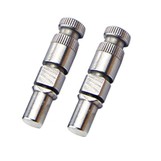
Hey there! As a supplier of DC Motor Shafts, I've seen firsthand how crucial these little components are to the overall performance of a DC motor, especially when it comes to speed regulation. In this blog, I'm gonna break down how the DC motor shaft influences the motor's speed regulation.
Let's start with the basics. A DC motor works by converting electrical energy into mechanical energy. The shaft is the part that transfers this mechanical energy from the motor to the load. It might seem like a simple rod, but its design and characteristics can have a huge impact on how well the motor can control its speed.
Material and Weight
The material of the DC motor shaft plays a significant role in speed regulation. For instance, if you're using a shaft made from a heavy - duty material like steel, it will have more inertia. Inertia is the tendency of an object to resist changes in its state of motion. A shaft with high inertia will take more time to speed up or slow down. This means that when you try to change the motor's speed, the response will be a bit sluggish.
On the other hand, shafts made from lighter materials like aluminum have less inertia. They can respond more quickly to changes in the motor's input, allowing for faster speed regulation. As a DC Motor Shaft supplier, I offer a variety of materials, including Motor Shaft SUS303 SUS304 SUS316, which are known for their durability and relatively light weight, making them great for applications that require precise speed control.
Diameter and Length
The diameter and length of the shaft also matter a lot. A shaft with a larger diameter is generally stiffer. Stiffness is important because it affects how the shaft can transmit torque without bending or deforming. When a shaft bends under load, it can cause variations in the motor's speed. For example, if the shaft bends during operation, the load on the motor can change unevenly, leading to fluctuations in speed.
A longer shaft, on the other hand, can introduce more flexibility. While some flexibility can be beneficial in certain applications, too much can lead to instability in speed regulation. As a supplier, I work closely with customers to determine the optimal diameter and length for their specific DC motor requirements.
Surface Finish
The surface finish of the DC motor shaft is another factor that can influence speed regulation. A smooth surface finish reduces friction between the shaft and the bearings. Friction can cause energy losses, which in turn can affect the motor's efficiency and speed. When there's less friction, the motor can operate more smoothly, and it's easier to control its speed.
For example, if the shaft has a rough surface, it can cause the bearings to wear out faster. As the bearings wear, the gap between the shaft and the bearings can increase, leading to vibrations and speed variations. At our company, we pay great attention to the surface finish of our DC Motor Shaft products to ensure optimal performance.
Balancing
Proper balancing of the DC motor shaft is crucial for stable speed regulation. An unbalanced shaft can cause vibrations during operation. These vibrations can not only affect the motor's speed but also lead to premature wear and tear of the motor components.


When a shaft is balanced, it rotates smoothly, and the motor can maintain a consistent speed. As a supplier, we have advanced balancing equipment to ensure that every shaft we supply meets the highest standards of balance. This helps our customers achieve better speed regulation and longer motor life.
Compatibility with the Motor and Load
The DC motor shaft needs to be compatible with both the motor and the load it's driving. If the shaft is not properly matched to the motor's power and torque requirements, it can lead to inefficient speed regulation. For example, if the shaft is too small for the motor's power output, it may not be able to transmit the torque effectively, causing the motor to struggle and the speed to fluctuate.
Similarly, the shaft must be able to handle the load requirements. If the load is too heavy for the shaft, it can cause the motor to slow down or even stall. As a supplier, I have the expertise to help customers select the right shaft for their specific motor and load combinations.
Comparison with AC Motor Shafts
It's also interesting to compare DC motor shafts with AC Motor Shaft. AC motors generally operate at a fixed frequency, and their speed regulation is often achieved through different methods compared to DC motors. DC motors offer more flexibility in speed regulation, and the shaft's influence on speed regulation is more pronounced.
AC motor shafts are often designed to handle the specific characteristics of AC motors, such as the alternating current and the associated magnetic fields. In contrast, DC motor shafts need to be optimized for the direct current and the unique speed - control requirements of DC motors.
Real - World Applications
In real - world applications, the influence of the DC motor shaft on speed regulation can be seen in many industries. For example, in robotics, precise speed regulation is essential for accurate movement. A well - designed DC motor shaft can ensure that the robot's joints move smoothly and at the right speed.
In the automotive industry, DC motors are used in various applications, such as power windows and windshield wipers. The shaft's ability to regulate speed accurately ensures that these systems operate reliably and efficiently.
Conclusion
In conclusion, the DC motor shaft has a profound influence on the motor's speed regulation. From the material and weight to the diameter, length, surface finish, balancing, and compatibility, every aspect of the shaft's design and characteristics plays a role in how well the motor can control its speed.
As a DC Motor Shaft supplier, I'm committed to providing high - quality shafts that meet the diverse needs of our customers. Whether you're looking for a shaft for a small hobby project or a large industrial application, I have the expertise and the products to help you achieve optimal speed regulation.
If you're interested in learning more about our DC motor shafts or need help selecting the right shaft for your application, don't hesitate to get in touch. We're here to assist you in your procurement process and ensure that you get the best possible solution for your motor speed regulation needs.
References
- “Motor Handbook” by A. E. Fitzgerald, Charles Kingsley Jr., and Stephen D. Umans
- “Electric Motors and Drives: Fundamentals, Types, and Applications” by Austin Hughes and Bill Drury