

Titanium Alloy Shaft
Your Professional Titanium Alloy Shaft Supplier!
Shenzhen Sanhexing Shaft Manufacturing Co., Ltd. is a private enterprise specializing in the customized production of various precision mechanical hardware parts and non-standard precision shafts. Specializing in the production of stainless steel motor shafts, stepped shafts, knurled shafts, screw shafts, worm shafts, gear shafts, spindles, and high-precision shaft products.
Wide range of product applications
Applied in automobiles, drones, electrical equipment, industrial robots, electronic appliances, motors, toys and other industries.
Rich experience
The company has more than 10 years of experience in this field.
Quick response
We promise to respond to your inquiries within 24 hours to ensure that you receive the information and support you need in a timely manner.
Accept ODM/OEM services
The CNC processing series has more than 16 years of experience, and can customize and process various special-shaped precision parts made of special copper and aluminum materials according to drawings or samples.
-
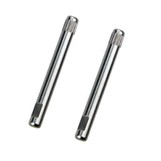
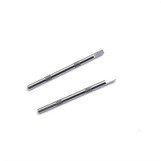
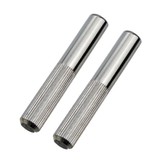
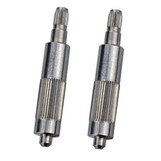
 TC4 Titanium Alloy ShaftTC4 titanium alloy has a density that is only 45% of steel, but its specific strengthAdd to Inquiry
Features of Titanium Alloy Shaft
Lightweight properties
Low density helps improve overall performance and fuel efficiency. Hollow structures are often used to further reduce weight without affecting strength.
High strength and stiffness
Titanium alloys provide high strength at a lower weight, allowing them to withstand high loads and extreme environments. Excellent tensile strength, suitable for applications requiring high strength.
Corrosion resistance
Titanium alloys show excellent corrosion resistance in humid and corrosive environments and are not easily oxidized or rusted. They can withstand a variety of chemical media, including acids and alkalis, and are suitable for the chemical and medical equipment fields.
High temperature performance
Titanium alloys can still maintain good strength and toughness at high temperatures, and are suitable for use in high temperature environments, such as aircraft engine parts.
Good processability
Titanium alloys have good welding properties, but the welding process needs to be controlled to avoid oxidation and embrittlement.
Biocompatibility
Due to their good biocompatibility, titanium alloys are often used in medical devices and implants (such as artificial joints and dental implants).
Aerospace
Titanium alloy shafts are used in components such as turbine shafts, compressors and combustion chambers of aircraft engines. Due to their high strength and high temperature resistance, they can remain stable under extreme conditions.
Automotive industry
Titanium alloy shafts are used in drive shafts, suspension components and exhaust systems of high-performance sports cars to improve acceleration performance and fuel efficiency.
Medical equipment
Due to the biocompatibility of titanium alloys, they are widely used in the manufacture of medical devices such as artificial joints, dental implants and bone nails to ensure good compatibility with human tissue.

Chemical and marine engineering
Titanium alloy shafts are used to manufacture corrosion-resistant pumps, valves and reactors, and can also be used to manufacture structural components of marine platforms, submersibles and underwater equipment, which can resist corrosion from various chemical media.
Sports equipment
Titanium alloy shafts are used in sports equipment such as bicycle frames, golf clubs, tennis rackets, etc. to improve performance and reduce weight, enhancing the competitive performance of athletes.
Mechanical and industrial equipment
In high-end machinery and automation equipment, titanium alloy shafts can be used in transmission systems and bearings to improve work efficiency and durability.
Types of Titanium Alloy Shaft
Solid shaft
Made of a single solid titanium alloy material, it has high strength and is suitable for high-load applications. Used in industrial equipment and mechanical transmission systems that require high strength and rigidity.
α-type titanium alloy
Mainly composed of titanium and α-phase stabilizing elements (such as aluminum and tin). It has good high-temperature performance and corrosion resistance, and moderate strength. Commonly used in aerospace, chemical and medical equipment and other fields.
β-type titanium alloy
Contains β-phase stabilizing elements (such as molybdenum, vanadium, chromium). It has high strength and good toughness, and is suitable for use in high-load and high-temperature environments. Suitable for aerospace components and high-performance industrial equipment.
Casting shaft
Made through a casting process, it is suitable for shafts with complex shapes and large sizes. Used in large machinery and equipment.
Machined shaft
Adopts high-precision processing technology such as CNC machining to ensure the accuracy of dimensions and tolerances. Widely used in machinery and equipment with high-precision requirements.
Medical device shaft
Designed for medical devices, focusing on biocompatibility and corrosion resistance. Such as artificial joints, dental implants, etc.
Aerospace Shafts
Designed to withstand extreme temperatures and pressures, with a focus on lightweight and strength. Such as aerospace engine components and aircraft structures.
Processing Technology of Titanium Alloy Shaft
Forging
The titanium alloy is heated to a high temperature and then formed by a forging press. Improves the mechanical properties of the material and eliminates casting defects. Suitable for aerospace and industrial components that require high strength and high reliability.
Casting
The molten titanium alloy liquid is cast into a mold and solidified after cooling. Complex shapes can be manufactured, reducing subsequent processing. Used for titanium alloy components of large size or complex shape.
Machining
The cutting process is performed using a CNC machine tool (CNC) to remove excess material to achieve the required size and tolerance. High precision and complex geometry can be achieved. Widely used in aerospace, medical equipment and high-end machinery.
Heat treatment
The microstructure of titanium alloy is changed through heating and cooling processes to improve its mechanical properties. Used for components that require high strength and toughness for specific applications.
Welding
The edges of titanium alloy materials are melted and connected together to form a whole. Allows multiple parts to be connected during the assembly process, maintaining high strength and stability. Used for the assembly of complex components, such as aerospace structures.
Customization of Titanium Alloy Shaft
According to application requirements: Communicate with customers to understand their application scenarios and technical requirements, and design titanium alloy shafts that meet specific loads, sizes and environmental conditions.
CAD modeling: Use computer-aided design (CAD) software for detailed modeling to ensure that the design meets precise requirements.
According to the application environment: Select the appropriate titanium alloy type (such as α, β, α/β) and grade (such as Ti-6Al-4V) according to the customer's specific application to ensure that the strength and corrosion resistance requirements are met.
Special alloys: Provide special titanium alloy materials for specific applications (such as medical or marine environments) to improve their performance.
Custom processing: Select the appropriate processing technology according to design requirements, including forging, casting, machining and surface treatment to ensure the quality and performance of the final product.
High-precision processing: Use CNC machine tools for high-precision processing to ensure that the dimensional tolerance and surface quality meet customer requirements.
Specific treatment solutions: Provide customized surface treatment solutions such as anodizing, spraying or polishing to improve corrosion resistance and wear resistance according to the customer's use environment.
Multi-layer protection: Combine multiple surface treatment processes to provide multi-layer protection to meet the needs of specific applications.
Develop a detailed quality control plan, including material inspection, processing process monitoring and final product testing to ensure that every link meets the standards.
Surface treatment of Titanium Alloy Shaft
Grinding: Used to remove surface defects, improve dimensional accuracy and surface finish.
Polishing: Further improve surface finish, reduce surface roughness and enhance appearance.
Sandblasting: Using high-pressure airflow to spray sand or other abrasives onto the surface, which can remove oxide layers, burrs, increase surface roughness and improve coating adhesion.
Burnishing: Cold working the surface with metal or ceramic rollers to harden the surface, improve wear resistance and improve surface finish.
Pickling: Using acid solution to remove oxide layers, dirt and residues on the surface.
Passivation: Forming an oxide film on the surface of titanium alloy to improve corrosion resistance.
Chemical Conversion Coating: Forming a coating on the surface of titanium alloy through chemical reaction, such as phosphate conversion film, to improve coating adhesion.
Anodizing: Anodizing titanium alloy in electrolyte to form an oxide film on the surface, which can improve corrosion resistance and wear resistance.
PVD: For example, titanium (TiN), titanium carbide (TiC), titanium aluminum nitride (TiAlN), etc., can improve hardness, wear resistance, friction coefficient and corrosion resistance.
CVD: For example, depositing diamond coating to improve wear resistance and hardness.
Spraying: For example, plasma spraying, flame spraying, etc., can coat various materials to improve wear resistance, corrosion resistance or improve other properties.
Laser processing: Change the surface properties by laser, such as laser cladding, laser hardening, etc., to improve hardness and wear resistance.
Ion implantation: Ions are implanted into the surface of titanium alloy to change its composition and properties, such as improving hardness and wear resistance.
Heat treatment: Such as annealing, quenching, aging, etc., is used to change the microstructure and mechanical properties of titanium alloys.
Frequently Asked Questions
As one of the most professional titanium alloy shaft manufacturers and suppliers in China, we're featured by quality products and low price. Be free to buy customized titanium alloy shaft made in China here from our factory. Contact us for quotation and free sample.
TC4 Titanium Alloy Shaft, titanium alloy shaft