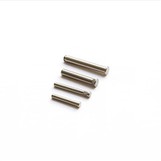
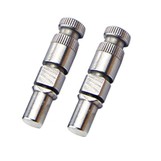
As a knurled shaft supplier, I often get asked all sorts of questions about these nifty little components. One question that pops up more often than you'd think is, "Can a knurled shaft be welded?" Well, let's dive right into it and break it down.
First off, let's talk a bit about what a knurled shaft is. A knurled shaft is a cylindrical rod with a textured surface created by a process called knurling. This texture can be in different patterns, like straight, diamond, or spiral, and it serves a few important purposes. It provides a better grip, which is super useful in applications where you need to manually turn or adjust something. Think of the handles on a tool or the adjustment knobs on a machine – that's where you'll often find knurled shafts.
Now, back to the big question: welding. Welding is a process of joining two or more pieces of metal together by heating them to a melting point and then allowing them to cool and solidify. It's a common method used in manufacturing and repair, but when it comes to knurled shafts, things get a bit tricky.


The Challenges of Welding Knurled Shafts
One of the main challenges is the heat affected zone (HAZ). When you weld metal, the area around the weld gets heated up, and this can cause some changes in the material properties. For a knurled shaft, this can mean the loss of the knurled texture. The high heat can smooth out the knurled pattern, which defeats the whole purpose of having a knurled surface in the first place.
Another issue is the potential for warping. Knurled shafts are often precision components, and any warping caused by the welding process can make them unusable. The shaft might end up bent or out of round, which can lead to problems with fit and function in the application it's meant for.
The type of material also plays a big role. Different metals have different welding characteristics. For example, stainless steel knurled shafts can be more difficult to weld compared to mild steel ones. Stainless steel has a higher chromium content, which can cause issues like cracking and porosity in the weld. You can check out our Stainless Steel Knurled Shaft for more details on the properties of these shafts.
When Welding Might Be an Option
Despite the challenges, there are some situations where welding a knurled shaft can be done successfully. If the knurled part of the shaft isn't near the weld area, then the risk of damaging the knurling is reduced. For example, if you need to join two ends of a knurled shaft that are far from the knurled section, you might be able to get away with it.
Also, if the application doesn't require the knurled texture to be perfect, welding could be an option. Maybe the shaft is used in a less critical part of a machine where a slightly damaged knurled surface won't affect the overall performance.
Welding Techniques for Knurled Shafts
If you decide to go ahead with welding a knurled shaft, there are a few techniques that can help minimize the damage. One is to use a low-heat welding process, like TIG (Tungsten Inert Gas) welding. TIG welding allows for more precise control of the heat input, which can reduce the size of the heat affected zone and the risk of warping.
Preheating the shaft before welding can also help. This reduces the thermal stress on the material and can prevent cracking. However, preheating needs to be done carefully to avoid overheating the knurled area.
Post-Welding Considerations
After welding, you'll need to do some post-weld treatments. This might include stress relieving to reduce any internal stresses in the shaft. You might also need to re-machine the shaft to restore its dimensions and, if possible, the knurled texture. This can be a time-consuming and costly process, but it's necessary to ensure the shaft meets the required specifications.
Our Precision Knurled Shafts
At our company, we offer a wide range of Precision Knurled Shaft. These shafts are manufactured to high standards, and we take great care to ensure the knurled texture is consistent and of high quality. We understand the importance of precision in these components, and we use advanced manufacturing techniques to achieve the best results.
If you're in the market for knurled shafts, whether you need them for a new project or to replace existing ones, we're here to help. We can provide you with the right shafts for your specific application and offer advice on any welding or other processing needs you might have.
Conclusion
So, can a knurled shaft be welded? The answer is yes, but it's not without its challenges. You need to carefully consider the application, the material, and the potential impact on the knurled texture. If you're unsure, it's always a good idea to consult with an expert.
If you're interested in purchasing knurled shafts or have any questions about our products, feel free to reach out. We're happy to have a chat and discuss your requirements. Whether you need a small quantity for a prototype or a large order for mass production, we've got you covered.
References
- ASM Handbook Volume 6: Welding, Brazing, and Soldering
- Machinery's Handbook, 31st Edition