Hey there! As an AC motor shaft supplier, I often get asked about how an AC motor shaft works. So, I thought I'd write this blog to break it down for you in a way that's easy to understand.
Let's start with the basics. An AC motor is a device that converts electrical energy into mechanical energy. And the shaft is a crucial part of this process. It's like the backbone of the motor, connecting various components and transferring the rotational force generated by the motor to the load.
The Structure of an AC Motor Shaft
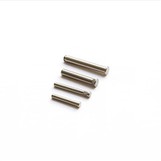
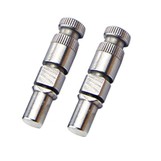
The shaft of an AC motor is typically a cylindrical rod made from high - strength materials like steel, stainless steel (such as SUS303, SUS304, or SUS316, check out Motor Shaft SUS303 SUS304 SUS316 for more details). It needs to be strong enough to withstand the torque and stresses during operation.
The shaft usually has two ends. One end is connected to the rotor of the motor. The rotor is the rotating part of the motor. When the electrical current flows through the stator (the stationary part of the motor), it creates a rotating magnetic field. This magnetic field interacts with the magnetic field of the rotor, causing the rotor to turn. And since the shaft is attached to the rotor, it also starts to rotate.


The other end of the shaft is connected to the load. The load could be a pump, a fan, a conveyor belt, or any other mechanical device that needs to be driven. So, as the shaft rotates, it transfers the mechanical power from the motor to the load, making the load work.
The Role of the Shaft in Torque Transmission
Torque is the rotational force that causes an object to rotate. In an AC motor, the shaft plays a vital role in transmitting torque from the motor to the load. The amount of torque that the shaft can carry depends on its diameter, material, and length.
A thicker shaft can generally handle more torque because it has a larger cross - sectional area. If the load requires a high amount of torque, we need to choose a shaft with an appropriate diameter. For example, in a heavy - duty industrial motor that drives large machinery, a bigger - diameter shaft will be used to transfer the large amount of torque required.
The material of the shaft also affects its torque - carrying capacity. High - quality steel or stainless steel shafts have better mechanical properties, such as high strength and good ductility, which allow them to transmit torque more effectively without breaking or deforming.
Speeds and RPM
The shaft rotates at a certain speed, which is usually measured in revolutions per minute (RPM). The speed of the shaft depends on the frequency of the AC power supply and the number of poles in the motor.
In a standard AC motor, the synchronous speed (the theoretical speed of the motor) can be calculated using the formula: (n_s=\frac{120f}{p}), where (n_s) is the synchronous speed in RPM, (f) is the frequency of the AC power supply (in Hz), and (p) is the number of poles in the motor.
For example, in a 60 - Hz power supply system, a 4 - pole motor has a synchronous speed of (n_s=\frac{120\times60}{4}=1800) RPM. However, the actual speed of the shaft is usually a bit less than the synchronous speed due to factors like slip.
Types of AC Motor Shafts
There are different types of AC motor shafts to meet various application requirements. One common type is the AC Motor Shaft, which is designed for general - purpose AC motors. These shafts are made to be durable and reliable, and they can be used in a wide range of applications, from small household appliances to large industrial equipment.
Another type is the Brushless Motor Shaft. Brushless motors are becoming more and more popular because they have fewer moving parts, less maintenance, and higher efficiency. The shafts for brushless motors are often designed with special features to match the unique characteristics of these motors.
Maintenance of AC Motor Shafts
Proper maintenance of the AC motor shaft is essential to ensure the long - term performance of the motor. One of the key aspects of maintenance is lubrication. If the shaft has bearings, the bearings need to be lubricated regularly to reduce friction and wear.
We also need to check the shaft for any signs of damage, such as cracks or excessive wear. If there are any issues, the shaft may need to be replaced. In addition, keeping the motor and the shaft clean can prevent the accumulation of dirt and debris, which can also affect the performance of the shaft.
Why Choose Our AC Motor Shafts?
As a supplier of AC motor shafts, we take pride in offering high - quality products. Our shafts are made from the best materials, and we use advanced manufacturing processes to ensure their precision and reliability.
We have a wide range of shafts to meet different customer needs. Whether you need a shaft for a small - scale project or a large - scale industrial application, we've got you covered. And our team of experts is always ready to help you choose the right shaft for your specific requirements.
If you're in the market for AC motor shafts, we'd love to have a chat with you. We can provide you with detailed product information, answer any questions you may have, and even offer customized solutions. So, don't hesitate to reach out to us for a purchase negotiation. We're looking forward to working with you and helping you get the most out of your AC motors.
References
- "Electric Machinery Fundamentals" by Stephen J. Chapman
- "Industrial Motor Handbook" by various authors