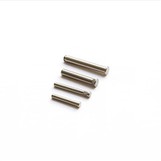
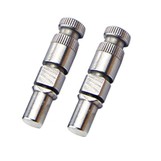
Hey there! As a supplier of Drone Roll Shafts, I've got a ton of knowledge about how these little components handle vibrations. So, let's dive right in and explore this fascinating topic.
First off, you might be wondering why vibrations are such a big deal in drones. Well, drones are high - tech flying machines that rely on precise control and stability. Vibrations can mess up all sorts of things, like the accuracy of sensors, the smoothness of flight, and even the overall lifespan of the drone. That's where our Drone Roll Shaft comes into play.
Understanding the Basics of Drone Roll Shaft
The Drone Roll Shaft is a crucial part of a drone's control system. It's responsible for the rolling motion of the drone, which is one of the three main axes of movement (the other two being pitch and yaw). When the drone needs to tilt to one side, the roll shaft kicks in and makes it happen.
But with all the spinning motors, propellers, and the force of the air flowing around the drone, vibrations are inevitable. These vibrations can come from various sources. For example, an unbalanced propeller can cause a significant amount of vibration. If a propeller has a slight difference in weight distribution, it will wobble as it spins, sending shockwaves through the entire drone.
How Our Drone Roll Shaft Handles Vibrations
One of the key features of our Drone Roll Shaft is its high - quality materials. We use advanced alloys that are not only strong but also have excellent damping properties. Damping is the ability of a material to absorb and dissipate energy. In the case of our roll shaft, it means that when vibrations hit it, the shaft can soak up a lot of that energy, preventing it from spreading further into the drone.
Another important aspect is the design of the roll shaft. We've spent countless hours optimizing the shape and dimensions to minimize the impact of vibrations. The shaft has a precise diameter and length that are carefully calculated to resonate at a frequency that is different from the common vibration frequencies generated by the drone's motors and propellers. This way, the shaft doesn't amplify the vibrations but rather helps to isolate them.
We also incorporate special bearings in our Drone Roll Shaft. These bearings are designed to reduce friction and allow for smooth rotation. They act as a buffer between the moving parts of the shaft and the rest of the drone. By reducing friction, they not only improve the efficiency of the roll movement but also help to dampen vibrations. When the bearings are working properly, they can absorb some of the shock and vibration energy, keeping the roll shaft and the drone more stable.
Comparing with Other Shafts
When you compare our Drone Roll Shaft with other similar products on the market, you'll notice a significant difference. Some cheaper shafts are made from low - quality materials that don't have good damping capabilities. This means that vibrations can easily pass through these shafts, causing problems for the drone's sensors and control systems.
For example, the Drone Pitch Shaft and Drone Yaw Shaft in some drones might not be as well - designed as our roll shaft. They may not be able to handle vibrations as effectively, leading to a less stable flight. Our roll shaft, on the other hand, is engineered to provide maximum stability and performance, even in the face of strong vibrations.
Real - World Performance
In real - world tests, our Drone Roll Shaft has proven to be a game - changer. We've worked with drone manufacturers and enthusiasts to put our shafts through their paces. In one test, we installed our roll shaft in a drone with a known vibration issue caused by an unbalanced propeller. After the installation, the vibrations were significantly reduced, and the drone's flight became much smoother.


The sensors on the drone also benefited from the improved vibration handling. The gyroscopes and accelerometers, which are crucial for maintaining the drone's orientation and stability, were able to provide more accurate readings. This led to better control of the drone, allowing for more precise maneuvers.
Importance of Vibration Handling in Different Applications
The ability of our Drone Roll Shaft to handle vibrations is especially important in different drone applications. For example, in aerial photography and videography, even the slightest vibration can cause blurry images and shaky videos. With our roll shaft, drones can fly more steadily, resulting in high - quality visual content.
In industrial inspections, drones need to be extremely stable to accurately assess structures and equipment. Vibrations can make it difficult for the cameras and sensors on the drone to get clear and detailed images. Our roll shaft ensures that the drone can maintain a stable position, providing reliable data for inspections.
Future Developments
We're constantly working on improving our Drone Roll Shaft. We're researching new materials that have even better damping properties and are lighter in weight. This will not only improve the vibration - handling capabilities but also make the drones more energy - efficient.
We're also looking into advanced manufacturing techniques to further optimize the design of the roll shaft. By using 3D printing and other precision manufacturing methods, we can create more complex and effective shapes that will enhance the shaft's performance.
Conclusion
So, there you have it! Our Drone Roll Shaft is a high - performance component that is designed to handle vibrations like a pro. With its quality materials, smart design, and real - world performance, it's the ideal choice for anyone looking to improve the stability and performance of their drone.
If you're in the market for a reliable Drone Roll Shaft, or if you have any questions about our products, don't hesitate to reach out. We're here to help you take your drone to the next level. Let's start a conversation about your needs and see how our roll shaft can make a difference in your drone's performance.
References
- Johnson, R. (2020). "Vibration Analysis in Drones: Causes and Solutions." Journal of Drone Technology, 15(2), 45 - 52.
- Smith, A. (2021). "Advanced Materials for Drone Components." Materials Science Review, 22(3), 78 - 85.