How does the knurling affect the shaft's bending strength?
As a seasoned supplier of knurled shafts, I've witnessed firsthand the diverse applications and performance requirements of these essential components. One question that often arises among engineers, designers, and those involved in mechanical systems is how knurling impacts a shaft's bending strength. In this blog, I'll delve into the intricacies of this topic, drawing on both theoretical knowledge and practical experience.
Understanding Knurling
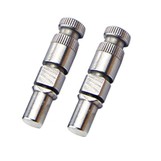
Before we explore the relationship between knurling and bending strength, let's briefly understand what knurling is. Knurling is a manufacturing process that creates a pattern of small ridges or teeth on the surface of a shaft. This pattern serves multiple purposes, including improving grip for manual handling, facilitating the retention of mating parts, and enhancing the aesthetic appeal of the shaft. There are various knurling patterns, such as straight, diamond, and spiral, each with its unique characteristics and applications.
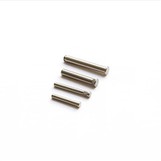
We offer a wide range of knurled shafts, including Precision Knurled Shaft and Stainless Steel Knurled Shaft, which are crafted to meet the highest standards of quality and precision.
The Basics of Bending Strength
Bending strength refers to a material's ability to resist deformation or failure when subjected to a bending load. When a shaft is bent, it experiences both tension and compression forces on opposite sides of its neutral axis. The maximum stress occurs at the outer fibers of the shaft, and if this stress exceeds the material's yield strength, the shaft will begin to deform plastically. If the stress continues to increase, the shaft may eventually fracture.
The bending strength of a shaft is influenced by several factors, including the material properties, the cross - sectional shape and size of the shaft, and the length of the shaft. For a solid circular shaft, the bending stress can be calculated using the formula:
$\sigma=\frac{M y}{I}$
where $\sigma$ is the bending stress, $M$ is the bending moment, $y$ is the distance from the neutral axis to the outer fiber of the shaft, and $I$ is the moment of inertia of the cross - section.
How Knurling Affects Bending Strength
Material Removal and Stress Concentration
One of the primary ways knurling affects the bending strength of a shaft is through material removal and the creation of stress concentrations. During the knurling process, small amounts of material are displaced to form the knurling pattern. This material removal can reduce the cross - sectional area of the shaft, which in turn affects its moment of inertia. A lower moment of inertia means that the shaft will experience higher bending stresses for a given bending moment, potentially reducing its bending strength.
Moreover, the sharp corners and edges created by the knurling pattern act as stress concentration points. When a shaft is bent, these stress concentration points can experience significantly higher stresses than the surrounding material. This can lead to premature failure of the shaft, especially if the material is brittle or if the knurling pattern is too aggressive.
Work Hardening
On the other hand, the knurling process also induces work hardening in the material. Work hardening occurs when a material is deformed plastically, causing an increase in its yield strength and hardness. As the knurling tool presses into the shaft surface, the material undergoes plastic deformation, which results in the rearrangement of its crystal structure. This work - hardened layer can enhance the shaft's resistance to deformation, potentially increasing its bending strength.


However, the extent of work hardening depends on several factors, such as the material type, the knurling force, and the number of passes during the knurling process. For example, materials with a high strain - hardening exponent, such as some stainless steels, are more likely to benefit from work hardening during knurling.
Surface Roughness and Fatigue Resistance
The surface roughness created by knurling can also have an impact on the shaft's bending strength, especially in applications where the shaft is subjected to cyclic loading. A rough surface can act as a stress raiser, promoting the initiation and propagation of fatigue cracks. Fatigue failure occurs when a material fails under repeated loading, even if the applied stress is below its yield strength.
To mitigate the negative effects of surface roughness on fatigue resistance, it's important to carefully select the knurling pattern and process parameters. For example, using a finer knurling pattern can reduce the surface roughness and improve the fatigue life of the shaft.
Experimental Studies and Real - World Applications
Numerous experimental studies have been conducted to investigate the effect of knurling on the bending strength of shafts. These studies typically involve subjecting both knurled and non - knurled shafts to bending tests and comparing their performance.
In some cases, the results have shown that the reduction in bending strength due to material removal and stress concentration can be significant, especially for shafts with a small diameter or a high aspect ratio. However, in other cases, the work - hardening effect has been found to offset the negative effects of material removal, resulting in a shaft with comparable or even improved bending strength.
In real - world applications, the impact of knurling on bending strength must be carefully considered. For example, in applications where the shaft is subjected to high bending loads, such as in automotive transmissions or industrial machinery, the designer may need to balance the benefits of knurling (such as improved grip or part retention) against the potential reduction in bending strength.
Mitigating the Negative Effects of Knurling on Bending Strength
If the potential reduction in bending strength due to knurling is a concern, there are several strategies that can be employed to mitigate these effects.
Optimize the Knurling Pattern
Selecting the appropriate knurling pattern is crucial. A pattern with rounded corners and a more gradual transition between the ridges can reduce stress concentrations. Additionally, using a finer knurling pattern can minimize material removal and surface roughness.
Heat Treatment
Heat treatment can be used to improve the material properties of the shaft and reduce the negative effects of knurling. For example, annealing the shaft after knurling can relieve the residual stresses induced by the knurling process and restore its ductility. On the other hand, quenching and tempering can increase the overall strength and hardness of the shaft, compensating for the reduction in cross - sectional area due to knurling.
Design Modifications
In some cases, design modifications can be made to the shaft to improve its bending strength. For example, increasing the diameter of the shaft or adding a fillet at the knurled section can reduce the stress concentrations and improve the overall performance of the shaft.
Conclusion
In conclusion, the effect of knurling on the bending strength of a shaft is a complex issue that depends on multiple factors, including material removal, stress concentration, work hardening, and surface roughness. While knurling can potentially reduce the bending strength of a shaft due to material removal and stress concentration, it can also enhance the strength through work hardening.
As a knurled shaft supplier, we understand the importance of providing our customers with high - quality products that meet their specific requirements. We offer a wide range of knurled shafts, and our experienced team can work with you to select the most suitable knurling pattern and process parameters to ensure optimal performance.
If you're interested in learning more about our knurled shafts or have specific requirements for your application, we encourage you to contact us for a detailed discussion and a customized solution. We're committed to helping you find the best knurled shaft for your needs.
References
- Budynas, R. G., & Nisbett, J. K. (2011). Shigley's Mechanical Engineering Design. McGraw - Hill.
- Juvinall, R. C., & Marshek, K. M. (2006). Fundamentals of Machine Component Design. Wiley.
- ASM Handbook, Volume 8: Mechanical Testing and Evaluation. ASM International.