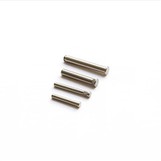
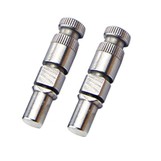
As a knurled shaft supplier, I've witnessed firsthand the importance of understanding how knurling affects the strength of the shaft. Knurling is a manufacturing process that creates a pattern of small ridges or bumps on the surface of a shaft. This pattern can serve various purposes, from improving grip to enhancing the shaft's mechanical properties. In this blog post, I'll delve into the science behind knurling and its impact on shaft strength.
What is Knurling?
Knurling is a cold - forming process where a set of hardened steel wheels or dies are pressed against the surface of a rotating shaft. These wheels have a specific pattern, such as straight, diamond, or spiral, which is transferred onto the shaft's surface. The process deforms the metal, displacing it to create the characteristic ridges. This process is commonly used in applications where a better grip is required, like on tool handles, knobs, and in mechanical assemblies.
How Knurling Affects Surface Area
One of the primary ways knurling affects the shaft is by increasing its surface area. When the ridges are formed, the actual surface area of the shaft becomes larger compared to a smooth - surfaced shaft. This increase in surface area can have a significant impact on the shaft's performance.
In applications where the shaft needs to transmit torque or power, a larger surface area allows for better frictional contact. For example, in a power transmission system, a knurled shaft can grip a mating component more effectively. This increased frictional force can prevent slippage, which is crucial for the efficient transfer of power. When the surface area is larger, the contact pressure between the shaft and the mating part is distributed over a wider area, reducing the likelihood of local stress concentrations that could lead to premature failure.
Impact on Stress Distribution
Knurling also affects the stress distribution within the shaft. When a load is applied to a shaft, stress is generated within the material. In a smooth shaft, the stress distribution may be relatively uniform under simple loading conditions. However, in a knurled shaft, the ridges can act as stress concentrators.
At the base of each ridge, there is a small radius where stress can accumulate. This is because the material at the base of the ridge experiences a change in geometry, which disrupts the normal flow of stress. If the knurling is not properly designed or if the shaft is subjected to high - cycle loading, these stress concentrations can lead to fatigue cracks. Over time, these cracks can propagate and cause the shaft to fail.
On the other hand, if the knurling is designed correctly, it can also help to distribute stress more evenly. For instance, in some cases, the ridges can act as small reinforcing elements. They can resist deformation and help to transfer the load more uniformly throughout the shaft. This is especially true when the knurling pattern is carefully chosen to match the loading conditions of the shaft.
Material Hardening and Strength
During the knurling process, the metal is deformed, which causes work - hardening. Work - hardening is a phenomenon where the material becomes stronger and harder as it is deformed. When the knurling wheels press against the shaft, the metal grains are distorted and realigned. This increases the resistance of the material to further deformation.


The degree of work - hardening depends on several factors, including the material of the shaft, the knurling force, and the number of passes. For example, softer metals like aluminum may experience a more significant increase in hardness compared to harder metals like stainless steel. However, even in stainless steel, work - hardening can improve the surface strength of the shaft.
The increased hardness and strength at the surface can enhance the shaft's resistance to wear and abrasion. In applications where the shaft is in contact with other components or is exposed to harsh environments, a knurled surface can provide better protection against damage.
Types of Knurling and Their Effects
There are different types of knurling patterns, and each can have a unique effect on the shaft's strength.
Straight Knurling
Straight knurling creates a series of parallel ridges along the length of the shaft. This type of knurling is often used when a simple grip improvement is needed. In terms of strength, straight knurling can provide some resistance to axial movement. The parallel ridges can act as small barriers, preventing the shaft from sliding out of a mating component. However, straight knurling may not be as effective in distributing stress in all directions compared to other patterns.
Diamond Knurling
Diamond knurling consists of a pattern of intersecting ridges that form a diamond - shaped pattern. This pattern provides a more uniform grip in both axial and radial directions. From a strength perspective, diamond knurling can help to distribute stress more evenly across the surface of the shaft. The intersecting ridges can act as a network of reinforcing elements, which can improve the shaft's overall strength and resistance to deformation.
Spiral Knurling
Spiral knurling creates a helical pattern on the shaft. This type of knurling is useful in applications where the shaft needs to rotate and transmit torque. The spiral pattern can help to guide the flow of stress along the shaft's axis, reducing the likelihood of stress concentrations. Additionally, the spiral ridges can provide a self - centering effect in some assemblies, which can improve the overall stability and strength of the system.
Applications and Considerations
The impact of knurling on shaft strength is highly relevant in various industries. In the automotive industry, knurled shafts are used in steering systems, transmission components, and engine parts. In these applications, the shaft needs to be strong enough to withstand high loads and vibrations. The knurling can improve the grip between the shaft and other components, ensuring reliable operation.
In the aerospace industry, where weight and strength are critical factors, knurled shafts can be designed to provide the necessary strength while minimizing weight. The work - hardening effect of knurling can enhance the surface strength of the shaft, allowing for the use of thinner or lighter materials.
When considering knurling for a specific application, it's important to take into account the loading conditions, the material of the shaft, and the desired performance. For example, if the shaft will be subjected to high - cycle fatigue, the knurling pattern and depth should be carefully chosen to minimize stress concentrations.
Our Knurled Shaft Offerings
As a knurled shaft supplier, we offer a wide range of knurled shafts to meet different customer needs. Our Stainless Steel Knurled Shaft is made from high - quality stainless steel, which provides excellent corrosion resistance and strength. The knurling process on these shafts is carefully controlled to ensure optimal performance.
We also have Precision Knurled Shaft that are manufactured with high precision. These shafts are ideal for applications where tight tolerances and consistent performance are required.
If you're in need of knurled shafts for your project, we encourage you to contact us for a detailed discussion. Our team of experts can help you choose the right knurling pattern, material, and specifications to ensure that your shafts meet your strength and performance requirements.
Conclusion
In conclusion, knurling has a complex and multifaceted impact on the strength of the shaft. It can increase the surface area, affect stress distribution, and cause work - hardening. The type of knurling pattern chosen also plays a crucial role in determining the shaft's performance. As a knurled shaft supplier, we understand the importance of these factors and strive to provide high - quality knurled shafts that meet the diverse needs of our customers. If you're interested in learning more about our products or discussing your specific requirements, please don't hesitate to reach out to us. We're here to help you find the best knurled shaft solutions for your applications.
References
- Dieter, G. E. (1988). Mechanical Metallurgy. McGraw - Hill.
- Kalpakjian, S., & Schmid, S. R. (2008). Manufacturing Engineering and Technology. Pearson.
- Lindeburg, M. R. (2001). Mechanical Engineering Reference Manual for the PE Exam. Professional Publications.