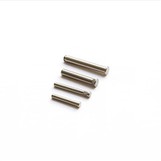
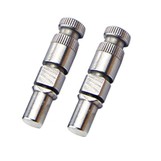
Thermal expansion is a fundamental physical phenomenon that occurs when a material changes its dimensions in response to a temperature variation. In the context of an AC motor shaft, thermal expansion can have significant implications for the motor's operation, performance, and longevity. As a supplier of AC Motor Shaft, I have witnessed firsthand how thermal expansion can affect the functionality of these crucial components.
Understanding Thermal Expansion
Before delving into how thermal expansion impacts an AC motor shaft, it's essential to understand the concept itself. Thermal expansion is governed by the material's coefficient of thermal expansion (CTE), which is a measure of how much a material expands or contracts per unit length for a given change in temperature. Different materials have different CTE values; for example, metals generally have relatively high CTEs compared to ceramics.
When an AC motor is in operation, electrical energy is converted into mechanical energy, and this process generates heat. The heat is dissipated through various components of the motor, including the shaft. As the temperature of the shaft increases, it expands according to its CTE. The amount of expansion can be calculated using the formula:
$\Delta L = L_0 \times \alpha \times \Delta T$
where $\Delta L$ is the change in length, $L_0$ is the original length, $\alpha$ is the coefficient of thermal expansion, and $\Delta T$ is the change in temperature.
Effects on Shaft Dimensions
One of the most immediate effects of thermal expansion on an AC motor shaft is the change in its dimensions. As the shaft heats up and expands, its length, diameter, and even its straightness can be affected.
Length Expansion
The increase in length can cause problems in applications where precise axial positioning is required. For instance, in a conveyor system driven by an AC motor, the expansion of the shaft can lead to misalignment between the motor and the driven equipment. This misalignment can result in increased vibration, noise, and premature wear of the bearings and other components.
Diameter Expansion
The expansion of the shaft's diameter can also have significant consequences. If the shaft is press - fit into a bearing or a coupling, the increased diameter can create excessive stress on these components. Over time, this can lead to bearing failure, as the increased pressure can cause the bearing to overheat, lose its lubrication, and eventually seize.
Straightness
Thermal expansion can also affect the straightness of the shaft. Uneven heating across the shaft's cross - section can cause it to bend or warp. This can lead to additional vibration and imbalance in the motor, reducing its efficiency and increasing the risk of mechanical failure.
Impact on Motor Performance
The changes in shaft dimensions due to thermal expansion can have a direct impact on the performance of the AC motor.
Efficiency
The increased vibration and misalignment caused by thermal expansion can reduce the motor's efficiency. The motor has to work harder to overcome the additional frictional forces and mechanical losses, resulting in higher energy consumption and lower overall efficiency.
Torque Transmission
The integrity of torque transmission can be compromised. If the shaft is not properly aligned or if there is excessive stress on the coupling due to thermal expansion, the torque transfer from the motor to the load can be inconsistent. This can lead to fluctuations in the speed and power output of the driven equipment, affecting its performance and reliability.
Noise and Vibration
As mentioned earlier, thermal expansion can cause increased noise and vibration in the motor. This not only creates an unpleasant working environment but can also be a sign of underlying mechanical problems. Excessive vibration can also lead to fatigue failure of the motor components over time.
Mitigation Strategies
To minimize the negative effects of thermal expansion on an AC motor shaft, several mitigation strategies can be employed.
Material Selection
Choosing a material with a low coefficient of thermal expansion can reduce the amount of expansion. For example, some specialty alloys or composite materials have lower CTEs compared to traditional metals. As a supplier, we offer a range of Brushless Motor Shaft and DC Motor Shaft options made from different materials to meet the specific requirements of our customers.
Thermal Management
Effective thermal management is crucial. This can include improving the motor's cooling system, such as using better - designed heat sinks or fans. Ensuring proper ventilation around the motor can also help dissipate heat more efficiently, reducing the temperature rise and subsequent thermal expansion.
Design Considerations
In the design phase, engineers can incorporate features to accommodate thermal expansion. For example, using flexible couplings that can tolerate some degree of misalignment or allowing for a small amount of axial movement in the shaft support structure.
Importance of Quality Shafts
As a supplier of AC motor shafts, we understand the critical role that high - quality shafts play in ensuring the reliable operation of motors. Our shafts are manufactured to strict quality standards, using precision machining techniques to ensure accurate dimensions and excellent surface finish. We also conduct thorough quality control checks to ensure that our shafts can withstand the effects of thermal expansion and other environmental factors.
By providing high - quality shafts, we help our customers reduce the risk of motor failure, improve the efficiency of their equipment, and extend the service life of their motors. Whether you are in the industrial, automotive, or consumer electronics sector, our AC motor shafts can meet your specific needs.
Conclusion
Thermal expansion is a significant factor that can affect the operation of an AC motor shaft. The changes in shaft dimensions can lead to misalignment, increased vibration, reduced efficiency, and premature component failure. However, by understanding the principles of thermal expansion and implementing appropriate mitigation strategies, these negative effects can be minimized.
As a trusted supplier of AC motor shafts, we are committed to providing our customers with the highest quality products and technical support. If you are looking for reliable AC motor shafts or need advice on how to address thermal expansion issues in your motor applications, we invite you to contact us for a procurement discussion. Our team of experts is ready to assist you in finding the best solutions for your specific requirements.


References
- Incropera, F. P., & DeWitt, D. P. (2002). Fundamentals of Heat and Mass Transfer. John Wiley & Sons.
- Shigley, J. E., & Mischke, C. R. (2001). Mechanical Engineering Design. McGraw - Hill.
- Chapman, S. J. (2004). Electric Machinery Fundamentals. McGraw - Hill.