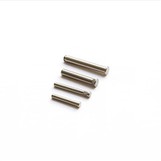
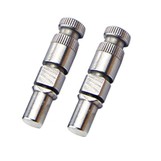
Hey there! I'm a supplier of knurled shafts, and I'm super stoked to take you through the process of how these nifty components are made. Knurled shafts are used in a ton of different industries, from automotive to electronics, because of their unique grip and functionality. So, let's dive right in!
Starting with the Basics: Material Selection
The first step in making a knurled shaft is picking the right material. There are several options out there, but the most common ones are steel, stainless steel, and aluminum. Each material has its own set of pros and cons, and the choice depends on the specific application of the shaft.
For instance, if you need a shaft that's strong and durable, steel is a great choice. It can withstand high loads and is resistant to wear and tear. On the other hand, if you're looking for a shaft that won't rust or corrode, Stainless Steel Knurled Shaft is the way to go. It's perfect for applications in harsh environments, like marine or food processing industries. And if weight is a concern, aluminum is a lightweight alternative that still offers decent strength.
Cutting the Raw Material
Once we've selected the material, the next step is to cut it into the appropriate length. This is usually done using a saw or a cutting machine. The length of the shaft depends on its intended use, so we make sure to measure and cut it accurately.
After cutting, the raw material is often sent for some preliminary machining to get it into a more workable shape. This might involve turning it on a lathe to create a smooth cylindrical surface. Turning is a process where the material rotates while a cutting tool removes excess material to achieve the desired diameter and finish.
The Knurling Process
Now, let's talk about the star of the show – the knurling process. Knurling is what gives the shaft its distinctive pattern and grip. There are two main types of knurling: straight knurling and diamond knurling.
Straight knurling creates a series of parallel lines on the surface of the shaft, while diamond knurling creates a criss - cross pattern. The choice between the two depends on the application. For example, straight knurling is often used when a simple grip is needed, like on a tool handle. Diamond knurling, on the other hand, provides a more aggressive grip and is commonly used in applications where a stronger hold is required, such as on a control knob.
The knurling process is typically done using a knurling tool. This tool has a set of hardened wheels with the desired knurling pattern. The tool is pressed against the rotating shaft, and as the shaft turns, the wheels roll over its surface, imprinting the pattern. The pressure applied during knurling is crucial – too little, and the pattern won't be well - defined; too much, and it could damage the shaft.
Precision Machining
After knurling, the shaft might need some additional precision machining to meet the exact specifications. This could involve further turning, milling, or grinding. For example, if the shaft needs to have a specific diameter at certain points or if it has holes or grooves that need to be machined, we use precision machining techniques to achieve that.
Precision Knurled Shaft is a term we often hear in industries where accuracy is key. These shafts are machined to very tight tolerances, sometimes within a few thousandths of an inch. To achieve this level of precision, we use advanced CNC (Computer Numerical Control) machines. These machines are programmed to perform the machining operations with high accuracy, ensuring that each shaft meets the required specifications.
Heat Treatment
In some cases, the knurled shaft might undergo heat treatment. Heat treatment is a process where the shaft is heated to a specific temperature and then cooled at a controlled rate. This can improve the shaft's hardness, strength, and wear resistance.
There are different types of heat treatment processes, such as annealing, quenching, and tempering. Annealing is used to soften the material, making it easier to machine. Quenching involves rapid cooling to increase the hardness, and tempering is done after quenching to reduce the brittleness and improve the toughness of the shaft.
Surface Finishing
Once the machining and heat treatment are done, the shaft goes through a surface finishing process. This is important for several reasons. First, it improves the appearance of the shaft, making it look more professional. Second, it can enhance the corrosion resistance of the shaft.
Common surface finishing techniques include polishing, plating, and coating. Polishing gives the shaft a smooth and shiny surface, while plating involves depositing a thin layer of metal, like chrome or nickel, on the surface to improve its corrosion resistance and appearance. Coating can also be used to add a protective layer, such as a powder coating or a paint.
Quality Control
Throughout the entire manufacturing process, quality control is of utmost importance. We have a team of quality control inspectors who check each shaft at various stages to make sure it meets our high standards.
They use a variety of measuring tools, such as calipers, micrometers, and gauges, to check the dimensions, surface finish, and knurling pattern of the shaft. Any shafts that don't meet the specifications are either re - worked or discarded. This ensures that only the best - quality knurled shafts make it to our customers.
Why Choose Our Knurled Shafts
As a supplier, we take pride in our knurled shafts. We have years of experience in the industry, and we use the latest technology and equipment to manufacture high - quality products. Our shafts are made from top - notch materials and are precision - machined to meet the strictest standards.
Whether you need a Stainless Steel Knurled Shaft for a marine application or a Precision Knurled Shaft for a high - tech device, we've got you covered. We also offer custom - made solutions to meet your specific requirements.
If you're in the market for knurled shafts, don't hesitate to reach out. We're always happy to discuss your needs and provide you with a quote. Whether you're a small business or a large corporation, we can work with you to find the perfect knurled shaft solution for your application.
References
- "Machining Handbook" by Industrial Press Inc.
- "Manufacturing Engineering and Technology" by S. Kalpakjian and S. R. Schmid
So, there you have it – a detailed look at how a knurled shaft is made. I hope this blog has given you a better understanding of the process. If you have any questions or are interested in purchasing our knurled shafts, feel free to get in touch. We're looking forward to working with you!