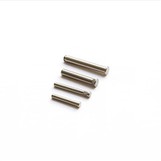
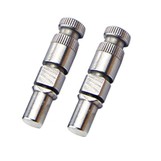
Hey there, fellow drone enthusiasts! As a supplier of Drone Pitch Shaft, I've seen firsthand how crucial accurate measurements are for these components. In this blog, I'll share some tips and tricks on how to measure a drone pitch shaft accurately.
Why Accurate Measurement Matters
First off, let's talk about why accurate measurement is so important. The pitch shaft is a key part of a drone's control system. It's responsible for the up-and-down movement of the drone, which is essential for stable flight. If the pitch shaft isn't measured correctly, it can lead to all sorts of problems.
For example, an inaccurate measurement might cause the drone to pitch too much or too little. This can make the drone difficult to control, and in extreme cases, it could even cause the drone to crash. Plus, using a poorly measured pitch shaft can put extra stress on other parts of the drone, leading to premature wear and tear.
Tools You'll Need
Before you start measuring, you'll need to gather the right tools. Here are some of the essentials:
Caliper
A caliper is a must-have tool for measuring the dimensions of the pitch shaft. It allows you to get precise measurements of the shaft's diameter, length, and other important dimensions. There are two main types of calipers: digital and analog. Digital calipers are generally more accurate and easier to read, but they can be a bit more expensive.
Micrometer
A micrometer is another useful tool for measuring small dimensions with high precision. It's especially good for measuring the thickness of the shaft walls or the diameter of small parts. Like calipers, micrometers come in digital and analog versions.
Surface Plate
A surface plate provides a flat, stable surface for measuring the pitch shaft. It helps ensure that your measurements are accurate by providing a consistent reference point. Make sure to choose a surface plate that's clean and free of scratches or other defects.

Dial Indicator
A dial indicator is used to measure small variations in the shaft's surface. It can help you detect any irregularities or deviations from the desired dimensions. Dial indicators are particularly useful for measuring the straightness and concentricity of the shaft.

Step-by-Step Measurement Process
Now that you have your tools, let's go through the step-by-step process of measuring a drone pitch shaft accurately.
Step 1: Clean the Shaft
Before you start measuring, make sure the pitch shaft is clean. Any dirt, debris, or oil on the shaft can affect your measurements. Use a clean cloth or a mild solvent to wipe the shaft clean.
Step 2: Measure the Diameter
Use a caliper to measure the diameter of the pitch shaft at several points along its length. Make sure to measure both the outer diameter and the inner diameter (if applicable). Take multiple measurements at different locations to ensure accuracy. Record your measurements and calculate the average diameter.
Step 3: Measure the Length
Use a caliper or a ruler to measure the length of the pitch shaft. Make sure to measure from the end of the shaft to the other end, including any flanges or other features. Again, take multiple measurements and calculate the average length.
Step 4: Check the Straightness
To check the straightness of the pitch shaft, place it on a surface plate and use a dial indicator. Move the dial indicator along the length of the shaft and look for any variations in the reading. If the reading changes significantly, it could indicate that the shaft is bent or warped.
Step 5: Measure the Concentricity
Concentricity refers to how well the center of the shaft aligns with the center of its bearing or other mating parts. To measure concentricity, use a dial indicator and a fixture that allows you to rotate the shaft. Place the dial indicator on the shaft and rotate it slowly. Look for any variations in the reading. If the reading changes, it could indicate that the shaft is not concentric.
Step 6: Check the Surface Finish
The surface finish of the pitch shaft can also affect its performance. Use a surface roughness tester to measure the surface roughness of the shaft. A smooth surface finish can reduce friction and wear, while a rough surface finish can cause problems.

Common Measurement Errors and How to Avoid Them
Even with the right tools and techniques, it's possible to make measurement errors. Here are some common errors and how to avoid them:
Parallax Error
Parallax error occurs when you view the measurement scale at an angle. To avoid parallax error, make sure you're looking at the scale straight on.
Zero Error
Zero error occurs when the measuring tool is not properly calibrated. Before you start measuring, make sure to zero the caliper or micrometer.
Temperature Error
Temperature can affect the dimensions of the pitch shaft. Make sure to measure the shaft at a consistent temperature to avoid temperature-related errors.
Human Error
Human error can also occur when taking measurements. Make sure to take your time and double-check your measurements to avoid mistakes.
Conclusion
Measuring a drone pitch shaft accurately is essential for ensuring the performance and reliability of your drone. By using the right tools and following the steps outlined in this blog, you can get accurate measurements every time.
If you're in the market for high-quality Drone Pitch Shaft, Drone Yaw Shaft, or Drone Roll Shaft, we've got you covered. Our products are made from the highest quality materials and are precision-engineered to meet the strictest standards.
If you have any questions or would like to discuss your specific requirements, please don't hesitate to get in touch. We're always happy to help!
References
- "Fundamentals of Measurement and Metrology" by John G. Webster
- "Precision Measurement and Calibration" by Peter H. Sydenham
- "Measurement Systems: Application and Design" by Ernest O. Doebelin