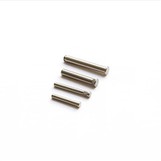
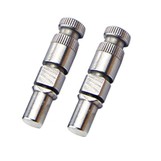
Hey there! As a supplier of hard chrome shafts, I often get asked about how to measure the hardness of these shafts. It's a crucial aspect, especially when you're looking for high - performance and long - lasting components. In this blog, I'll walk you through the different methods to measure the hardness of a hard chrome shaft.
First off, let's understand why hardness measurement is so important. A hard chrome shaft is used in a variety of applications, like in industrial machinery, automotive parts, and even in some high - end consumer products. The hardness of the shaft determines its wear resistance, corrosion resistance, and overall durability. If the shaft isn't hard enough, it'll wear out quickly, leading to frequent replacements and increased costs. On the other hand, if it's too hard, it might become brittle and prone to cracking.
One of the most common methods to measure the hardness of a hard chrome shaft is the Rockwell hardness test. This test is pretty straightforward. You use a Rockwell hardness tester, which has a diamond cone or a hardened steel ball as an indenter. The tester applies a minor load first, which sets the indenter in place. Then, a major load is applied for a specific period. After that, the major load is removed, and the difference in depth of the indentation made by the indenter under the minor and major loads is measured. This measurement is then converted into a Rockwell hardness number.

The advantage of the Rockwell test is that it's quick and relatively easy to perform. You can get a hardness reading in a matter of minutes. However, it does have some limitations. The test can be affected by the surface finish of the shaft. If the surface isn't smooth enough, the indentation might not be accurate. Also, the size and shape of the shaft can matter. For very small or oddly - shaped shafts, it might be difficult to get a proper reading.
Another popular method is the Brinell hardness test. In this test, a hardened steel or tungsten carbide ball is pressed into the surface of the shaft under a specific load for a set time. After the load is removed, the diameter of the indentation is measured. The Brinell hardness number is calculated based on the load applied and the surface area of the indentation.
The Brinell test is great for measuring the hardness of large - diameter shafts. It gives a more average hardness value over a larger area compared to the Rockwell test. But it's a bit more time - consuming. Measuring the diameter of the indentation accurately can be tricky, and it might leave a relatively large indentation on the shaft surface, which could be a problem if the shaft is going to be used in a high - precision application.
There's also the Vickers hardness test. This test uses a square - based diamond pyramid as an indenter. A load is applied to the indenter, which makes an indentation on the shaft surface. The diagonals of the indentation are measured, and the Vickers hardness number is calculated.
The Vickers test is very accurate and can be used on a wide range of materials and shaft sizes. It's less affected by surface finish compared to the Rockwell test. However, it requires a more sophisticated testing machine and a trained operator. And like the Brinell test, it can be time - consuming.
Now, when it comes to choosing the right method for your hard chrome shaft, it depends on several factors. If you're in a hurry and just need a quick estimate, the Rockwell test might be your best bet. But if you need a more accurate and detailed hardness analysis, especially for high - precision applications, the Vickers test could be the way to go.
As a hard chrome shaft supplier, I always recommend getting your shafts tested by a professional laboratory. They have the right equipment and expertise to ensure accurate results. At our company, we also perform in - house hardness testing on all our Hard Chrome Linear Shaft before they leave the factory. This ensures that our customers get the highest - quality products that meet their specific requirements.
We use state - of - the - art testing equipment and follow strict quality control procedures. Our team of experts is always on hand to answer any questions you might have about the hardness of our shafts or any other technical aspects.
If you're in the market for hard chrome shafts and want to learn more about our products, or if you have specific hardness requirements for your application, don't hesitate to reach out. We're here to help you find the perfect solution for your needs. Whether you're a small - scale manufacturer or a large industrial company, we can work with you to provide the right hard chrome shafts at a competitive price.
In conclusion, measuring the hardness of a hard chrome shaft is an important step in ensuring its quality and performance. By choosing the right testing method and working with a reliable supplier, you can be confident that you're getting a product that will last. So, if you're interested in our hard chrome shafts, just get in touch, and we'll start the conversation about how we can meet your needs.
References:
- "Materials Science and Engineering: An Introduction" by William D. Callister, Jr. and David G. Rethwisch
- "Hardness Testing of Metals" by ASM International