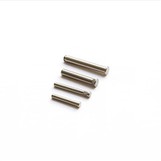
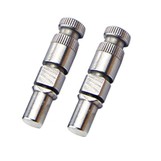
As a DC Motor Shaft supplier, I understand the critical importance of accurately measuring the torsional vibration of a DC motor shaft. Torsional vibration can have a significant impact on the performance, reliability, and lifespan of a DC motor. In this blog post, I will share some effective methods for measuring torsional vibration and explain why it matters in the context of DC motor shafts.
Why Measure Torsional Vibration?
Torsional vibration in a DC motor shaft refers to the oscillatory twisting motion around the axis of the shaft. This vibration can be caused by various factors, such as uneven loading, misalignment, gear meshing, or electrical disturbances. If left unaddressed, torsional vibration can lead to several problems, including:
- Reduced Efficiency: Torsional vibration can cause additional energy losses in the motor, leading to decreased efficiency and increased power consumption.
- Premature Wear and Tear: Excessive vibration can accelerate the wear of bearings, gears, and other components, reducing their lifespan and increasing the risk of failure.
- Noise and Vibration: Torsional vibration can generate noise and vibration, which can be a nuisance in some applications and may also indicate potential problems with the motor.
- System Instability: In some cases, torsional vibration can cause system instability, leading to erratic operation or even complete failure of the motor.
By measuring torsional vibration, we can identify potential problems early on and take appropriate measures to prevent them from causing significant damage. This can help to improve the performance, reliability, and lifespan of the DC motor, as well as reduce maintenance costs and downtime.
Methods for Measuring Torsional Vibration
There are several methods available for measuring torsional vibration in a DC motor shaft. The choice of method depends on various factors, such as the type of motor, the application, the accuracy required, and the available resources. Here are some of the most commonly used methods:
Strain Gauge Method
The strain gauge method is one of the most widely used methods for measuring torsional vibration. It involves attaching strain gauges to the surface of the shaft and measuring the changes in strain caused by the torsional deformation. Strain gauges are small, flexible sensors that change their electrical resistance when subjected to strain. By measuring the change in resistance, we can calculate the amount of strain and, hence, the torsional vibration.
The strain gauge method offers several advantages, including high accuracy, wide frequency range, and the ability to measure both static and dynamic torsional loads. However, it also has some limitations, such as the need for careful installation and calibration, the sensitivity to temperature and other environmental factors, and the potential for interference from other sources of vibration.
Optical Encoder Method
The optical encoder method involves using an optical encoder to measure the angular position and velocity of the shaft. An optical encoder is a device that uses a light source and a detector to detect the movement of a rotating shaft. By measuring the change in angular position and velocity over time, we can calculate the torsional vibration.
The optical encoder method offers several advantages, including high accuracy, non-contact measurement, and the ability to measure both static and dynamic torsional loads. However, it also has some limitations, such as the need for a clear line of sight between the encoder and the shaft, the sensitivity to dirt and dust, and the potential for interference from other sources of light.
Laser Doppler Vibrometer Method
The laser Doppler vibrometer (LDV) method involves using a laser to measure the vibration of the shaft. The LDV emits a laser beam onto the surface of the shaft and measures the Doppler shift in the frequency of the reflected light caused by the vibration of the shaft. By measuring the Doppler shift, we can calculate the vibration velocity and, hence, the torsional vibration.
The LDV method offers several advantages, including high accuracy, non-contact measurement, and the ability to measure vibration at a single point on the shaft. However, it also has some limitations, such as the need for a clear line of sight between the LDV and the shaft, the sensitivity to surface roughness and reflectivity, and the potential for interference from other sources of vibration.
Accelerometer Method
The accelerometer method involves using an accelerometer to measure the acceleration of the shaft. An accelerometer is a device that measures the acceleration of an object by detecting the force exerted on a mass inside the device. By measuring the acceleration of the shaft, we can calculate the vibration velocity and, hence, the torsional vibration.
The accelerometer method offers several advantages, including high accuracy, wide frequency range, and the ability to measure vibration in multiple directions. However, it also has some limitations, such as the need for careful installation and calibration, the sensitivity to temperature and other environmental factors, and the potential for interference from other sources of vibration.
Choosing the Right Method
When choosing a method for measuring torsional vibration, it is important to consider several factors, such as the type of motor, the application, the accuracy required, and the available resources. Here are some guidelines to help you choose the right method:
- Accuracy: The accuracy of the measurement method is one of the most important factors to consider. The required accuracy depends on the application and the level of precision needed. For example, in some applications, such as aerospace or automotive, high accuracy is essential, while in other applications, such as industrial or consumer products, a lower level of accuracy may be acceptable.
- Frequency Range: The frequency range of the measurement method is another important factor to consider. The frequency range of the torsional vibration depends on the speed of the motor and the characteristics of the load. For example, in a high-speed motor, the torsional vibration may have a high frequency, while in a low-speed motor, the torsional vibration may have a low frequency.
- Non-Contact vs. Contact Measurement: Non-contact measurement methods, such as the optical encoder and LDV methods, offer several advantages, such as the ability to measure vibration without interfering with the operation of the motor and the ability to measure vibration at a single point on the shaft. Contact measurement methods, such as the strain gauge and accelerometer methods, offer several advantages, such as the ability to measure vibration directly on the shaft and the ability to measure both static and dynamic torsional loads.
- Cost and Complexity: The cost and complexity of the measurement method are also important factors to consider. Some measurement methods, such as the strain gauge and optical encoder methods, require specialized equipment and expertise, while other measurement methods, such as the accelerometer method, are relatively simple and inexpensive.
Conclusion
Measuring torsional vibration in a DC motor shaft is an important part of ensuring the performance, reliability, and lifespan of the motor. By using the right method and taking appropriate measures to prevent torsional vibration, we can improve the efficiency, reduce maintenance costs, and increase the uptime of the motor.
As a DC Motor Shaft supplier, we offer a wide range of high-quality DC Motor Shaft products that are designed to meet the needs of various applications. We also provide technical support and advice to help our customers choose the right shaft for their specific needs and to ensure that it is installed and maintained correctly.
If you are interested in learning more about our DC Motor Shaft products or if you have any questions or concerns about measuring torsional vibration, please feel free to contact us. We would be happy to help you find the right solution for your needs.


References
- [1] "Torsional Vibration Analysis and Control in Rotating Machinery," by J. E. Shigley and C. R. Mischke.
- [2] "Measurement and Analysis of Torsional Vibration in Electric Motors," by A. J. Hanson and R. J. Keefer.
- [3] "Laser Doppler Vibrometry: Principles and Applications," by M. A. Lees and P. A. Todd.