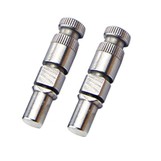
As a supplier of Drone Pitch Shafts, I've witnessed firsthand the crucial role these components play in a drone's overall performance. Aerodynamics is a key factor in determining how well a drone can fly, and optimizing the aerodynamic performance of a drone pitch shaft can significantly enhance flight efficiency, stability, and range. In this blog, I'll share some insights and strategies on how to achieve this optimization.
Understanding the Basics of Drone Pitch Shaft Aerodynamics
Before delving into optimization techniques, it's essential to understand the basic principles of aerodynamics as they apply to drone pitch shafts. The pitch shaft is responsible for controlling the tilt of the drone's rotors, which in turn affects the pitch angle of the entire aircraft. When the pitch shaft moves, it changes the angle of attack of the rotors, generating lift and thrust.
The aerodynamic performance of a pitch shaft is influenced by several factors, including its shape, surface finish, and material properties. A well-designed pitch shaft should minimize drag, which is the force that opposes the motion of the drone through the air. Reducing drag can improve the drone's efficiency, allowing it to fly longer distances on a single charge.
Shape Optimization
One of the most effective ways to optimize the aerodynamic performance of a drone pitch shaft is to carefully design its shape. A streamlined shape can significantly reduce drag by allowing the air to flow smoothly around the shaft. Here are some key considerations when designing the shape of a pitch shaft:
- Cross-Sectional Shape: The cross-sectional shape of the pitch shaft plays a crucial role in determining its aerodynamic properties. A circular cross-section is often the most efficient shape, as it minimizes the surface area exposed to the airflow. However, in some cases, an elliptical or teardrop-shaped cross-section may be more suitable, depending on the specific requirements of the drone.
- Tapered Design: A tapered pitch shaft can help to reduce drag by gradually decreasing the diameter of the shaft towards the ends. This design allows the air to flow more smoothly around the shaft, reducing turbulence and drag.
- Smooth Contours: The surface of the pitch shaft should be as smooth as possible to minimize drag. Any sharp edges or irregularities can cause turbulence, which increases drag and reduces the efficiency of the drone.
Surface Finish
In addition to shape optimization, the surface finish of the pitch shaft also has a significant impact on its aerodynamic performance. A smooth surface finish can reduce drag by allowing the air to flow more smoothly over the shaft. Here are some tips for achieving a smooth surface finish:
- Polishing: Polishing the surface of the pitch shaft can remove any roughness or imperfections, resulting in a smoother surface finish. This can be done using a variety of polishing techniques, such as mechanical polishing or chemical polishing.
- Coating: Applying a smooth coating to the surface of the pitch shaft can also help to reduce drag. There are several types of coatings available, including anti-friction coatings and hydrophobic coatings, which can improve the aerodynamic performance of the shaft.
- Surface Treatment: Surface treatments, such as anodizing or electroplating, can also be used to improve the surface finish of the pitch shaft. These treatments can provide a hard, smooth surface that is resistant to wear and corrosion.
Material Selection
The choice of material for the drone pitch shaft is another important factor in optimizing its aerodynamic performance. The material should have a high strength-to-weight ratio, as well as good aerodynamic properties. Here are some common materials used for drone pitch shafts:
- Aluminum: Aluminum is a popular choice for drone pitch shafts due to its lightweight and high strength. It also has good corrosion resistance and can be easily machined into complex shapes.
- Carbon Fiber: Carbon fiber is another lightweight and strong material that is commonly used in drone components. It has excellent stiffness and can provide a high degree of aerodynamic efficiency.
- Titanium: Titanium is a strong and lightweight material that is often used in high-performance drones. It has excellent corrosion resistance and can withstand high temperatures, making it suitable for use in harsh environments.
Testing and Validation
Once the pitch shaft has been designed and manufactured, it's important to test and validate its aerodynamic performance. This can be done using a variety of testing methods, such as wind tunnel testing and flight testing.
- Wind Tunnel Testing: Wind tunnel testing involves placing the pitch shaft in a wind tunnel and measuring the forces acting on it as the air flows over it. This can provide valuable information about the drag coefficient and other aerodynamic properties of the shaft.
- Flight Testing: Flight testing involves flying the drone with the pitch shaft installed and measuring its performance in real-world conditions. This can provide valuable information about the overall performance of the drone, including its flight efficiency, stability, and range.
Conclusion
Optimizing the aerodynamic performance of a drone pitch shaft is a complex process that requires careful consideration of several factors, including shape, surface finish, and material selection. By following the strategies outlined in this blog, you can design and manufacture a pitch shaft that provides excellent aerodynamic performance, resulting in improved flight efficiency, stability, and range for your drone.
If you're interested in learning more about our Drone Pitch Shaft products or have any questions about optimizing the aerodynamic performance of your drone, please don't hesitate to contact us. We're here to help you find the best solutions for your specific needs.


In addition to the pitch shaft, we also offer a wide range of other drone components, including Drone Roll Shaft and Drone Yaw Shaft. Our products are designed and manufactured to the highest standards of quality and performance, ensuring that you get the best possible results for your drone.
We look forward to hearing from you and working with you to optimize the performance of your drone.
References
- Anderson, J. D. (2017). Fundamentals of Aerodynamics. McGraw-Hill Education.
- Raymer, D. P. (2012). Aircraft Design: A Conceptual Approach. AIAA Education Series.
- Sforza, P. M. (2008). Flight Vehicle Aerodynamics. AIAA Education Series.