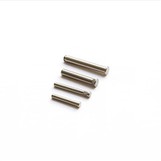
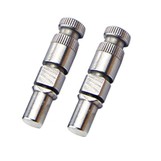
In the realm of high - speed machinery and equipment, fixed shafts play a crucial role. As a fixed shaft supplier, I have witnessed firsthand the challenges that fixed shafts face in high - speed environments. In this blog, I will delve into the limitations of fixed shafts in high - speed scenarios and offer practical solutions to overcome them.
Understanding the Limitations of Fixed Shafts in High - Speed Environments
1. Vibration and Noise
One of the most prominent limitations of fixed shafts in high - speed environments is the generation of excessive vibration and noise. At high rotational speeds, even the slightest imbalance in the shaft can cause significant vibrations. These vibrations not only lead to increased noise levels but can also cause premature wear and tear on the shaft and other components in the system. For instance, in a high - speed motor, a vibrating fixed shaft can cause the bearings to wear out faster, leading to frequent maintenance and replacement.
2. Heat Generation
High - speed rotation generates a substantial amount of heat. Fixed shafts are often subjected to frictional forces at the points of contact with bearings and other components. This friction, combined with the high - speed rotation, can cause the temperature of the shaft to rise rapidly. Excessive heat can have detrimental effects on the material properties of the shaft, such as reducing its strength and hardness. Over time, this can lead to deformation of the shaft, which can compromise the overall performance of the machinery.


3. Material Fatigue
In high - speed applications, fixed shafts are constantly under cyclic loading. The repeated stress cycles can lead to material fatigue. Micro - cracks can form on the surface of the shaft, and over time, these cracks can propagate and cause the shaft to fail. Material fatigue is a serious concern, especially in industries where reliability and safety are of utmost importance, such as aerospace and automotive.
4. Limited Precision
Maintaining precision is a challenge in high - speed environments. As the shaft rotates at high speeds, factors such as thermal expansion, vibration, and material wear can affect its dimensional accuracy. This lack of precision can lead to misalignment in the machinery, which can cause further problems such as reduced efficiency and increased wear on other components.
Solutions to Overcome the Limitations
1. Balancing the Shaft
To reduce vibration and noise, proper balancing of the fixed shaft is essential. Balancing involves adding or removing material from the shaft to ensure that its center of mass coincides with its axis of rotation. There are two main types of balancing: static balancing and dynamic balancing. Static balancing is suitable for low - speed applications, while dynamic balancing is required for high - speed shafts. By using advanced balancing equipment and techniques, we can achieve a high level of balance, which significantly reduces vibration and noise levels.
2. Heat Dissipation
To address the issue of heat generation, effective heat dissipation methods need to be employed. One common approach is to use high - performance lubricants. Lubricants not only reduce friction between the shaft and the bearings but also help in dissipating heat. Additionally, we can design the shaft with cooling channels or use external cooling systems such as fans or liquid cooling. For example, in some high - speed industrial motors, liquid - cooled shafts are used to maintain a stable operating temperature.
3. Material Selection and Treatment
Choosing the right material is crucial for overcoming material fatigue. High - strength and fatigue - resistant materials such as alloy steels are often preferred for high - speed applications. These materials have excellent mechanical properties and can withstand the cyclic loading associated with high - speed rotation. Moreover, proper heat treatment processes such as quenching and tempering can further enhance the material's strength and hardness. At our company, we offer a wide range of Stainless Steel Fixed Shaft options, which are known for their corrosion resistance and high strength, making them suitable for high - speed environments.
4. Precision Manufacturing
To ensure high precision, advanced manufacturing techniques need to be employed. Computer Numerical Control (CNC) machining is a popular method for manufacturing fixed shafts with high accuracy. CNC machines can precisely control the cutting tools, resulting in shafts with tight tolerances. Additionally, we can use precision grinding and honing processes to further improve the surface finish and dimensional accuracy of the shaft. Our Precision Fixed Shaft products are manufactured using state - of - the - art CNC technology, ensuring the highest level of precision.
5. Monitoring and Maintenance
Regular monitoring and maintenance are essential for the long - term performance of fixed shafts in high - speed environments. We can use sensors to monitor parameters such as temperature, vibration, and shaft displacement. By analyzing the data collected from these sensors, we can detect potential problems early and take preventive measures. For example, if the temperature of the shaft exceeds a certain threshold, we can adjust the cooling system or shut down the machinery to prevent damage.
The Role of a Reliable Fixed Shaft Supplier
As a fixed shaft supplier, we play a vital role in helping our customers overcome the limitations of fixed shafts in high - speed environments. We have the expertise and resources to provide high - quality shafts that are designed to meet the specific requirements of high - speed applications. Our team of engineers can work closely with customers to understand their needs and recommend the most suitable materials, manufacturing processes, and solutions.
We also offer comprehensive after - sales support, including installation guidance, maintenance training, and technical assistance. By partnering with a reliable fixed shaft supplier, customers can ensure the reliability and performance of their machinery in high - speed environments.
Conclusion
In conclusion, fixed shafts face several limitations in high - speed environments, including vibration, heat generation, material fatigue, and limited precision. However, by implementing the right solutions such as balancing the shaft, improving heat dissipation, selecting the appropriate materials, using precision manufacturing techniques, and conducting regular monitoring and maintenance, these limitations can be overcome. As a fixed shaft supplier, we are committed to providing our customers with high - quality shafts and innovative solutions to meet the challenges of high - speed applications.
If you are in need of high - performance fixed shafts for your high - speed machinery, we invite you to contact us for a detailed discussion. Our team of experts will be happy to assist you in finding the best solutions for your specific needs.
References
- "Mechanical Design of Machine Elements and Machines: A Failure - Prevention Perspective" by Juvinall and Marshek
- "Fundamentals of Machine Elements" by Robert C. Juvinall and Kurt M. Marshek
- "Vibration Analysis for Machinery: An Introduction" by Peter Avitabile