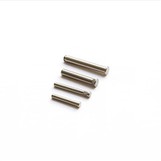
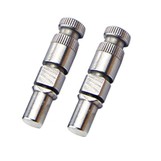
Rotating shafts are essential components in various industrial applications, from automotive engines and power generators to manufacturing machinery. However, vibration in rotating shafts can lead to a multitude of problems, including premature wear and tear, reduced efficiency, and even catastrophic failures. As a rotating shaft supplier, we understand the significance of minimizing shaft vibration to ensure the optimal performance and longevity of your equipment. In this blog post, we will explore the causes of shaft vibration and provide practical solutions to reduce it.
Understanding the Causes of Shaft Vibration
Before delving into the solutions, it is crucial to understand the root causes of shaft vibration. The primary factors contributing to shaft vibration include:
1. Imbalance
Imbalance occurs when the mass distribution around the shaft's axis is uneven. This can be due to manufacturing errors, wear and tear, or the accumulation of dirt and debris on the shaft. Even a small amount of imbalance can generate significant centrifugal forces, leading to vibration.
2. Misalignment
Misalignment refers to the improper positioning of the shaft relative to other components, such as bearings, couplings, or gears. It can be either angular or parallel misalignment. Misalignment causes additional forces and stresses on the shaft, resulting in vibration and premature wear of the components.
3. Resonance
Resonance is a phenomenon that occurs when the natural frequency of the shaft coincides with the frequency of the exciting force. When this happens, the amplitude of the vibration increases significantly, potentially causing severe damage to the shaft and other components.
4. Bearing Issues
Worn or damaged bearings can also cause shaft vibration. Bearings support the shaft and allow it to rotate smoothly. If the bearings are not functioning properly, they can introduce additional forces and vibrations into the system.
5. Aerodynamic or Hydrodynamic Forces
In some applications, such as fans, pumps, and turbines, aerodynamic or hydrodynamic forces can cause shaft vibration. These forces can be generated by the flow of air or fluid around the shaft and can be particularly problematic at high speeds.
Solutions to Reduce Shaft Vibration
Now that we have identified the main causes of shaft vibration, let's explore the practical solutions to reduce it.


1. Balancing the Shaft
Balancing is the most common and effective method for reducing shaft vibration caused by imbalance. There are two main types of balancing: static balancing and dynamic balancing.
- Static Balancing: Static balancing is used to correct the imbalance in a stationary shaft. It involves adding or removing weight from the shaft to ensure that its center of gravity is aligned with its axis of rotation. Static balancing is typically used for slow-speed applications or shafts with a relatively small diameter.
- Dynamic Balancing: Dynamic balancing is used to correct the imbalance in a rotating shaft. It involves measuring the vibration of the shaft at different speeds and positions and then adding or removing weight to the shaft to minimize the vibration. Dynamic balancing is more accurate and effective than static balancing and is typically used for high-speed applications or shafts with a large diameter.
As a rotating shaft supplier, we offer precision balancing services to ensure that your shafts are balanced to the highest standards. Our state-of-the-art balancing equipment and experienced technicians can accurately measure and correct any imbalance in your shafts, reducing vibration and improving the performance of your equipment.
2. Aligning the Shaft
Proper alignment is essential for reducing shaft vibration caused by misalignment. There are several methods for aligning shafts, including:
- Laser Alignment: Laser alignment is a precise and efficient method for aligning shafts. It involves using a laser beam to measure the position of the shaft relative to other components and then making the necessary adjustments to ensure proper alignment.
- Dial Indicator Alignment: Dial indicator alignment is a traditional method for aligning shafts. It involves using a dial indicator to measure the position of the shaft relative to other components and then making the necessary adjustments to ensure proper alignment.
As a rotating shaft supplier, we can provide you with alignment services and tools to ensure that your shafts are properly aligned. Our experienced technicians can use the latest alignment techniques and equipment to ensure that your shafts are aligned to the highest standards, reducing vibration and improving the performance of your equipment.
3. Avoiding Resonance
To avoid resonance, it is important to ensure that the natural frequency of the shaft is well away from the frequency of the exciting force. This can be achieved by:
- Changing the Shaft Design: The natural frequency of the shaft can be changed by altering its length, diameter, or material. By changing the shaft design, you can shift the natural frequency of the shaft away from the frequency of the exciting force, reducing the risk of resonance.
- Adding Dampers: Dampers are devices that are used to absorb and dissipate the energy of the vibration. By adding dampers to the shaft, you can reduce the amplitude of the vibration and prevent resonance from occurring.
As a rotating shaft supplier, we can work with you to design and manufacture shafts that are less prone to resonance. Our engineers have extensive experience in shaft design and can use advanced simulation tools to optimize the shaft design and ensure that it meets your specific requirements.
4. Maintaining the Bearings
Proper bearing maintenance is essential for reducing shaft vibration caused by bearing issues. This includes:
- Regular Inspection: Regularly inspecting the bearings for wear, damage, and contamination can help to identify and address any issues before they cause significant problems.
- Lubrication: Proper lubrication is essential for the smooth operation of the bearings. Make sure to use the correct type and amount of lubricant and to change the lubricant at the recommended intervals.
- Replacement: If the bearings are worn or damaged, they should be replaced immediately. Using worn or damaged bearings can lead to increased vibration and premature failure of the shaft and other components.
As a rotating shaft supplier, we can provide you with high-quality bearings and bearing maintenance services to ensure that your bearings are functioning properly. Our experienced technicians can inspect, lubricate, and replace your bearings as needed, reducing vibration and improving the performance of your equipment.
5. Minimizing Aerodynamic or Hydrodynamic Forces
In applications where aerodynamic or hydrodynamic forces are a concern, it is important to minimize these forces to reduce shaft vibration. This can be achieved by:
- Optimizing the Design: The design of the fan, pump, or turbine can be optimized to reduce the aerodynamic or hydrodynamic forces acting on the shaft. This can include changing the shape of the blades, adjusting the pitch angle, or using a different type of impeller.
- Using Anti-Vibration Mounts: Anti-vibration mounts can be used to isolate the shaft from the aerodynamic or hydrodynamic forces. These mounts absorb and dissipate the energy of the vibration, reducing the amplitude of the vibration and preventing it from being transmitted to the shaft.
As a rotating shaft supplier, we can work with you to design and manufacture shafts that are less affected by aerodynamic or hydrodynamic forces. Our engineers have extensive experience in fluid dynamics and can use advanced simulation tools to optimize the design of your equipment and reduce the vibration caused by these forces.
Conclusion
Reducing shaft vibration is essential for ensuring the optimal performance and longevity of your equipment. By understanding the causes of shaft vibration and implementing the appropriate solutions, you can minimize vibration, reduce wear and tear, and improve the efficiency of your equipment.
As a rotating shaft supplier, we are committed to providing our customers with high-quality rotating shafts and comprehensive solutions to reduce shaft vibration. Our precision rotating shafts are designed and manufactured to the highest standards, using the latest technology and materials. We also offer a range of services, including balancing, alignment, and bearing maintenance, to ensure that your shafts are operating at their best.
If you are looking for a reliable rotating shaft supplier or need help reducing the vibration of your rotating shafts, please contact us. Our team of experts will be happy to assist you and provide you with the solutions you need.
References
- Harris, T. A., & Kotzalas, M. N. (2007). Rolling Bearing Analysis. Wiley-Interscience.
- Shigley, J. E., Mischke, C. R., & Budynas, R. G. (2004). Mechanical Engineering Design. McGraw-Hill.
- Vance, J. M. (1988). Rotordynamics of Turbomachinery. Wiley-Interscience.