Hey there! As a rotating shaft supplier, I've seen firsthand the wide range of applications these nifty components have. So, let's dive right in and explore where rotating shafts are used in our everyday lives and in various industries.
Automotive Industry
One of the biggest users of rotating shafts is the automotive industry. In cars, rotating shafts play a crucial role in the engine. The crankshaft, for example, is a type of rotating shaft that converts the linear motion of the pistons into rotational motion. This rotational motion is then transferred to the transmission and ultimately to the wheels, making your car move. Without a properly functioning crankshaft, your car wouldn't go anywhere!
Another important application in cars is the driveshaft. The driveshaft transfers power from the transmission to the differential, which then distributes the power to the wheels. It has to be strong and durable to withstand the high torque and rotational speeds involved. And of course, the steering column also contains a rotating shaft. This shaft allows you to turn the steering wheel and control the direction of your vehicle.
Manufacturing and Machinery
In the manufacturing world, rotating shafts are everywhere. Machine tools like lathes, milling machines, and drills rely on rotating shafts to perform their functions. The spindle in a lathe, for instance, is a rotating shaft that holds the workpiece and rotates it at high speeds while the cutting tool shapes the material. This enables precise machining of parts with different shapes and sizes.
Conveyor systems also use rotating shafts. The shafts are connected to the conveyor belts and drive their movement. They ensure that products are transported smoothly from one part of the factory to another. In addition, pumps and compressors often have rotating shafts. These shafts are used to drive the impellers or pistons, which create the pressure needed to move fluids or gases.
Aerospace Industry
The aerospace industry demands the highest level of precision and reliability, and rotating shafts are no exception. In aircraft engines, rotating shafts are used to drive the compressor and turbine sections. The compressor shaft rotates at extremely high speeds to compress the incoming air, while the turbine shaft extracts energy from the hot exhaust gases to drive the compressor and other engine components.
Flight control systems also rely on rotating shafts. The control surfaces of an aircraft, such as the ailerons, elevators, and rudders, are actuated by rotating shafts connected to the control mechanisms. These shafts allow the pilot to control the aircraft's attitude and direction during flight.
Power Generation
Power plants, whether they're using fossil fuels, nuclear energy, or renewable sources like wind and hydro, all use rotating shafts. In a steam turbine, for example, high - pressure steam is directed onto the turbine blades, causing the turbine shaft to rotate. This rotational motion is then converted into electrical energy by a generator.
Wind turbines also have large rotating shafts. The blades of the wind turbine capture the kinetic energy of the wind and transfer it to the shaft. The shaft then drives the generator to produce electricity. Hydroelectric power plants use water turbines, which also rely on rotating shafts to convert the energy of flowing water into electrical power.
Consumer Goods
Even in our daily lives, we encounter rotating shafts in many consumer goods. Electric fans have a rotating shaft that drives the fan blades, creating a flow of air. Hair dryers also use a small rotating shaft to power the fan that blows hot air.
In home appliances like washing machines and dryers, rotating shafts are used to drive the drums. The shafts rotate the drums at different speeds to agitate the clothes during the washing process and spin them dry.
Medical Equipment
Medical equipment also benefits from the use of rotating shafts. Surgical drills, for example, have a rotating shaft that drives the drill bit. This allows surgeons to make precise holes in bones during orthopedic surgeries. Dental drills also use rotating shafts to perform various dental procedures, such as drilling cavities and shaping teeth.
Imaging equipment like CT scanners and MRI machines may also contain rotating shafts. These shafts are used to move the imaging components, ensuring accurate and detailed scans of the patient's body.
Precision Rotating Shaft
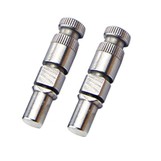
If you're looking for high - quality rotating shafts, you might want to check out our Precision Rotating Shaft. We offer a wide range of precision rotating shafts that are designed to meet the specific requirements of different industries. Our shafts are made from high - quality materials and are manufactured using advanced machining techniques to ensure excellent performance and reliability.
Why Choose Us?
As a rotating shaft supplier, we understand the importance of quality and precision. We have a team of experienced engineers and technicians who are dedicated to producing the best rotating shafts on the market. We use state - of - the - art equipment and strict quality control measures to ensure that every shaft we produce meets or exceeds industry standards.
We also offer customized solutions. Whether you need a unique size, shape, or material for your rotating shaft, we can work with you to design and manufacture the perfect solution. Our goal is to provide our customers with the best products and services, and we're committed to building long - term relationships with our clients.


Let's Connect
If you're in the market for rotating shafts, we'd love to hear from you. Whether you have a specific project in mind or just want to learn more about our products, feel free to reach out. We're always happy to answer your questions and provide you with a quote. Don't hesitate to contact us for all your rotating shaft needs. We're confident that we can provide you with the high - quality rotating shafts that your business requires.
References
- Smith, J. (2018). Machinery Handbook. Industrial Press Inc.
- Johnson, R. (2020). Automotive Engineering Fundamentals. SAE International.
- Brown, A. (2019). Aerospace Engineering Principles. Cambridge University Press.