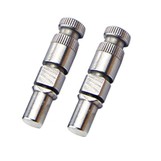
As a seasoned supplier of robot shafts, I've witnessed firsthand the critical role that connection types play in the functionality and performance of robotic systems. The connection between the robot shaft and other components is not just a mechanical link; it's a crucial factor that can determine the efficiency, precision, and overall reliability of the robot. In this blog, I'll delve into the different connection types for a robot shaft, exploring their characteristics, applications, and advantages.
Key Considerations in Selecting Shaft Connection Types
Before we explore the different connection types, it's important to understand several key factors that should influence your choice. These factors include the torque and rotational speed requirements of your application. Applications with high torque demand may require more robust connection methods that can handle the stress without slipping or failing. Rotational speed also plays a role, as high-speed applications may need connections that offer minimal vibration and balanced weight distribution to ensure smooth operation.
Another critical consideration is the precision and accuracy needed in your robotic operations. Precision tasks, such as those in the electronics manufacturing or aerospace industries, call for connection types that can maintain tight tolerances and minimize backlash.
The environment in which the robot operates is also vital. Harsh conditions, including high temperatures, excessive moisture, or the presence of chemicals, can degrade certain connection materials and affect their performance over time. Materials and connection types resistant to these environmental factors should be selected accordingly.
Common Connection Types for Robot Shafts
1. Couplings
Couplings are widely used to connect the robot shaft to other components, such as motors or gearboxes. They serve as a flexible link that can accommodate misalignments between the two shafts while transmitting torque efficiently. There are several types of couplings, each with its own unique features and applications.
- Flexible Couplings: These couplings are designed to compensate for various types of misalignments, including angular, parallel, and axial misalignments. They are made from materials such as rubber or elastomers, which provide flexibility and dampen vibrations. Flexible couplings are commonly used in applications where precise alignment is difficult to achieve or where there is a need to reduce shock and vibration.
- Rigid Couplings: In contrast to flexible couplings, rigid couplings provide a solid connection between the shafts without any flexibility. They are used in applications where precise alignment is critical and where there is no need to compensate for misalignments. Rigid couplings are typically made from materials such as steel or aluminum and are suitable for high-torque applications.
- Oldham Couplings: Oldham couplings are designed to accommodate parallel misalignments between the shafts. They consist of three discs: two outer discs that are connected to the shafts and a middle disc that slides between the outer discs. Oldham couplings are commonly used in applications where there is a need for high torque transmission and a small amount of parallel misalignment.
2. Keyed Connections
Keyed connections are a traditional and widely used method of connecting a robot shaft to a hub or other component. A key is a small, rectangular piece of metal that is inserted into a keyway, which is a groove cut into the shaft and the hub. The key prevents the shaft from rotating relative to the hub, ensuring a positive and secure connection.
- Square Keys: Square keys are the most common type of key used in keyed connections. They are easy to manufacture and install and provide a reliable connection for a wide range of applications. Square keys are typically used in applications where the torque requirements are moderate.
- Woodruff Keys: Woodruff keys are semicircular in shape and are used in applications where the shaft has a small diameter. They are easy to install and provide a good fit in the keyway, but they are not suitable for high-torque applications.
- Feather Keys: Feather keys are similar to square keys, but they are longer and have a smaller cross-sectional area. They are used in applications where the shaft needs to slide axially relative to the hub, such as in a gearbox or a clutch.
3. Splined Connections
Splined connections are another type of connection that is commonly used in robot shafts. A spline is a series of ridges or teeth that are cut into the shaft and the hub. The splines mesh together, providing a positive and secure connection that can transmit high torque.
- Parallel Splines: Parallel splines are the most common type of spline used in splined connections. They have straight teeth that are parallel to the axis of the shaft. Parallel splines are easy to manufacture and provide a reliable connection for a wide range of applications.
- Involute Splines: Involute splines have curved teeth that are designed to provide a better fit and a more efficient transfer of torque. They are commonly used in applications where the torque requirements are high and where there is a need for precise alignment.
- Helical Splines: Helical splines have teeth that are helically shaped, which allows them to transmit torque more smoothly and efficiently. They are commonly used in applications where there is a need for high-speed rotation and a small amount of axial movement.
4. Shrink Fits
Shrink fits are a method of connecting a robot shaft to a hub by heating the hub and then cooling it while it is in contact with the shaft. The hub contracts as it cools, creating a tight and secure fit around the shaft. Shrink fits are commonly used in applications where the torque requirements are high and where there is a need for a precise and permanent connection.
The advantages of shrink fits include their high strength, their ability to transmit high torque, and their resistance to vibration and shock. However, shrink fits require special equipment and expertise to install, and they can be difficult to remove if necessary.
Applications and Benefits of Different Connection Types
Each connection type offers unique benefits that make it suitable for specific applications. Couplings are ideal for scenarios where misalignment compensation and vibration dampening are required. For instance, in robotic arms used for pick-and-place operations, flexible couplings can absorb the shock and vibration caused by sudden movements, prolonging the lifespan of the components and reducing maintenance costs.

Keyed connections are valued for their simplicity and reliability. They are commonly used in traditional industrial robots, such as those in automotive manufacturing plants, where moderate torque transmission and easy installation are essential. Splined connections, on the other hand, excel in high-torque and high-precision applications. In robotic milling or drilling machines, splines ensure accurate power transmission and maintain the alignment of the cutting tool, resulting in high-quality finished products.
Shrink fits are the go-to choice for applications that demand a permanent and robust connection. In heavy-duty robotic systems, such as those used in mining or construction, shrink fits can withstand extreme loads and harsh operating conditions, providing long-term reliability.
Conclusion
In conclusion, choosing the right connection type for a robot shaft is a critical decision that can significantly impact the performance and reliability of a robotic system. As a robot shaft supplier, we understand the importance of providing our customers with high-quality products and expert advice on connection types. Whether you need a flexible coupling for a precision application or a shrink fit for a high-torque environment, we have the expertise and the products to meet your needs.
If you're interested in learning more about our Robot Main Shaft products or need assistance in selecting the right connection type for your robot shaft, please don't hesitate to contact us. Our team of experienced engineers is ready to help you find the best solution for your specific requirements. Let's work together to ensure the success of your robotic applications.
References
- Oberg, E., Jones, F. D., Horton, H. L., & Ryffel, H. H. (2016). Machinery's Handbook: A Reference Book for the Mechanical Engineer, Designer, Manufacturing Engineer, Draftsman, Toolmaker, and Machinist. Industrial Press Inc.
- Shigley, J. E., Mischke, C. R., & Budynas, R. G. (2003). Mechanical Engineering Design. McGraw-Hill.
- Mangialardi, L. (2014). Machine Elements: Handbook for Design and Calculation. Springer.