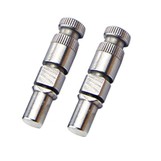
Hey there! As a supplier of fixed shafts, I've been in the game for quite a while. I know how crucial it is to ensure the quality of these parts. In this blog, I'm gonna share with you the inspection methods for a new fixed shaft.
Visual Inspection
The first step in inspecting a new fixed shaft is a simple visual check. You'd be surprised how much you can tell just by looking. Start by examining the surface of the shaft. It should be free from any obvious cracks, scratches, or dents. Cracks can weaken the shaft and lead to failure under stress, while scratches might cause issues with the fit and function of the shaft in its intended application.
Look for any signs of unevenness or warping. A warped shaft won't perform as expected and can cause problems in the machinery it's a part of. Also, pay attention to the finish of the shaft. A smooth finish is usually a good sign of quality manufacturing. If you notice any rough spots or areas where the finish seems inconsistent, it could be a red flag.
Dimensional Inspection
Accurate dimensions are key when it comes to fixed shafts. You need to make sure the shaft meets the specified size requirements. This involves using precision measuring tools like calipers, micrometers, and gauges.
Measure the diameter of the shaft at several points along its length. Any variation in diameter can affect how the shaft fits into its housing or mates with other components. Check the length of the shaft as well. A shaft that's too long or too short can cause assembly issues.
For shafts with keyways or splines, you'll need to measure the width, depth, and location of these features. Incorrect keyway or spline dimensions can prevent the shaft from transmitting torque properly.
Material Inspection
The material of the fixed shaft plays a huge role in its performance and durability. There are a few ways to inspect the material.
One common method is hardness testing. You can use a hardness tester to determine the hardness of the shaft. Different applications require different levels of hardness. For example, a shaft used in a high - stress environment might need to be harder to resist wear and deformation.
Another aspect is the material composition. You can use techniques like spectroscopy to analyze the elements present in the shaft. This helps ensure that the shaft is made from the correct material. For instance, if you're expecting a Precision Fixed Shaft made from a specific alloy, the material analysis can confirm if it meets the specifications.
Surface Roughness Inspection
The surface roughness of a fixed shaft can have a significant impact on its performance. A rough surface can increase friction, wear, and noise. To measure surface roughness, you can use a surface profilometer.
This device measures the microscopic peaks and valleys on the surface of the shaft. The results are usually expressed in terms of roughness average (Ra). A lower Ra value indicates a smoother surface. Depending on the application, there are specific surface roughness requirements. For example, a shaft used in a high - speed rotating application might need a very smooth surface to reduce friction and heat generation.
Straightness Inspection
A straight shaft is essential for proper operation. There are a few ways to check the straightness of a fixed shaft.
One method is to use a straightedge. Place the straightedge along the length of the shaft and look for any gaps between the straightedge and the shaft. If there are gaps, it means the shaft is not straight.
Another more precise method is using a laser alignment system. This system can measure the straightness of the shaft with high accuracy. It's especially useful for long shafts or shafts with tight straightness tolerances.
Balance Inspection
For fixed shafts that rotate, balance is crucial. An unbalanced shaft can cause vibration, which can lead to premature wear of the shaft and other components, as well as noise and reduced performance.
To check the balance of a shaft, you can use a balancing machine. This machine rotates the shaft at a high speed and measures the amount and location of any imbalance. Based on the results, you can add or remove material from the shaft to correct the imbalance.
Fatigue Resistance Inspection
Fixed shafts are often subjected to cyclic loading, which can lead to fatigue failure over time. To assess the fatigue resistance of a new shaft, you can perform fatigue testing.
This involves subjecting the shaft to repeated loading cycles in a testing machine. The number of cycles and the magnitude of the load are determined based on the expected operating conditions of the shaft. By monitoring the shaft during the test, you can detect any signs of fatigue, such as cracks or deformation.
Corrosion Resistance Inspection
If the fixed shaft is going to be used in a corrosive environment, it's important to check its corrosion resistance. You can perform salt spray tests or immersion tests.
In a salt spray test, the shaft is placed in a chamber where it's exposed to a fine mist of saltwater. After a certain period of time, you check the shaft for signs of corrosion, such as rust or pitting.
In an immersion test, the shaft is submerged in a corrosive solution for a specified time. This test can give you an idea of how well the shaft will withstand long - term exposure to a particular corrosive environment.
Conclusion
Inspecting a new fixed shaft is a multi - step process that involves checking various aspects of the shaft, from its appearance to its performance under different conditions. By using these inspection methods, you can ensure that the Stainless Steel Fixed Shaft or any other type of fixed shaft you're offering meets the highest quality standards.


If you're in the market for high - quality fixed shafts and want to discuss your specific requirements, feel free to reach out. We're here to help you find the perfect solution for your needs.
References
- Machinery's Handbook
- ASME Standards for Shaft Design and Inspection
- ISO Standards for Material Testing and Surface Finish