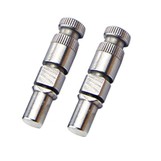
In the intricate world of mechanical engineering, rotating shafts play a pivotal role. As a seasoned rotating shaft supplier, I've witnessed firsthand the significance of adhering to international standards. These standards not only ensure the quality and reliability of rotating shafts but also facilitate seamless integration within diverse mechanical systems across the globe.
Key International Standards for Rotating Shafts
ISO Standards
The International Organization for Standardization (ISO) has developed a comprehensive set of standards that govern various aspects of rotating shafts. ISO 286 specifies the tolerances for linear sizes, which are crucial for the dimensional accuracy of rotating shafts. This standard ensures that the shafts are manufactured within precise limits, allowing for proper fit and function within the mating components. For example, in a high - speed motor, the shaft's diameter tolerance must be tightly controlled to prevent vibrations and premature wear.
ISO 1101 focuses on geometric tolerancing, which includes form, orientation, location, and run - out tolerances. These tolerances are essential for maintaining the straightness, roundness, and concentricity of the rotating shaft. A shaft with poor geometric accuracy can lead to uneven loading, increased friction, and ultimately, mechanical failure.
ANSI/ASME Standards
In the United States, the American National Standards Institute (ANSI) and the American Society of Mechanical Engineers (ASME) have established standards that are widely recognized in the industry. ANSI/ASME B18.3 covers the design and dimensions of keyways and keys used in rotating shafts. Keyways and keys are critical for transmitting torque between the shaft and the attached components, such as gears or pulleys. By following these standards, manufacturers can ensure a proper and secure connection, reducing the risk of slippage.
ANSI/ASME B4.1 and B4.2 deal with the general tolerances for machining processes. These standards provide guidelines for the allowable variations in dimensions and surface finishes during the manufacturing of rotating shafts. They help manufacturers strike a balance between cost - effective production and the required level of precision.
DIN Standards
In Germany, the Deutsches Institut für Normung (DIN) has developed a series of standards for rotating shafts. DIN 7190 specifies the dimensions and tolerances for splined shafts. Splines are used to transmit high torques and allow for axial movement between the shaft and the mating part. The DIN standards ensure that splined shafts are interchangeable and can be used in a wide range of applications, from automotive transmissions to industrial machinery.
DIN 6784 focuses on the surface roughness of mechanical parts, including rotating shafts. A proper surface finish is essential for reducing friction, improving lubrication, and preventing corrosion. By adhering to the DIN surface roughness standards, manufacturers can enhance the performance and longevity of rotating shafts.
Importance of Adhering to International Standards
Quality Assurance
International standards act as a benchmark for quality. When a rotating shaft is manufactured according to these standards, it undergoes a series of rigorous inspections and tests. This ensures that the shaft meets the specified requirements in terms of dimensions, material properties, and performance. For example, a shaft that complies with ISO standards for dimensional accuracy is more likely to fit correctly into the intended application, reducing the need for costly rework or replacement.
Compatibility and Interchangeability
One of the main advantages of international standards is that they promote compatibility and interchangeability. When different manufacturers follow the same standards, their rotating shafts can be used interchangeably in various mechanical systems. This is particularly important in the global market, where components from different suppliers may be integrated into a single machine. For instance, a gearbox manufacturer can source rotating shafts from multiple suppliers, knowing that they will all meet the same quality and dimensional standards.
Safety
Rotating shafts are often used in high - speed and high - torque applications, where safety is of utmost importance. International standards incorporate safety requirements, such as the minimum wall thickness for hollow shafts and the proper design of shaft couplings. By following these standards, manufacturers can minimize the risk of shaft failure, which could lead to serious accidents and injuries. For example, a shaft coupling that meets the ANSI/ASME safety standards is less likely to break under normal operating conditions, protecting the operators and the equipment.
Our Commitment as a Rotating Shaft Supplier
As a rotating shaft supplier, we are fully committed to adhering to international standards. Our manufacturing processes are designed to meet the strictest requirements of ISO, ANSI/ASME, DIN, and other relevant standards. We use state - of - the - art equipment and advanced manufacturing techniques to ensure the highest level of precision and quality in our rotating shafts.
We offer a wide range of rotating shafts, including Precision Rotating Shaft. Our precision rotating shafts are engineered to meet the most demanding applications, where accuracy and reliability are critical. Whether you need a shaft for a small - scale laboratory instrument or a large - scale industrial machine, we have the expertise and capabilities to provide a customized solution.
Our team of experienced engineers and technicians conducts thorough inspections at every stage of the manufacturing process. We use advanced metrology equipment, such as coordinate measuring machines (CMMs), to verify the dimensions and geometric tolerances of our rotating shafts. In addition, we perform material testing to ensure that the shafts are made from high - quality materials with the appropriate mechanical properties.
Contact Us for Your Rotating Shaft Needs
If you are in the market for high - quality rotating shafts that meet international standards, look no further. As a trusted rotating shaft supplier, we are dedicated to providing you with the best products and services. Our team of experts can work with you to understand your specific requirements and recommend the most suitable rotating shaft solution for your application.
Whether you need a standard off - the - shelf shaft or a custom - designed one, we have the capabilities to meet your needs. We offer competitive pricing, fast turnaround times, and excellent customer support. To start a conversation about your rotating shaft requirements, please feel free to reach out to us. We look forward to working with you and helping you achieve your mechanical engineering goals.


References
- International Organization for Standardization (ISO). ISO 286, ISO 1101.
- American National Standards Institute (ANSI) and American Society of Mechanical Engineers (ASME). ANSI/ASME B18.3, ANSI/ASME B4.1, ANSI/ASME B4.2.
- Deutsches Institut für Normung (DIN). DIN 7190, DIN 6784.