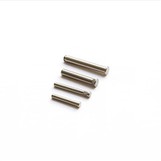
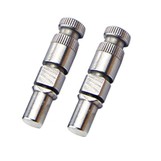
Hey there! I'm a supplier of eccentric shafts, and today I'm gonna dive into the precision - machining methods for these nifty components. Eccentric shafts are pretty crucial in various mechanical systems, from automotive engines to industrial machinery. They're designed with a non - centered axis, which gives them unique functions. So, let's get right into how we can machine them with high precision.
Turning
One of the most common precision - machining methods for an eccentric shaft is turning. Turning is a process where a cutting tool is used to remove material from a rotating workpiece. When it comes to eccentric shafts, the key is to set up the workpiece accurately on the lathe.
First off, we need to use a special chuck or fixture to hold the shaft. There are different types of chucks, like four - jaw independent chucks, which allow us to adjust each jaw independently. This is super handy for setting the correct eccentricity. Once the shaft is secured, we use a single - point cutting tool to remove material from the outer surface of the shaft.
To achieve high precision, we have to control the depth of cut, feed rate, and cutting speed carefully. The depth of cut determines how much material is removed in each pass, the feed rate is how fast the cutting tool moves along the workpiece, and the cutting speed is the speed at which the workpiece rotates. By fine - tuning these parameters, we can create a smooth and accurate surface finish on the eccentric shaft. For more info on high - quality eccentric shafts, check out Precision Eccentric Shaft.
Milling
Milling is another great option for machining eccentric shafts. In milling, a rotating multi - point cutting tool is used to remove material from the workpiece. There are two main types of milling: face milling and peripheral milling.
Face milling is used to create flat surfaces on the shaft, while peripheral milling is used to cut the outer diameter or create grooves. When milling an eccentric shaft, we can use a CNC (Computer Numerical Control) milling machine. This allows us to program the machine to follow a specific path, which is essential for achieving the correct eccentricity.
The advantage of using a CNC milling machine is that it can perform complex operations with high precision. We can input the exact dimensions and the required eccentricity into the machine's control system, and it will do the rest. However, we still need to select the right cutting tools and cutting parameters. For example, the type of milling cutter, the number of teeth on the cutter, and the cutting speed and feed rate all affect the quality of the finished product. You can find some great stainless - steel eccentric shafts at Stainless Steel Eccentric Shaft.
Grinding
Grinding is a precision - finishing process that can be used to achieve extremely high accuracy and surface finish on an eccentric shaft. In grinding, an abrasive wheel is used to remove a small amount of material from the workpiece.
There are different types of grinding processes, such as cylindrical grinding and centerless grinding. Cylindrical grinding is used when the shaft has a cylindrical shape, and we want to improve its roundness and surface finish. We mount the shaft between centers on the grinding machine and rotate it while the abrasive wheel moves along the surface of the shaft.
Centerless grinding, on the other hand, doesn't require the shaft to be centered between centers. Instead, the shaft is supported by a regulating wheel and a work rest blade. This process is great for high - volume production and can achieve very tight tolerances.
To get the best results from grinding, we need to choose the right abrasive wheel. The type of abrasive, the grain size, and the wheel hardness all play a role in the grinding process. A harder wheel is suitable for harder materials, while a softer wheel is better for softer materials. Also, we need to control the grinding pressure, feed rate, and the speed of the abrasive wheel to avoid over - heating and damaging the shaft.
Drilling and Boring
Drilling and boring are important processes for creating holes in an eccentric shaft. Drilling is used to create a hole in the shaft, while boring is used to enlarge an existing hole or improve its accuracy.
When drilling an eccentric shaft, we need to use a drill bit of the correct size and material. The drill bit should be sharp and properly aligned with the workpiece. We also need to control the drilling speed and feed rate to prevent the drill bit from breaking or causing excessive vibration.
Boring is a more precise process than drilling. We use a boring tool to remove material from the inside of the hole. Boring can be done on a lathe or a milling machine. On a lathe, the workpiece rotates, and the boring tool moves along the axis of the hole. On a milling machine, the boring tool rotates, and the workpiece is moved to the desired position.
For both drilling and boring, it's crucial to maintain the correct eccentricity. This may require the use of special fixtures or jigs to ensure that the holes are drilled or bored in the right location.


EDM (Electrical Discharge Machining)
EDM is a non - traditional machining method that can be used for machining eccentric shafts, especially when dealing with hard materials or complex shapes. In EDM, an electrical discharge is used to remove material from the workpiece.
There are two main types of EDM: wire EDM and sinker EDM. In wire EDM, a thin wire electrode is used to cut through the workpiece. The wire is guided by a CNC system, allowing for very precise cuts. This process is great for creating complex shapes and tight tolerances.
Sinker EDM uses a shaped electrode to create a cavity in the workpiece. The electrode is submerged in a dielectric fluid, and an electrical discharge is created between the electrode and the workpiece. This method is suitable for creating deep holes or complex internal shapes in the eccentric shaft.
The advantage of EDM is that it can machine materials that are difficult to cut using traditional methods. However, it's a slower process and can be more expensive. So, it's usually used for high - precision parts or when other methods won't work.
Conclusion
Well, there you have it! These are some of the precision - machining methods for an eccentric shaft. Each method has its own advantages and disadvantages, and the choice of method depends on factors like the material of the shaft, the required precision, the production volume, and the complexity of the shape.
As a supplier of eccentric shafts, I'm always looking for ways to improve the machining process and provide the best quality products to my customers. Whether you need a simple eccentric shaft or a highly complex one, I've got the expertise and the right machining methods to get the job done.
If you're interested in purchasing eccentric shafts or have any questions about the machining process, feel free to reach out. We can discuss your specific requirements and find the best solution for your needs. Let's start a great partnership in the world of mechanical components!
References
- "Machining Processes and Machine Tools" by M. P. Groover
- "Modern Manufacturing Technology" by P. C. Pandey
- "Manufacturing Engineering and Technology" by S. Kalpakjian and S. R. Schmid