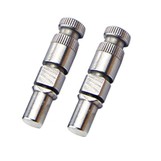
As a seasoned supplier of eccentric shafts, I've witnessed firsthand the crucial role these components play in various mechanical systems. Eccentric shafts are designed with an axis of rotation that is offset from the centerline, enabling them to convert rotary motion into linear motion or vice versa. This unique design, however, subjects the shaft to complex stress distributions that must be carefully analyzed to ensure optimal performance and reliability. In this blog post, I'll explore the key stress-analysis methods for eccentric shafts, providing insights that can help engineers and manufacturers make informed decisions.
Understanding the Basics of Eccentric Shaft Stress
Before delving into the stress-analysis methods, it's essential to understand the types of stresses that an eccentric shaft typically experiences. The primary stresses include:


- Bending Stress: As the eccentric shaft rotates, it is subjected to bending moments due to the offset load. This bending stress can cause the shaft to deform and potentially fail if not properly managed.
- Torsional Stress: In addition to bending, the shaft also experiences torsional stress as it transmits torque from the driving source to the driven component. Torsional stress can lead to twisting and shearing of the shaft material.
- Contact Stress: At the points where the eccentric shaft contacts other components, such as bearings or cams, contact stress occurs. This stress can cause surface wear and fatigue, reducing the lifespan of the shaft.
Analytical Methods for Stress Analysis
Analytical methods involve using mathematical equations to calculate the stress distribution in an eccentric shaft. These methods are based on the principles of mechanics and can provide accurate results for simple geometries and loading conditions. Some of the commonly used analytical methods include:
- Beam Theory: Beam theory is a fundamental approach for analyzing the bending stress in an eccentric shaft. By treating the shaft as a beam, engineers can use equations such as the Euler-Bernoulli beam theory or the Timoshenko beam theory to calculate the bending moments and stresses along the shaft.
- Torsion Theory: Torsion theory is used to analyze the torsional stress in an eccentric shaft. The theory is based on the assumption that the shaft is circular in cross-section and that the shear stress is proportional to the distance from the center of the shaft. By applying the torsion formula, engineers can calculate the maximum torsional stress and the angle of twist.
- Contact Mechanics: Contact mechanics is used to analyze the contact stress between the eccentric shaft and other components. The theory is based on the Hertzian contact theory, which assumes that the contact surfaces are elastic and that the contact area is small compared to the size of the components. By applying the Hertzian contact formula, engineers can calculate the maximum contact stress and the contact area.
Numerical Methods for Stress Analysis
Numerical methods involve using computer software to simulate the stress distribution in an eccentric shaft. These methods are more flexible and can handle complex geometries and loading conditions that are difficult to analyze using analytical methods. Some of the commonly used numerical methods include:
- Finite Element Analysis (FEA): FEA is a powerful numerical method for analyzing the stress distribution in an eccentric shaft. The method involves dividing the shaft into a finite number of elements and solving the equations of equilibrium for each element. By using FEA software, engineers can obtain detailed information about the stress distribution, deformation, and fatigue life of the shaft.
- Boundary Element Method (BEM): BEM is another numerical method for analyzing the stress distribution in an eccentric shaft. The method involves solving the equations of equilibrium on the boundary of the shaft rather than in the entire domain. By using BEM software, engineers can obtain accurate results with less computational effort compared to FEA.
Experimental Methods for Stress Analysis
Experimental methods involve using physical tests to measure the stress distribution in an eccentric shaft. These methods are used to validate the results obtained from analytical and numerical methods and to provide real-world data for design optimization. Some of the commonly used experimental methods include:
- Strain Gauge Measurement: Strain gauge measurement is a simple and effective method for measuring the strain and stress in an eccentric shaft. The method involves attaching strain gauges to the surface of the shaft and measuring the change in resistance as the shaft is loaded. By using the strain gauge data, engineers can calculate the stress distribution in the shaft.
- Photoelasticity: Photoelasticity is a non-destructive method for visualizing the stress distribution in an eccentric shaft. The method involves using a transparent model of the shaft and applying a load to it. By observing the interference patterns produced by the polarized light passing through the model, engineers can obtain a qualitative understanding of the stress distribution.
- Acoustic Emission Testing: Acoustic emission testing is a method for detecting the onset of damage and fatigue in an eccentric shaft. The method involves monitoring the acoustic emissions produced by the shaft as it is loaded. By analyzing the acoustic emission data, engineers can detect the presence of cracks and other defects in the shaft.
Choosing the Right Stress-Analysis Method
The choice of stress-analysis method depends on several factors, including the complexity of the geometry, the loading conditions, the accuracy required, and the available resources. In general, analytical methods are suitable for simple geometries and loading conditions, while numerical methods are more suitable for complex geometries and loading conditions. Experimental methods are used to validate the results obtained from analytical and numerical methods and to provide real-world data for design optimization.
Importance of Stress Analysis for Eccentric Shafts
Stress analysis is an essential step in the design and manufacturing of eccentric shafts. By accurately predicting the stress distribution in the shaft, engineers can optimize the design to ensure that it can withstand the expected loads and operating conditions. This can help to improve the performance, reliability, and lifespan of the shaft, reducing the risk of failure and downtime.
Our Eccentric Shaft Products
As a leading supplier of eccentric shafts, we offer a wide range of high-quality products to meet the needs of various industries. Our Stainless Steel Eccentric Shaft is made from premium stainless steel, providing excellent corrosion resistance and durability. Our Precision Eccentric Shaft is manufactured to strict tolerances, ensuring precise performance and reliability.
Contact Us for Eccentric Shaft Procurement
If you're in the market for high-quality eccentric shafts, we'd love to hear from you. Our team of experts can provide you with detailed information about our products and help you choose the right solution for your application. Contact us today to start a conversation about your eccentric shaft procurement needs.
References
- Shigley, J. E., & Mischke, C. R. (2001). Mechanical Engineering Design. McGraw-Hill.
- Boresi, A. P., & Schmidt, R. J. (2003). Advanced Mechanics of Materials. Wiley.
- Timoshenko, S. P., & Goodier, J. N. (1970). Theory of Elasticity. McGraw-Hill.