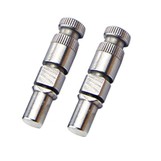
As a supplier of knurled shafts, I often get asked about the surface finish requirements for these components. It's a crucial topic because the right surface finish can significantly impact the performance, functionality, and aesthetics of a knurled shaft. In this blog, I'll break down the key surface finish requirements and explain why they matter.
Why Surface Finish Matters
Before we dive into the specific requirements, let's talk about why surface finish is so important for knurled shafts. First off, the surface finish affects the grip. Knurled shafts are commonly used in applications where a good grip is essential, like in tools or machinery handles. A rough or uneven surface finish can make it difficult to hold the shaft securely, leading to potential safety hazards or reduced efficiency.
Secondly, the surface finish can impact the durability of the shaft. A smooth and consistent finish helps to prevent corrosion and wear, which can extend the lifespan of the shaft. This is especially important in harsh environments or applications where the shaft is exposed to high levels of stress or friction.


Finally, the surface finish can also affect the aesthetics of the shaft. In some applications, the appearance of the shaft is just as important as its functionality. A well-finished knurled shaft can enhance the overall look of a product, making it more appealing to customers.
Key Surface Finish Requirements
Now that we understand why surface finish is important, let's take a look at the key requirements for a knurled shaft.
Roughness
The roughness of the surface is one of the most important factors to consider. The roughness is typically measured in micrometers (μm) or microinches (μin). For a knurled shaft, the roughness requirements can vary depending on the application. In general, a smoother surface finish is preferred for applications where a high level of precision is required, while a rougher finish may be acceptable for applications where a good grip is the primary concern.
For example, in a precision instrument, the roughness of the knurled shaft may need to be within a very tight tolerance, such as 0.2 to 0.8 μm. On the other hand, in a tool handle, a roughness of 3.2 to 6.3 μm may be sufficient to provide a good grip.
Texture
The texture of the knurled surface is also important. The texture refers to the pattern or shape of the knurling. There are several different types of knurling patterns, including straight knurling, diamond knurling, and spiral knurling. Each pattern has its own unique characteristics and is suitable for different applications.
Straight knurling is the most common type of knurling and is typically used for applications where a simple and effective grip is required. Diamond knurling provides a more aggressive grip and is often used in applications where a high level of torque is needed. Spiral knurling is less common but can be used in applications where a smooth and continuous grip is required.
Hardness
The hardness of the surface is another important factor to consider. The hardness of the surface can affect the wear resistance and durability of the shaft. In general, a harder surface is preferred for applications where the shaft is exposed to high levels of stress or friction.
The hardness of the surface can be increased through various heat treatment processes, such as quenching and tempering. The specific heat treatment process used will depend on the material of the shaft and the desired hardness.
Coating
In some cases, a coating may be applied to the surface of the knurled shaft to improve its performance and durability. There are several different types of coatings available, including zinc plating, nickel plating, and chrome plating. Each coating has its own unique properties and is suitable for different applications.
Zinc plating is a common coating that provides good corrosion resistance and is relatively inexpensive. Nickel plating provides a harder and more wear-resistant surface and is often used in applications where a high level of durability is required. Chrome plating provides a very smooth and shiny surface and is often used in applications where aesthetics are important.
Meeting the Surface Finish Requirements
As a knurled shaft supplier, we understand the importance of meeting the surface finish requirements of our customers. That's why we use state-of-the-art manufacturing processes and equipment to ensure that our knurled shafts meet the highest standards of quality.
We start by carefully selecting the materials for our knurled shafts. We use only high-quality materials that are suitable for the specific application and can provide the desired surface finish. We then use precision machining techniques to create the knurling pattern on the shaft. Our machining processes are carefully controlled to ensure that the knurling pattern is consistent and accurate.
After the knurling is complete, we perform a series of quality control checks to ensure that the surface finish meets the requirements. We use advanced measuring equipment to measure the roughness, texture, and hardness of the surface. We also perform visual inspections to check for any defects or imperfections.
If the surface finish does not meet the requirements, we will take the necessary steps to correct the issue. This may involve re-machining the shaft or applying a different coating. We are committed to providing our customers with the highest quality knurled shafts and will do everything we can to ensure that our products meet their expectations.
Conclusion
In conclusion, the surface finish requirements for a knurled shaft are an important consideration for any application. The right surface finish can significantly impact the performance, functionality, and aesthetics of the shaft. By understanding the key surface finish requirements and using the right manufacturing processes and equipment, we can ensure that our knurled shafts meet the highest standards of quality.
If you're in the market for a high-quality knurled shaft, we'd love to hear from you. We offer a wide range of Precision Knurled Shaft and Stainless Steel Knurled Shaft to meet your specific needs. Contact us today to learn more about our products and services and to discuss your requirements.
References
- "Machinery's Handbook," Industrial Press Inc.
- "Surface Finish and Texture Measurement," ASME Standards.