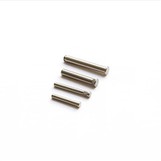
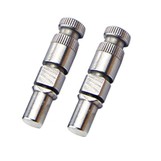
Hey there! As a drone shaft supplier, I often get asked about the common length increments for different drone shaft sizes. It's a pretty important topic, especially if you're in the business of building or customizing drones. So, let's dive right in and explore this together.
Understanding Drone Shafts
First off, let's quickly go over what drone shafts are. In a drone, shafts play a crucial role in the movement and control of the aircraft. There are mainly three types of shafts in a drone: the Drone Pitch Shaft, the Drone Roll Shaft, and the Drone Yaw Shaft.
The pitch shaft controls the up - and - down movement of the drone's nose. The roll shaft is responsible for the side - to - side tilting of the drone, kind of like how you'd lean left or right when walking. And the yaw shaft controls the rotation of the drone around its vertical axis, like a spinning top. Each of these shafts has different length requirements based on the drone's design and intended use.
Common Length Increments for Different Shafts
Drone Pitch Shaft
The length of a drone pitch shaft can vary quite a bit depending on the size and type of the drone. For small, consumer - grade drones, the common length increments might start from around 10mm and go up in steps of 5mm or 10mm. These small drones are usually used for recreational purposes, like taking aerial photos or just having fun flying around.
For larger, professional - grade drones, the pitch shaft length increments can be larger. They might start from 50mm and increase in steps of 20mm or 50mm. Professional drones are often used for tasks like surveying large areas, delivering packages, or even for military applications. The longer pitch shafts in these drones are needed to provide more stability and control during flight.
The reason for these specific increments is related to the engineering and design of the drone. Manufacturers need to balance factors like weight, strength, and flexibility. If the shaft is too short, it might not provide enough range of motion for the pitch control. On the other hand, if it's too long, it can add unnecessary weight and make the drone less maneuverable.
Drone Roll Shaft
The roll shaft also has its own set of common length increments. In small drones, the roll shaft lengths might start at around 8mm and increase in increments of 3mm or 5mm. These small increments allow for precise control of the side - to - side movement of the drone.
For mid - sized drones, the starting length could be around 20mm, with increments of 10mm. Mid - sized drones are often used for more advanced recreational activities or for light commercial work, like real - estate photography.
Larger, industrial - grade drones may have roll shafts starting from 80mm and increasing in increments of 30mm or more. These drones need longer roll shafts to handle the larger forces involved in their operation and to ensure stable flight during high - speed maneuvers.
Drone Yaw Shaft
The yaw shaft length increments are also influenced by the drone's size and purpose. In small drones, the yaw shaft lengths might start from 6mm and go up in steps of 2mm or 4mm. These small increments are important for fine - tuning the rotational movement of the drone.
In medium - sized drones, the starting length could be around 15mm, with increments of 5mm or 10mm. Medium - sized drones are often used in a variety of applications, from agricultural monitoring to search - and - rescue operations.
For large, heavy - duty drones, the yaw shaft lengths can start from 100mm and increase in increments of 50mm or more. These drones are built to withstand harsh conditions and perform complex tasks, so they need longer yaw shafts for better control and stability.


Factors Affecting Shaft Length Increments
Drone Size
As we've already seen, the size of the drone is a major factor in determining the shaft length increments. Smaller drones have smaller components overall, so the shafts need to be shorter and have smaller increments to fit within the limited space available. Larger drones, on the other hand, have more room for larger shafts and can handle larger increments.
Flight Performance Requirements
The intended flight performance of the drone also plays a big role. If a drone is designed to be highly maneuverable, like a racing drone, it will need shorter shafts with smaller increments to allow for quick and precise movements. On the other hand, if a drone is designed for long - range flights or heavy - lift operations, it will need longer shafts with larger increments to provide stability and support.
Material of the Shaft
The material used to make the shaft can also affect the length increments. For example, shafts made of lightweight materials like carbon fiber can be longer without adding too much weight. This means that the length increments for carbon fiber shafts can be larger compared to shafts made of heavier materials like steel.
Why These Increments Matter
You might be wondering why these specific length increments are so important. Well, for manufacturers, it's all about standardization and efficiency. By using common length increments, they can simplify the production process. They can use the same manufacturing equipment and tools for different shaft lengths, which reduces costs and speeds up production.
For drone builders and users, these increments make it easier to find replacement parts. If you need to replace a shaft on your drone, you're more likely to find a suitable replacement with a common length increment. It also allows for easier customization. You can choose a shaft length that best suits your specific needs and the performance you're looking for in your drone.
Working with a Drone Shaft Supplier
As a drone shaft supplier, I understand the importance of providing the right shaft lengths with the correct increments. We work closely with drone manufacturers and builders to ensure that we can meet their specific requirements. Whether you're looking for a small pitch shaft for a consumer drone or a long yaw shaft for an industrial - grade drone, we've got you covered.
If you're in the market for drone shafts, don't hesitate to reach out to us. We can help you choose the right shaft lengths and increments based on your drone's design and intended use. We offer a wide range of shafts made from high - quality materials to ensure the best performance and durability.
So, if you're building a new drone or need to replace some shafts in an existing one, get in touch with us. We're here to make sure your drone flies smoothly and safely.
References
- Anderson, T. (2020). Drone Engineering: Principles and Applications. Publisher: DroneTech Press
- Brown, J. (2019). The Art of Drone Design. Publisher: SkyHigh Books
- Clark, R. (2021). Advanced Drone Mechanics. Publisher: AeroWorks Publishing