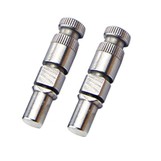
Hey there! As a motor shaft supplier, I often get asked about the concentricity requirement for a motor shaft. So, I thought I'd take some time to break it down for you and explain why it's such a big deal.


First off, let's talk about what concentricity actually means. In simple terms, concentricity is all about how well the centerline of one part aligns with the centerline of another part. When we're talking about a motor shaft, we're usually concerned with how well the shaft's centerline lines up with the centerline of the motor's bearings or other rotating components.
Why does this matter? Well, if a motor shaft isn't concentric, it can cause a whole bunch of problems. For starters, it can lead to increased vibration. You know how a washing machine can shake and rattle if the load inside isn't balanced? It's kind of the same idea with a motor shaft. When the shaft isn't concentric, it creates an uneven distribution of forces as it rotates. This unevenness causes the motor to vibrate more than it should. And that extra vibration isn't just annoying; it can also cause premature wear and tear on the motor's components.
Another issue is increased friction. When the shaft isn't centered properly, it rubs against the bearings or other parts in a way that it shouldn't. This extra friction generates heat, which can damage the bearings and other sensitive components over time. It also means that the motor has to work harder to overcome the friction, which can lead to decreased efficiency and higher energy consumption.
So, what are the typical concentricity requirements for a motor shaft? Well, it really depends on the type of motor and its intended application. For some small, low - speed motors used in things like household appliances, the concentricity requirements might not be as strict. These motors can usually tolerate a little bit of misalignment without major issues.
On the other hand, high - speed motors, like those used in industrial machinery or electric vehicles, have much stricter concentricity requirements. In these applications, even a tiny amount of misalignment can cause significant problems. For example, in a high - speed electric motor for a manufacturing machine, the concentricity tolerance might be as tight as a few micrometers. That's incredibly precise!
Now, let's talk about how we ensure the concentricity of the motor shafts we supply. We use a variety of advanced manufacturing and inspection techniques. First, during the machining process, we use high - precision lathes and milling machines. These machines are capable of cutting and shaping the shaft with a very high degree of accuracy. We also have strict quality control measures in place. After the initial machining, we use specialized measuring tools, such as dial indicators and laser alignment systems, to check the concentricity of the shaft. If the shaft doesn't meet our strict standards, we re - machine it until it does.
There are different types of motor shafts we offer, each with its own set of requirements and benefits. For instance, we have Motor Shaft SUS303 SUS304 SUS316. These stainless - steel shafts are known for their corrosion resistance, which makes them great for applications where the motor might be exposed to moisture or chemicals. The concentricity requirements for these shafts are carefully calibrated to ensure optimal performance in these challenging environments.
Our Brushless Motor Shaft is another popular option. Brushless motors are known for their high efficiency and long lifespan. To maintain these advantages, the concentricity of the shaft is crucial. A well - centered shaft helps to reduce the electrical losses and mechanical wear in the motor, ensuring that it runs smoothly and efficiently for a long time.
We also supply DC Motor Shaft. DC motors are widely used in a variety of applications, from small toys to large industrial equipment. The concentricity requirements for DC motor shafts vary depending on the size and power of the motor. For small DC motors, the requirements might be less strict, but for larger, more powerful ones, we make sure the shafts are as precise as possible.
In conclusion, the concentricity requirement for a motor shaft is super important. It can have a huge impact on the performance, efficiency, and lifespan of a motor. Whether you're using a small motor in a consumer product or a large industrial motor, getting the concentricity right is key.
If you're in the market for high - quality motor shafts that meet strict concentricity requirements, we'd love to hear from you. We're committed to providing the best products and services to our customers. So, don't hesitate to reach out and start a conversation about your motor shaft needs. Let's work together to find the perfect solution for your application.
References
- "Mechanical Engineering Handbook" - A comprehensive guide that covers various aspects of motor design and manufacturing, including concentricity requirements.
- "Motor Design and Application Manual" - This manual provides in - depth information on different types of motors and the importance of shaft concentricity for their proper functioning.