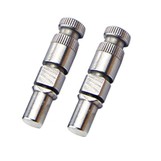
As a rotating shaft supplier, I've dealt with a wide variety of customers and their unique requirements. One question that often arises is about the difference between a solid and a hollow rotating shaft. In this blog post, I'll delve into the characteristics, advantages, and applications of both types to help you make an informed decision for your specific needs.
Physical Characteristics
Let's start by looking at the basic physical differences between solid and hollow rotating shafts. A solid rotating shaft is, as the name suggests, a continuous piece of material with no internal voids. It has a uniform cross - section throughout its length, providing a solid and robust structure. On the other hand, a hollow rotating shaft has an empty space running through its center. This design reduces the overall weight of the shaft while maintaining a relatively high level of strength.
The material used for both types of shafts can vary, including steel, aluminum, and various alloys. The choice of material depends on factors such as the required strength, corrosion resistance, and cost. For instance, steel is a popular choice for its high strength and durability, while aluminum is favored for its lightweight properties.
Strength and Rigidity
When it comes to strength and rigidity, solid rotating shafts have a clear advantage in terms of pure material strength. The continuous mass of a solid shaft allows it to withstand higher loads and torsional forces without deformation. This makes them ideal for applications where high torque is involved, such as in heavy - duty machinery, automotive engines, and industrial gearboxes.
However, hollow rotating shafts are not to be underestimated. Despite having a lower mass, they can be designed to have a high strength - to - weight ratio. By carefully selecting the wall thickness and outer diameter, engineers can optimize the shaft's performance to resist bending and torsional stresses. In fact, in some cases, a hollow shaft can offer comparable strength to a solid shaft at a much lower weight. This is particularly beneficial in applications where weight reduction is critical, such as in aerospace and high - speed machinery.
Weight and Inertia
Weight is a crucial factor in many rotating shaft applications. Solid shafts are heavier due to their continuous material, which can increase the overall weight of the system. This added weight can lead to higher energy consumption, especially in applications where the shaft needs to be accelerated and decelerated frequently.
Hollow rotating shafts, on the other hand, have a significant advantage in terms of weight. The internal void reduces the mass of the shaft, resulting in lower inertia. Lower inertia means that the shaft can be accelerated and decelerated more quickly, requiring less energy. This makes hollow shafts an excellent choice for high - speed applications, such as electric motors and turbine engines, where minimizing energy consumption and improving efficiency are top priorities.
Manufacturing and Cost
The manufacturing process for solid and hollow rotating shafts also differs. Solid shafts are typically machined from a solid bar of material using processes such as turning, milling, and grinding. These processes are relatively straightforward and well - established, making solid shafts generally more cost - effective to produce in large quantities.
Hollow shafts, however, require more complex manufacturing techniques. They can be produced by drilling a hole through a solid bar or by using processes such as tube drawing and extrusion. These methods are more labor - intensive and may require specialized equipment, which can increase the production cost. However, the cost difference may be offset by the benefits of weight reduction and improved performance in certain applications.
Heat Dissipation
Heat dissipation is an important consideration in rotating shaft applications, especially in high - speed or high - load environments. Solid shafts have a larger mass, which can act as a heat sink to absorb and dissipate heat. However, the internal heat transfer within a solid shaft can be relatively slow, leading to potential hot spots.
Hollow shafts offer better heat dissipation properties. The internal void allows for air circulation, which helps to carry away heat more efficiently. This can prevent overheating and extend the lifespan of the shaft and other components in the system. For example, in electric motors, hollow shafts can help to maintain a lower operating temperature, improving the motor's efficiency and reliability.
Applications
The choice between a solid and a hollow rotating shaft ultimately depends on the specific application. Here are some common applications for each type:
Solid Rotating Shafts
- Automotive Industry: Solid shafts are widely used in automotive engines, transmissions, and drivetrains. They can handle the high torque and loads generated by the engine and are essential for transferring power from the engine to the wheels.
- Industrial Machinery: In heavy - duty industrial machinery, such as presses, crushers, and conveyors, solid shafts provide the strength and reliability needed to operate under extreme conditions.
- Power Generation: Solid shafts are used in generators and turbines to transfer mechanical energy into electrical energy. They can withstand the high rotational speeds and torques associated with power generation.
Hollow Rotating Shafts
- Aerospace Industry: The aerospace industry places a premium on weight reduction. Hollow shafts are used in aircraft engines, control systems, and landing gear to reduce the overall weight of the aircraft, improving fuel efficiency and performance.
- High - Speed Machinery: In high - speed electric motors, spindles, and turbines, hollow shafts are preferred due to their low inertia and excellent heat dissipation properties. They allow for faster acceleration and deceleration, reducing energy consumption and improving operational efficiency.
- Medical Equipment: Hollow shafts are used in medical devices such as surgical robots and imaging equipment. Their lightweight design and precise control capabilities make them ideal for these applications.
Conclusion
In summary, both solid and hollow rotating shafts have their own unique characteristics, advantages, and applications. Solid shafts offer high strength and are suitable for heavy - duty applications where high loads and torques are involved. Hollow shafts, on the other hand, provide a high strength - to - weight ratio, lower inertia, and better heat dissipation, making them ideal for applications where weight reduction and high - speed performance are crucial.
As a rotating shaft supplier, I understand that choosing the right type of shaft is essential for the success of your project. Whether you need a Precision Rotating Shaft for a high - precision application or a robust shaft for heavy - duty use, I can offer you a wide range of options to meet your specific requirements.


If you're interested in learning more about our rotating shaft products or have any questions about the difference between solid and hollow shafts, please don't hesitate to contact us. Our team of experts is ready to assist you in selecting the best shaft for your application and guide you through the procurement process.
References
- Budynas, R. G., & Nisbett, J. K. (2011). Shigley's Mechanical Engineering Design. McGraw - Hill.
- Norton, R. L. (2012). Design of Machinery: An Introduction to the Synthesis and Analysis of Mechanisms and Machines. McGraw - Hill.
- Juvinall, R. C., & Marshek, K. M. (2011). Fundamentals of Machine Component Design. Wiley.