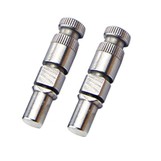
In the ever - advancing field of drone technology, precision is key. One of the fundamental aspects that significantly influences a drone's performance is the accuracy of its yaw angle. The yaw angle determines the drone's rotation around its vertical axis, which is crucial for tasks such as stable flight, obstacle avoidance, and accurate positioning. As a supplier of Drone Yaw Shaft, I have witnessed firsthand how the quality of the yaw shaft can have a profound impact on the yaw angle accuracy.
Understanding the Yaw Angle and Its Importance
The yaw angle is one of the three primary rotational angles of a drone, along with the roll and pitch angles. While the Drone Roll Shaft controls the rotation around the longitudinal axis and the Drone Pitch Shaft controls the rotation around the lateral axis, the yaw shaft is responsible for the rotation around the vertical axis.
Accurate yaw angle control is essential for several reasons. In aerial photography and videography, a precise yaw angle ensures that the camera remains pointed in the desired direction, resulting in smooth and stable footage. For delivery drones, accurate yaw control is necessary to navigate through complex environments and land at the correct location. In military and surveillance applications, the ability to precisely control the yaw angle allows drones to monitor specific areas without unnecessary movement.
The Role of the Drone Yaw Shaft
The drone yaw shaft is a critical component that transfers the rotational force from the motor to the drone's body, enabling it to change its yaw angle. A high - quality yaw shaft is designed to minimize friction, reduce backlash, and provide smooth and consistent rotation.
Friction in the yaw shaft can cause several problems. When there is excessive friction, the motor has to work harder to rotate the shaft, which can lead to increased power consumption and reduced battery life. Moreover, friction can cause uneven rotation, resulting in jerky movements and inaccurate yaw angle control. For example, if the yaw shaft has rough surfaces or is not properly lubricated, the drone may experience sudden jumps in the yaw angle, making it difficult to maintain a stable flight.
Backlash is another issue that can affect yaw angle accuracy. Backlash refers to the play or clearance between the components of the yaw shaft system. When there is significant backlash, there is a delay between the input from the motor and the actual rotation of the drone's body. This delay can cause overshooting or undershooting of the desired yaw angle, leading to instability and reduced accuracy.
Material and Design Considerations
The material used in the construction of the drone yaw shaft plays a crucial role in its performance. Common materials include aluminum, steel, and carbon fiber. Aluminum is lightweight and has good corrosion resistance, making it a popular choice for many drones. Steel, on the other hand, is stronger and more durable, but it is also heavier. Carbon fiber offers a unique combination of high strength and low weight, but it can be more expensive.
The design of the yaw shaft also affects its performance. A well - designed yaw shaft will have a proper diameter and length to ensure optimal torque transfer. The shape of the shaft, such as whether it is solid or hollow, can also impact its strength and weight. For example, a hollow yaw shaft can reduce weight without sacrificing too much strength, which is beneficial for improving the drone's overall performance.
Manufacturing Precision
The manufacturing process of the drone yaw shaft is of utmost importance. High - precision manufacturing techniques are required to ensure that the shaft meets the strict tolerances necessary for accurate yaw angle control.
CNC (Computer Numerical Control) machining is a commonly used manufacturing method for drone yaw shafts. This process allows for precise control of the dimensions and surface finish of the shaft. By using CNC machining, manufacturers can produce yaw shafts with tight tolerances, ensuring that the shaft fits perfectly with other components of the drone's yaw system.
Surface finishing is also a critical step in the manufacturing process. A smooth surface finish reduces friction and wear, improving the overall performance of the yaw shaft. Techniques such as polishing and coating can be used to achieve a high - quality surface finish.
Testing and Quality Assurance
To ensure the yaw angle accuracy of the drone, rigorous testing and quality assurance procedures are necessary. At our company, we conduct a series of tests on each yaw shaft before it is shipped to our customers.
One of the key tests is the torque test. This test measures the amount of torque required to rotate the yaw shaft at a given speed. By comparing the measured torque with the expected values, we can determine if the shaft has any issues with friction or mechanical resistance.
We also perform backlash tests to measure the play in the yaw shaft system. This involves applying a small amount of force in one direction and then measuring the movement of the shaft when the force is reversed. If the backlash is within the acceptable range, the yaw shaft is considered to be of high quality.
In addition to these tests, we use advanced sensors and measurement equipment to measure the actual yaw angle of the drone during flight tests. By comparing the measured yaw angle with the commanded yaw angle from the controller, we can evaluate the accuracy of the yaw shaft and make any necessary adjustments.
Impact on Drone Performance
The impact of a high - quality drone yaw shaft on overall drone performance cannot be overstated. When the yaw shaft provides accurate and consistent rotation, the drone can achieve better stability, smoother flight, and more precise control.
In terms of stability, a well - functioning yaw shaft helps the drone maintain its orientation in the air. This is particularly important in windy conditions, where the drone is more likely to be affected by external forces. With accurate yaw angle control, the drone can counteract the wind and remain stable.
Smoother flight is another benefit of a high - quality yaw shaft. When the yaw shaft rotates smoothly, the drone's movements are more fluid, resulting in a more pleasant flying experience for the operator. This is especially important for applications such as aerial photography, where any sudden movements can ruin the footage.


Precise control is perhaps the most significant advantage of a high - quality yaw shaft. With accurate yaw angle control, the drone can perform complex maneuvers with ease. For example, in search and rescue operations, a drone with precise yaw control can quickly scan a large area by rotating its camera in different directions.
Conclusion
In conclusion, the drone yaw shaft has a significant impact on the yaw angle accuracy of a drone. A high - quality yaw shaft, with proper material selection, precise manufacturing, and rigorous testing, is essential for achieving accurate yaw angle control. By minimizing friction, reducing backlash, and providing smooth rotation, the yaw shaft can improve the overall performance of the drone, including stability, flight smoothness, and control precision.
If you are in the market for a reliable and high - performance drone yaw shaft, we are here to help. Our company specializes in the production of top - quality drone yaw shafts that are designed to meet the most demanding requirements. We invite you to contact us for more information and to discuss your specific needs. We look forward to the opportunity to work with you and contribute to the success of your drone projects.
References
- Anderson, B. H., & Moore, J. B. (2016). Introduction to Flight. McGraw - Hill Education.
- Newman, W. S. (2017). Unmanned Aircraft Systems: UAS Design, Development, and Deployment. Wiley.
- Stevens, B. L., Lewis, F. L., & Johnson, E. N. (2015). Aircraft Control and Simulation: Dynamics, Controls Design, and Autonomous Systems. Wiley.