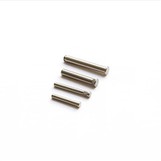
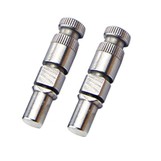
Hey there! As a supplier of linear shafts, I often get asked about the load capacity of these nifty little components. So, I thought I'd take a deep dive into what load capacity means for linear shafts, how it's determined, and why it matters to you.


First off, let's talk about what a linear shaft is. A linear shaft is a crucial part in many mechanical systems. It's basically a rod that provides a smooth, straight path for linear motion. You can find them in all sorts of applications, from industrial machinery to 3D printers. They come in different types, like the Precision Linear Shaft and the Hardened Steel Linear Shaft.
Now, onto the main topic: load capacity. The load capacity of a linear shaft refers to the maximum amount of weight or force that the shaft can handle without experiencing excessive wear, deformation, or failure. This is super important because if you exceed the load capacity, you can end up with a shaft that breaks down quickly, leading to costly repairs and downtime.
There are a few factors that determine the load capacity of a linear shaft. One of the most significant factors is the material of the shaft. For example, a Hardened Steel Linear Shaft is typically stronger and can handle higher loads compared to a shaft made from a softer material. Hardened steel has been heat-treated to increase its hardness and strength, which means it can withstand more pressure without bending or breaking.
The diameter of the shaft also plays a big role. Generally speaking, a larger diameter shaft can handle more load than a smaller one. This is because a larger shaft has more surface area to distribute the load, reducing the stress on any one point. However, it's important to note that increasing the diameter also means increasing the weight and cost of the shaft, so you need to find the right balance for your application.
Another factor is the length of the shaft. Longer shafts are more prone to deflection under load compared to shorter ones. Deflection is when the shaft bends or sags under the weight, which can affect the accuracy of the linear motion. So, if you need to use a long shaft, you may need to choose a shaft with a higher load capacity or provide additional support to prevent excessive deflection.
The type of load also matters. There are different types of loads that a linear shaft can experience, such as radial loads, axial loads, and moment loads. Radial loads act perpendicular to the axis of the shaft, like when a bearing rolls along the shaft. Axial loads act parallel to the axis of the shaft, like when a force is applied to push or pull the shaft. Moment loads create a twisting or bending force on the shaft. Each type of load requires a different approach when it comes to determining the load capacity.
To calculate the load capacity of a linear shaft, engineers use complex mathematical formulas and models. These take into account all the factors we've discussed, as well as other variables like the surface finish of the shaft, the type of bearing used, and the operating conditions. However, as a user, you don't need to worry about doing these calculations yourself. Most linear shaft suppliers, like us, can provide you with load capacity charts and guidelines based on the specific type of shaft you're interested in.
Let's take a look at some real-world examples. Suppose you're building a 3D printer. The linear shafts in a 3D printer are used to move the print head and the build platform. The load on these shafts is relatively light, mainly consisting of the weight of the print head and the friction between the moving parts. In this case, a smaller diameter Precision Linear Shaft with a moderate load capacity would probably be sufficient.
On the other hand, if you're working in an industrial setting, like a manufacturing plant, the linear shafts may need to handle much heavier loads. For example, in a conveyor system, the shafts are responsible for moving heavy products along the line. In this case, you'd need a larger diameter, high-strength Hardened Steel Linear Shaft with a high load capacity to ensure reliable operation.
So, why is it so important to choose the right load capacity for your linear shaft? Well, as I mentioned earlier, using a shaft with a load capacity that's too low can lead to premature failure. This not only costs you money in terms of replacing the shaft, but it can also cause production delays and lost revenue. On the other hand, choosing a shaft with a load capacity that's much higher than you need can be wasteful, as you'll end up paying more for a shaft that's overkill for your application.
When you're selecting a linear shaft, it's a good idea to consult with an expert. At our company, we've got a team of experienced engineers who can help you choose the right shaft for your specific needs. We can take into account all the factors we've discussed, as well as your budget and any other requirements you may have.
In conclusion, the load capacity of a linear shaft is a critical factor that you need to consider when choosing a shaft for your application. By understanding the factors that affect load capacity and working with a reliable supplier, you can ensure that you get a shaft that performs well and lasts a long time.
If you're interested in learning more about our linear shafts or have any questions about load capacity, feel free to reach out to us. We're always happy to help and can provide you with more detailed information and quotes. Let's work together to find the perfect linear shaft solution for your project!
References
- Machinery's Handbook, 31st Edition
- Engineering Materials and Their Applications, 8th Edition