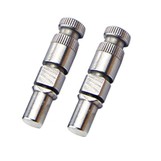
Hey there! As a pin shaft supplier, I often get asked about the material hardness range for high - strength pin shafts. It's a crucial topic, especially when it comes to ensuring the performance and durability of these essential components.
First off, let's understand why hardness matters for pin shafts. High - strength pin shafts are used in a wide range of applications, from automotive engines to industrial machinery. They need to withstand heavy loads, friction, and wear. If the pin shaft is too soft, it can deform easily under stress, leading to premature failure of the equipment. On the other hand, if it's too hard, it may become brittle and prone to cracking.
So, what's the ideal material hardness range for high - strength pin shafts? Well, it depends on the specific application and the material used.
Common Materials for High - Strength Pin Shafts and Their Hardness Ranges
1. Alloy Steels
Alloy steels are a popular choice for high - strength pin shafts. They offer a good balance of strength, toughness, and wear resistance. One of the most commonly used alloy steels is 4140. This steel can be heat - treated to achieve a hardness range of around 28 - 32 HRC (Rockwell Hardness C scale) in the normalized condition. When quenched and tempered, the hardness can go up to 40 - 45 HRC.


Another alloy steel, 4340, is known for its high strength and toughness. After proper heat treatment, the hardness of 4340 pin shafts can range from 38 - 42 HRC, which makes it suitable for applications that require high load - bearing capacity.
2. Stainless Steels
Stainless steels are preferred in applications where corrosion resistance is a major concern. Stainless Steel SUS304 SUS316 Precision Knurled Shaft is a great example. These stainless steels are austenitic in nature and have relatively lower hardness compared to some alloy steels. The hardness of SUS304 and SUS316 in the annealed condition is typically around 90 - 100 HRB (Rockwell Hardness B scale). However, they can be cold - worked to increase the hardness slightly, up to around 180 - 200 HV (Vickers Hardness).
3. Tool Steels
Tool steels are extremely hard and are used in applications where the pin shaft needs to resist high - pressure and high - temperature conditions. For example, D2 tool steel can have a hardness of 58 - 62 HRC after heat treatment. This makes it suitable for use in die - making and other high - stress applications.
Factors Affecting the Selection of Hardness Range
1. Load and Stress
The amount of load and stress that the pin shaft will experience is a key factor in determining the hardness range. In applications with high static or dynamic loads, a higher hardness is usually required. For instance, in a heavy - duty construction equipment, the pin shafts need to be able to withstand the weight and forces involved in lifting and moving large objects. So, a pin shaft made of a high - strength alloy steel with a hardness of 40 - 45 HRC would be a good choice.
2. Wear and Friction
If the pin shaft is in contact with other moving parts, wear and friction become important considerations. A harder pin shaft will generally have better wear resistance. In a machine where the pin shaft is constantly rotating or sliding against other components, a higher hardness can help reduce the rate of wear and extend the service life of the pin shaft.
3. Corrosion Environment
In corrosive environments, such as marine or chemical processing plants, the choice of material and its hardness are affected by the need for corrosion resistance. Stainless steels, as mentioned earlier, are a good option in these cases. Although they may have lower hardness compared to some alloy steels, their corrosion - resistant properties make them suitable for these applications.
Our Offerings
At our company, we understand the importance of getting the right hardness for high - strength pin shafts. We offer a wide range of Precision Pin Shaft made from different materials and with various hardness levels to meet the diverse needs of our customers.
We use advanced manufacturing processes and strict quality control measures to ensure that each pin shaft we produce meets the required hardness specifications. Whether you need a pin shaft for a small - scale machinery or a large - scale industrial application, we can provide you with the right solution.
Why Choose Us?
- Expertise: Our team of engineers and technicians has years of experience in the field of pin shaft manufacturing. We know how to select the right material and heat - treatment process to achieve the desired hardness.
- Customization: We can customize the pin shafts according to your specific requirements. Whether it's a special size, shape, or hardness level, we can make it happen.
- Quality Assurance: We have a comprehensive quality control system in place. Every pin shaft undergoes rigorous testing to ensure its hardness, strength, and other properties meet the standards.
Contact Us for Your Pin Shaft Needs
If you're in the market for high - strength pin shafts and are looking for the right material hardness range for your application, don't hesitate to reach out to us. We're here to help you make the best choice and provide you with high - quality pin shafts that will meet your expectations.
Let's start a conversation and see how we can work together to solve your pin shaft needs.
References
- "Metals Handbook: Properties and Selection: Irons, Steels, and High - Performance Alloys", ASM International
- "Machinery's Handbook", Industrial Press Inc.