What is the maximum radial load a DC motor shaft can withstand?
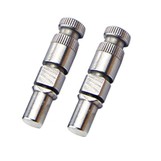
As a dedicated DC Motor Shaft supplier, I often encounter inquiries from customers regarding the maximum radial load a DC motor shaft can withstand. This is a crucial aspect, as understanding the load - bearing capacity directly impacts the performance and longevity of the DC motor.
1. Factors Affecting the Maximum Radial Load
The maximum radial load a DC motor shaft can handle is influenced by multiple factors. Material properties are of primary importance. For instance, shafts made from high - strength alloys like steel can generally withstand higher radial loads compared to those made from softer materials. Our DC Motor Shaft products are crafted from carefully selected materials to ensure optimal strength and durability.
The diameter of the shaft is another significant factor. A larger - diameter shaft typically has a higher load - bearing capacity. This is because a greater cross - sectional area provides more material to resist the applied radial forces. The length of the shaft also plays a role. Longer shafts are more prone to deflection under radial loads, which can reduce the maximum load they can handle.
The design of the motor and its mounting also affect the radial load capacity. If the motor is properly mounted and has appropriate support structures, it can distribute the load more evenly, allowing the shaft to handle a higher radial load. Additionally, the type of bearings used in the motor is crucial. High - quality bearings can reduce friction and support the shaft better, thereby increasing the maximum allowable radial load.
2. Theoretical Calculation of Radial Load Capacity
To estimate the maximum radial load a DC motor shaft can withstand, we can use some basic mechanical engineering principles. The stress in the shaft due to a radial load is related to the bending moment and the cross - sectional properties of the shaft.
The bending moment (M) caused by a radial load (F) at a distance (L) from the support can be calculated using the formula (M = F\times L). The maximum bending stress (\sigma) in a circular shaft is given by (\sigma=\frac{M\times c}{I}), where (c) is the distance from the neutral axis to the outer surface of the shaft (equal to the radius (r) for a circular shaft) and (I) is the moment of inertia of the cross - section. For a solid circular shaft, (I=\frac{\pi r^{4}}{4}).
The maximum allowable stress (\sigma_{allow}) is determined by the material properties of the shaft. By equating the maximum bending stress (\sigma) to the allowable stress (\sigma_{allow}), we can solve for the maximum radial load (F_{max}).
However, it's important to note that these theoretical calculations are based on ideal conditions and do not account for all real - world factors such as dynamic loads, vibrations, and manufacturing tolerances.
3. Practical Considerations in Real - World Applications
In real - world applications, the maximum radial load a DC motor shaft can withstand may be different from the theoretical values. Dynamic loads, such as those caused by sudden starts and stops or changes in the operating speed, can significantly increase the stress on the shaft. Vibrations can also cause fatigue failure over time, reducing the effective load - bearing capacity of the shaft.
For example, in a conveyor system, the DC motor shaft may be subjected to varying radial loads as the conveyor moves different loads. In this case, it's necessary to consider a safety factor to ensure the reliable operation of the motor. A safety factor of 1.5 - 2 is commonly used in industrial applications, which means that the actual load on the shaft should be well below the calculated maximum radial load.
4. Comparison with AC Motor Shafts
When comparing DC motor shafts with AC Motor Shaft, there are some differences in their radial load - bearing capacities. AC motors typically run at higher speeds and may have different torque characteristics compared to DC motors. This can result in different loading patterns on the shaft.
DC motors are often used in applications where precise speed control and high starting torque are required, such as in robotics and CNC machines. The radial loads in these applications may be more concentrated and require shafts with higher stiffness. AC motors, on the other hand, are commonly used in industrial fans and pumps, where the radial loads may be more evenly distributed.
However, the basic principles for determining the maximum radial load, such as material properties and shaft geometry, apply to both types of motor shafts.
5. Our Product Offerings and Their Radial Load Capacities
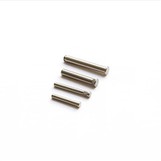
We offer a wide range of DC Motor Shaft products, including those made from different materials such as Motor Shaft SUS303 SUS304 SUS316. Each of these materials has different mechanical properties, which directly affect the radial load - bearing capacity of the shaft.
Our shafts are manufactured using advanced machining processes to ensure high precision and quality. We conduct rigorous quality control checks to ensure that each shaft meets the specified radial load requirements. Our technical team can also provide customized solutions based on the specific application requirements of our customers.
6. Importance of Choosing the Right Shaft for Radial Load Requirements
Selecting the right DC motor shaft for the expected radial load is crucial for the overall performance and reliability of the motor. If the shaft is not capable of withstanding the radial load, it can lead to premature failure, which may result in costly downtime and repairs.
On the other hand, choosing an overly large or heavy - duty shaft can increase the cost of the motor and may also add unnecessary weight and inertia to the system. Therefore, it's essential to accurately assess the radial load requirements and choose a shaft that provides the optimal balance between performance, cost, and reliability.


7. Contact Us for Your DC Motor Shaft Needs
If you are in the process of selecting a DC motor shaft for your application and need to understand more about the maximum radial load it can withstand, we are here to help. Our experienced team can provide detailed technical information and guidance to ensure that you choose the right shaft for your specific requirements.
Whether you need a standard shaft or a customized solution, we have the expertise and resources to meet your needs. We are committed to providing high - quality products and excellent customer service. Contact us today to start discussing your DC motor shaft requirements and let's work together to find the best solution for your application.
References
- Budynas, R. G., & Nisbett, J. K. (2011). Shigley's Mechanical Engineering Design. McGraw - Hill.
- Juvinall, R. C., & Marshek, K. M. (2011). Fundamentals of Machine Component Design. Wiley.
- Norton, R. L. (2012). Design of Machinery: An Introduction to the Synthesis and Analysis of Mechanisms and Machines. McGraw - Hill.