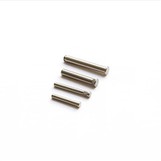
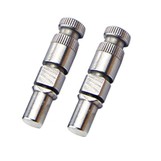
In the dynamic world of drone technology, the pitch angle range controlled by a drone pitch shaft is a critical factor that significantly impacts a drone's flight performance. As a trusted supplier of Drone Pitch Shafts, I am excited to delve into this topic and share insights that will not only enhance your understanding but also highlight the importance of choosing the right pitch shaft for your drones.
Understanding the Basics of Drone Movement
Before we explore the pitch angle range, it's essential to understand the three primary axes of drone movement: pitch, roll, and yaw. These axes are controlled by their respective shafts: Drone Pitch Shaft, Drone Roll Shaft, and Drone Yaw Shaft.
The pitch axis runs horizontally through the drone, from side to side. Movement along this axis is called pitching, which causes the drone to tilt its nose up or down. The roll axis also runs horizontally but from the front to the back of the drone. Rolling makes the drone lean to the left or right. The yaw axis is vertical, passing through the center of the drone, and yawing causes the drone to rotate left or right around this axis.
The Significance of the Pitch Angle Range
The pitch angle range refers to the maximum and minimum angles that a drone can tilt its nose up or down. This range is crucial because it directly affects the drone's ability to perform various maneuvers, such as climbing, descending, and cruising. A wider pitch angle range allows for more aggressive maneuvers, which is beneficial for drones used in racing or aerial acrobatics. On the other hand, a more limited pitch angle range may be suitable for drones used in surveillance or mapping, where stability and precision are key.
Factors Affecting the Pitch Angle Range
Several factors influence the pitch angle range controlled by a drone pitch shaft. One of the most significant factors is the design and construction of the pitch shaft itself. High - quality pitch shafts are engineered to provide smooth and precise movement, allowing for a wider and more accurate pitch angle range. The materials used in the shaft, such as carbon fiber or high - strength alloys, can also impact its performance. Carbon fiber shafts are lightweight and offer excellent stiffness, which can contribute to a more responsive pitch control.
Another factor is the motor and servo system that drives the pitch shaft. A powerful motor and a high - precision servo can provide the necessary torque and control to achieve a wider pitch angle range. The software and flight controller also play a crucial role. Advanced flight controllers can be programmed to limit or expand the pitch angle range based on the specific requirements of the drone's mission.
Typical Pitch Angle Ranges
In general, the pitch angle range for consumer drones typically falls between - 30° to + 30°. This range provides a good balance between stability and maneuverability for most recreational and light - commercial applications. For example, a drone used for aerial photography may only need a relatively small pitch angle range to maintain a stable camera platform while capturing images or videos.
However, for professional racing drones, the pitch angle range can be much wider, often exceeding ± 45°. These drones need to be able to perform rapid climbs and descents during races, requiring a more aggressive pitch control. Industrial drones used for tasks such as inspection or delivery may have a pitch angle range tailored to their specific needs. For instance, a delivery drone may need a more limited pitch angle range to ensure the stability of the payload during flight.
Our Drone Pitch Shafts: Meeting Diverse Needs
As a supplier of Drone Pitch Shafts, we understand the diverse needs of different drone applications. Our pitch shafts are designed to offer a wide range of pitch angle options to suit various requirements. We use the latest manufacturing techniques and high - quality materials to ensure the durability and performance of our products.
Our engineering team works closely with drone manufacturers to develop pitch shafts that are optimized for specific drone models and applications. Whether you are building a consumer - grade drone for casual flying or a professional - grade drone for high - performance tasks, we have the right pitch shaft for you.
Quality and Performance Assurance
We are committed to providing the highest quality Drone Pitch Shafts. Each shaft undergoes rigorous testing to ensure that it meets our strict quality standards. We test for factors such as smoothness of movement, torque capacity, and durability. Our quality control process includes both mechanical and electronic testing to guarantee that the pitch shafts perform reliably in real - world conditions.
Customization Options
We also offer customization options for our Drone Pitch Shafts. If you have specific requirements for the pitch angle range, material, or size of the shaft, our team can work with you to develop a custom - made solution. This flexibility allows us to meet the unique needs of our customers and ensure that their drones perform at their best.
Choosing the Right Pitch Angle Range for Your Drone
When choosing a pitch angle range for your drone, you need to consider the intended use of the drone. If you are building a drone for racing or acrobatics, a wider pitch angle range will be beneficial. However, if stability and precision are your top priorities, a more limited pitch angle range may be more suitable.
It's also important to consider the overall design and performance of the drone. The pitch angle range should be compatible with the drone's other components, such as the motors, servos, and flight controller. A well - balanced drone with a properly calibrated pitch angle range will offer better flight performance and reliability.
The Future of Drone Pitch Angle Control
As drone technology continues to evolve, we can expect to see further advancements in pitch angle control. Future pitch shafts may be even more lightweight, yet stronger, allowing for wider pitch angle ranges and more efficient flight. The integration of artificial intelligence and machine learning in flight controllers may also enable drones to adjust their pitch angle range in real - time based on environmental conditions and mission requirements.
Contact Us for Your Drone Pitch Shaft Needs
If you are in the market for high - quality Drone Pitch Shafts, look no further. Our team of experts is ready to assist you in choosing the right pitch shaft for your drone. Whether you need a standard pitch shaft or a custom - designed solution, we have the knowledge and experience to meet your needs.


We understand the importance of providing excellent customer service and support. We can answer any questions you may have about our products, the pitch angle range, or the installation process. Contact us today to start a conversation about how our Drone Pitch Shafts can enhance the performance of your drones.
References
- Anderson, D. J., & Eberhardt, S. E. (2016). Understanding Flight. McGraw - Hill Education.
- Newman, W. F. (2018). Introduction to Flight. McGraw - Hill Education.
- Thomas, R. J. (2020). Drones: Technology, Design, and Applications. CRC Press.