Hey there, drone enthusiasts! As a supplier of Drone Pitch Shaft, I've spent a lot of time diving deep into the nitty - gritty details of how drones work. One of the most interesting aspects is the relationship between the pitch shaft and the drone's propellers. So, let's get right into it!
First off, let's quickly understand what pitch is in the context of drones. Pitch refers to the up - and - down movement of the drone's nose. When the drone pitches forward, it moves in that direction, and when it pitches backward, it retreats. The pitch shaft plays a crucial role in making this movement possible.
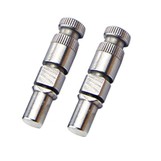
The pitch shaft is essentially a mechanical component that connects to the drone's control system and the propellers. It acts as a link that transfers the control signals from the flight controller to the propellers. When the flight controller decides that the drone needs to pitch, it sends a signal to the pitch shaft.
Now, how does this signal transfer affect the propellers? Well, the pitch shaft is designed to adjust the angle of the propellers. You see, the angle at which the propellers spin determines the amount of thrust and the direction in which it's applied. When the pitch shaft gets the signal to pitch forward, it changes the angle of the propellers in such a way that more thrust is generated at the front of the drone. This extra thrust at the front makes the drone's nose go down and the drone moves forward.
Conversely, when the pitch shaft receives a signal to pitch backward, it alters the propeller angles so that more thrust is produced at the rear of the drone. This causes the drone's nose to lift up, and the drone moves backward. It's a really neat mechanism that showcases the precision engineering behind drones.
Let's talk about the types of pitch shafts. There are mainly two types: fixed - pitch and variable - pitch. In a fixed - pitch system, the angle of the propellers relative to the pitch shaft is set and cannot be changed during flight. This is a simpler and more cost - effective solution, often used in entry - level drones. The flight controller adjusts the speed of the propellers to control the pitch.
On the other hand, variable - pitch systems offer more flexibility. The pitch shaft in a variable - pitch system can change the angle of the propellers on - the - fly. This allows for more precise control of the drone's pitch. High - end drones, especially those used for professional photography, racing, or industrial applications, often use variable - pitch systems. They can quickly adapt to different flight conditions and perform complex maneuvers with ease.
The pitch shaft also has to work in harmony with other components of the drone, such as the Drone Roll Shaft and the Drone Yaw Shaft. Roll refers to the side - to - side movement of the drone, and the roll shaft controls the angle of the propellers to achieve this movement. Yaw, on the other hand, is the rotation of the drone around its vertical axis, and the yaw shaft is responsible for making that happen. All these shafts need to work together seamlessly for the drone to fly smoothly.
Another important factor is the material of the pitch shaft. It needs to be strong enough to withstand the forces exerted on it during flight. Common materials include aluminum alloys and carbon fiber. Aluminum alloys are lightweight and have good strength - to - weight ratios. They're relatively easy to manufacture and are widely used in many drones. Carbon fiber, on the other hand, is even lighter and stronger. It's often used in high - performance drones where every gram of weight matters.
The size and shape of the pitch shaft also matter. A well - designed pitch shaft should be aerodynamic to reduce drag. It should also be compact enough to fit into the drone's frame without taking up too much space. This is especially important in smaller drones where space is at a premium.
As a Drone Pitch Shaft supplier, I've seen firsthand how crucial the pitch shaft is to a drone's performance. A high - quality pitch shaft can make a huge difference in how well a drone flies. It can improve stability, maneuverability, and overall flight efficiency.
If you're in the market for drones or drone parts, and you're looking for a reliable pitch shaft, I'd love to have a chat with you. Whether you're a hobbyist building your first drone or a professional looking to upgrade your equipment, I can offer you the best solutions. Feel free to reach out for more information and let's discuss how I can meet your specific needs.


In conclusion, the relationship between the pitch shaft and the drone's propellers is a key aspect of drone flight. The pitch shaft acts as the mediator between the flight controller and the propellers, adjusting the propeller angles to control the pitch of the drone. With different types of pitch shafts, materials, and designs available, there's a solution for every type of drone and every flight requirement. So, if you're passionate about drones, don't overlook the importance of the pitch shaft!
References:
- "Drone Technology Handbook"
- "Aerodynamics of Unmanned Aerial Vehicles"