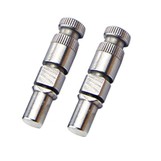
In the intricate world of AC motors, the diameter of the motor shaft is a critical parameter that can significantly influence the performance, efficiency, and reliability of the motor. As a trusted supplier of AC Motor Shaft, I have witnessed firsthand the importance of understanding the tolerance for the diameter of an AC motor shaft. In this blog post, I will delve into the concept of shaft diameter tolerance, its significance, and the factors that affect it.
What is Shaft Diameter Tolerance?
Shaft diameter tolerance refers to the allowable variation in the diameter of an AC motor shaft from its nominal or specified value. It is a crucial aspect of motor manufacturing as it ensures that the shaft can fit properly into the motor's bearings, couplings, and other components. Tolerances are specified in engineering drawings using a combination of upper and lower limits, which define the acceptable range of shaft diameters.

For example, if a shaft has a nominal diameter of 20 mm with a tolerance of ±0.05 mm, the acceptable range of diameters would be between 19.95 mm and 20.05 mm. Any shaft with a diameter outside this range would be considered out of tolerance and may not function correctly in the motor.
Why is Shaft Diameter Tolerance Important?
The tolerance for the diameter of an AC motor shaft is important for several reasons:
- Proper Fit: A shaft with the correct diameter tolerance ensures a proper fit between the shaft and the motor's bearings and couplings. This is essential for minimizing vibration, noise, and wear, which can lead to premature failure of the motor.
- Optimal Performance: The diameter of the shaft affects the motor's performance, including its torque, speed, and efficiency. A shaft with the correct tolerance ensures that the motor can operate at its optimal performance levels.
- Safety: A shaft that is out of tolerance can pose a safety hazard. For example, a shaft that is too small may not be able to transmit the required torque, leading to a sudden loss of power or even a mechanical failure. On the other hand, a shaft that is too large may cause excessive stress on the motor's components, leading to premature wear and failure.
Factors Affecting Shaft Diameter Tolerance
Several factors can affect the tolerance for the diameter of an AC motor shaft, including:
- Manufacturing Process: The manufacturing process used to produce the shaft can have a significant impact on its diameter tolerance. For example, turning, grinding, and honing are common machining processes used to produce shafts, and each process has its own level of accuracy and repeatability.
- Material Properties: The material properties of the shaft, such as its hardness, strength, and ductility, can also affect its diameter tolerance. For example, a shaft made of a harder material may be more difficult to machine to a precise diameter than a shaft made of a softer material.
- Design Requirements: The design requirements of the motor, such as its operating speed, torque, and load, can also influence the shaft diameter tolerance. For example, a motor that operates at high speeds may require a shaft with a tighter diameter tolerance to minimize vibration and noise.
- Environmental Conditions: The environmental conditions in which the motor operates, such as temperature, humidity, and vibration, can also affect the shaft diameter tolerance. For example, a motor that operates in a high-temperature environment may experience thermal expansion, which can cause the shaft diameter to increase.
Determining the Appropriate Shaft Diameter Tolerance
Determining the appropriate shaft diameter tolerance requires a careful consideration of the factors mentioned above, as well as the specific requirements of the motor application. In general, the tolerance should be as tight as possible while still being achievable with the available manufacturing processes and equipment.
To determine the appropriate tolerance, it is important to consult with the motor designer or engineer, as they will have a better understanding of the motor's requirements and the operating conditions. They can also provide guidance on the manufacturing processes and equipment that are best suited for producing the shaft with the required tolerance.
Measuring Shaft Diameter Tolerance
Measuring the shaft diameter tolerance is an important step in ensuring that the shaft meets the required specifications. There are several methods available for measuring shaft diameter, including:

- Calipers: Calipers are a common tool used to measure the diameter of a shaft. They are available in both digital and analog versions and can provide accurate measurements to within a few thousandths of an inch.
- Micrometers: Micrometers are more precise than calipers and can provide measurements to within a few millionths of an inch. They are typically used for measuring the diameter of small shafts or for applications where a high level of accuracy is required.
- Coordinate Measuring Machines (CMMs): CMMs are highly accurate measuring devices that use a probe to measure the dimensions of a part. They are typically used for measuring complex parts or for applications where a high level of accuracy is required.
Maintaining Shaft Diameter Tolerance
Maintaining the shaft diameter tolerance is essential for ensuring the long-term performance and reliability of the motor. To maintain the tolerance, it is important to follow the manufacturer's recommendations for maintenance and inspection. This may include regular cleaning, lubrication, and inspection of the shaft and its components.
In addition, it is important to use high-quality materials and manufacturing processes when producing the shaft. This can help to ensure that the shaft has the required strength, hardness, and dimensional stability to maintain its diameter tolerance over time.
Conclusion
In conclusion, the tolerance for the diameter of an AC motor shaft is a critical parameter that can significantly influence the performance, efficiency, and reliability of the motor. As a supplier of AC Motor Shaft, I understand the importance of providing high-quality shafts that meet the required specifications. By understanding the concept of shaft diameter tolerance, its significance, and the factors that affect it, you can make informed decisions when selecting and maintaining AC motors for your applications.
If you are in the market for high-quality AC Motor Shaft, DC Motor Shaft, or Brushless Motor Shaft, please feel free to contact us to discuss your specific requirements. We look forward to working with you to provide the best solutions for your motor needs.
References
- "Mechanical Engineering Design" by Joseph E. Shigley and Charles R. Mischke
- "Manufacturing Engineering and Technology" by S. Kalpakjian and S. R. Schmid
- "Handbook of Motor Technology" by Eric Packer