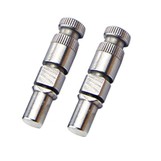
Hey there! As a supplier of drone shafts, I often get asked about the torque capacity of these crucial components. So, let's dive right in and explore what the torque capacity of a drone shaft really means and why it matters.
First off, what's torque? In simple terms, torque is the rotational force that causes an object to rotate around an axis. When it comes to drones, the shafts play a vital role in transferring this rotational force from the motors to the propellers. The torque capacity of a drone shaft refers to the maximum amount of torque it can handle without failing or deforming.
Why is torque capacity important for drone shafts? Well, if a shaft has a low torque capacity, it might not be able to transfer enough force to the propellers. This can lead to reduced performance, like slower acceleration, less stable flight, and even the risk of the shaft breaking under high loads. On the other hand, a shaft with a high torque capacity can handle more force, allowing the drone to perform better, especially during maneuvers that require a lot of power.
There are several factors that affect the torque capacity of a drone shaft. One of the main factors is the material the shaft is made of. Different materials have different mechanical properties, such as strength and stiffness. For example, shafts made of high - strength steel can generally handle more torque compared to those made of aluminum. Steel has a higher yield strength, which means it can withstand more force before it starts to deform permanently.
The diameter of the shaft also plays a significant role. A thicker shaft usually has a higher torque capacity because it has more material to resist the rotational force. Think of it like a thick stick and a thin stick. The thick stick is less likely to break when you try to twist it compared to the thin one.
The length of the shaft is another factor. Longer shafts are more prone to bending under torque, which can reduce their effective torque capacity. Shorter shafts are generally stiffer and can handle more torque for the same material and diameter.
Now, let's talk about the different types of drone shafts and their torque requirements. There are three main types of drone shafts: the Drone Yaw Shaft, the Drone Roll Shaft, and the Drone Pitch Shaft.
The yaw shaft is responsible for the drone's rotation around its vertical axis. When the drone needs to turn left or right, the yaw shaft transfers the torque from the motor to the appropriate control surfaces. The torque requirements for the yaw shaft depend on the size and weight of the drone, as well as the speed at which it needs to turn. Larger drones with more inertia will require a yaw shaft with a higher torque capacity to make quick turns.
The roll shaft controls the drone's rotation around its longitudinal axis. This is what allows the drone to tilt left or right. Similar to the yaw shaft, the torque capacity of the roll shaft needs to be sufficient to handle the forces generated during rolling maneuvers. Drones that perform acrobatic stunts or need to make rapid roll changes will need a roll shaft with a high torque capacity.
The pitch shaft is in charge of the drone's rotation around its lateral axis, which controls the drone's up - and - down movement. When the drone ascends or descends, the pitch shaft transfers the necessary torque. The torque requirements for the pitch shaft vary depending on the drone's payload and the rate of ascent or descent. A drone carrying a heavy payload will need a pitch shaft with a higher torque capacity to lift it effectively.
Calculating the exact torque capacity of a drone shaft is not always straightforward. It usually involves complex engineering calculations that take into account the material properties, dimensions, and the specific loads the shaft will experience. However, as a supplier, we use advanced testing methods to ensure that our shafts meet the required torque capacity standards.
We start by selecting high - quality materials. We source our materials from trusted suppliers and conduct thorough quality checks. Then, we use precision manufacturing processes to create shafts with the right dimensions and tolerances. After manufacturing, we subject the shafts to torque testing. We use specialized equipment to apply a gradually increasing torque to the shaft until it reaches its breaking point. This allows us to determine the maximum torque capacity of each shaft and ensure that it meets or exceeds the industry standards.
In addition to the material and manufacturing quality, we also offer customization options. Different drones have different torque requirements, and we understand that one - size - fits - all doesn't work in the drone industry. So, we can customize the shafts based on your specific needs. Whether you need a shaft with a higher torque capacity for a high - performance racing drone or a lighter shaft for a small, consumer - grade drone, we can make it happen.


If you're in the market for drone shafts, it's important to consider the torque capacity. Don't just go for the cheapest option. A shaft with a low torque capacity might save you some money upfront, but it could lead to performance issues and even safety risks in the long run.
As a drone shaft supplier, we're committed to providing high - quality products that meet your torque requirements. We have a team of experts who are always ready to answer your questions and help you choose the right shaft for your drone. Whether you're a hobbyist building your first drone or a professional in the drone industry, we've got you covered.
So, if you're interested in our drone shafts and want to discuss your specific torque requirements, feel free to reach out. We're here to help you get the best performance out of your drone. Let's work together to take your drone to new heights!
References
- "Mechanical Engineering Design" by Joseph E. Shigley and Charles R. Mischke
- "Aerodynamics of Flight Vehicles: Theory, Design, and Applications" by James D. Anderson Jr.