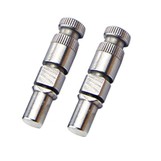
As a supplier of mini shafts, I've witnessed firsthand the growing demand for these precision components across various industries. One of the most crucial properties that customers often inquire about is the wear resistance of mini shafts. In this blog post, I'll delve into what wear resistance means for mini shafts, the factors that influence it, and how we ensure our products meet the highest standards of durability.
Understanding Wear Resistance in Mini Shafts
Wear resistance refers to a material's ability to withstand wear and tear caused by friction, abrasion, corrosion, and other mechanical forces. In the context of mini shafts, which are used in a wide range of applications such as robotics, medical devices, and automotive systems, wear resistance is essential for maintaining the performance and longevity of the equipment.
When a mini shaft experiences wear, it can lead to several issues, including increased friction, reduced efficiency, and even premature failure of the entire system. For example, in a robotic arm, a worn mini shaft can cause inaccurate movements and reduced precision, affecting the overall productivity of the robot. Similarly, in a medical device, a mini shaft with poor wear resistance can compromise the safety and effectiveness of the treatment.
Factors Affecting the Wear Resistance of Mini Shafts
Several factors can influence the wear resistance of mini shafts, including the material, surface finish, heat treatment, and operating conditions. Let's take a closer look at each of these factors:
Material Selection
The choice of material is perhaps the most critical factor in determining the wear resistance of a mini shaft. Different materials have different properties, such as hardness, toughness, and corrosion resistance, which can significantly impact their ability to withstand wear.
One of the most commonly used materials for mini shafts is stainless steel, which offers excellent corrosion resistance and good mechanical properties. Stainless Steel Mini Shaft is a popular choice for applications where hygiene and durability are essential, such as in the food and beverage industry and medical devices. Other materials that are often used for mini shafts include carbon steel, alloy steel, and titanium, each with its own unique set of properties and advantages.
Surface Finish
The surface finish of a mini shaft can also have a significant impact on its wear resistance. A smooth surface finish can reduce friction and wear, while a rough surface can increase the likelihood of abrasion and damage.
To achieve a high-quality surface finish, we use advanced machining techniques such as grinding, polishing, and lapping. These processes can remove any surface imperfections and create a smooth, uniform surface that is resistant to wear. In addition, we can also apply various surface treatments such as plating, coating, and nitriding to further enhance the wear resistance of the mini shaft.
Heat Treatment
Heat treatment is another important factor that can affect the wear resistance of a mini shaft. By subjecting the shaft to controlled heating and cooling processes, we can modify its microstructure and improve its mechanical properties, such as hardness, toughness, and wear resistance.
There are several types of heat treatment processes that can be used for mini shafts, including annealing, quenching, tempering, and case hardening. The choice of heat treatment process depends on the material, the application, and the desired properties of the mini shaft. For example, case hardening is a popular heat treatment process for mini shafts that require high surface hardness and wear resistance, while tempering is often used to improve the toughness and ductility of the shaft.
Operating Conditions
The operating conditions of a mini shaft can also have a significant impact on its wear resistance. Factors such as load, speed, temperature, and lubrication can all affect the rate of wear and the overall performance of the shaft.
For example, in high-load applications, the mini shaft may be subjected to greater stress and wear, requiring a material with higher strength and wear resistance. Similarly, in high-speed applications, the shaft may experience increased friction and heat, which can accelerate the wear process. To ensure the wear resistance of our mini shafts under different operating conditions, we work closely with our customers to understand their specific requirements and recommend the most suitable material, surface finish, and heat treatment process.
Ensuring High Wear Resistance in Our Mini Shafts
As a leading supplier of mini shafts, we are committed to providing our customers with high-quality products that meet the highest standards of wear resistance. To achieve this, we have implemented a comprehensive quality control system that covers every stage of the manufacturing process, from material selection to final inspection.
Material Testing
Before we start manufacturing a mini shaft, we carefully select the material based on the customer's requirements and the application. We source our materials from reputable suppliers and conduct thorough testing to ensure their quality and compliance with international standards.
We use advanced testing equipment such as hardness testers, tensile testers, and spectrometers to analyze the chemical composition and mechanical properties of the material. This allows us to verify the quality of the material and ensure that it meets the specifications of the mini shaft.
Precision Machining
Once the material has been selected and tested, we use advanced machining techniques to manufacture the mini shaft with high precision and accuracy. Our state-of-the-art CNC machining centers are equipped with the latest tools and technology, allowing us to produce mini shafts with tight tolerances and excellent surface finish.

We also have a team of experienced machinists who are trained to operate the CNC machines and ensure the quality of the machining process. They carefully monitor the machining parameters and make adjustments as needed to ensure that the mini shaft meets the required specifications.
Surface Treatment
After the machining process is complete, we apply various surface treatments to the mini shaft to enhance its wear resistance. We offer a wide range of surface treatments, including plating, coating, and nitriding, which can provide additional protection against wear, corrosion, and friction.
Our surface treatment processes are carried out in-house using advanced equipment and techniques. We carefully control the process parameters to ensure the quality and consistency of the surface treatment. We also conduct thorough testing to verify the effectiveness of the surface treatment and ensure that it meets the customer's requirements.
Final Inspection
Before the mini shaft is shipped to the customer, we conduct a final inspection to ensure its quality and compliance with the specifications. Our inspection process includes a visual inspection, dimensional inspection, and functional testing.
We use advanced inspection equipment such as coordinate measuring machines (CMMs) and optical comparators to measure the dimensions and geometry of the mini shaft with high precision. We also perform functional testing to ensure that the shaft operates smoothly and meets the performance requirements of the application.
Contact Us for Your Mini Shaft Needs
If you're looking for high-quality mini shafts with excellent wear resistance, look no further. As a leading supplier of mini shafts, we have the expertise and experience to provide you with the best solutions for your specific requirements.
We offer a wide range of mini shafts made from different materials, including stainless steel, carbon steel, alloy steel, and titanium. Our mini shafts are available in various sizes and shapes, and we can also customize them to meet your specific needs.
Whether you're in the robotics, medical, automotive, or any other industry, we can provide you with the mini shafts you need to ensure the performance and longevity of your equipment. Contact us today to discuss your requirements and get a free quote. We look forward to working with you!
References
- Callister, W. D., & Rethwisch, D. G. (2017). Materials Science and Engineering: An Introduction. Wiley.
- ASM Handbook, Volume 4: Heat Treating. ASM International.
- ISO 9001:2015 Quality management systems - Requirements. International Organization for Standardization.