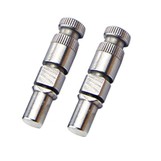
As a seasoned supplier of hard chrome shafts, I am often asked about the materials used in their production. The process of creating a high - quality hard chrome shaft involves a careful selection of base materials and the application of a hard chrome coating. In this blog, I'll delve into the details of these materials and their roles in the manufacturing of hard chrome shafts.
Base Materials for Hard Chrome Shafts
The base material of a hard chrome shaft serves as the foundation, providing the necessary strength, toughness, and dimensional stability. Different applications require different base materials, and here are some of the most commonly used ones:
Carbon Steel
Carbon steel is one of the most popular choices for hard chrome shafts. It is widely available, relatively inexpensive, and offers a good balance of strength and machinability. The carbon content in carbon steel can vary, with low - carbon steels (less than 0.3% carbon) being more ductile and easy to form, while high - carbon steels (more than 0.6% carbon) are stronger and harder but less malleable.
For example, 1045 carbon steel is a medium - carbon steel that is often used in hard chrome shaft production. It has a carbon content of around 0.45%, which gives it good strength and wear resistance. After heat treatment, 1045 steel can achieve a hardness suitable for many industrial applications. The hard chrome coating on top of the 1045 steel further enhances its wear resistance and corrosion protection.
Alloy Steel
Alloy steels are carbon steels that have been alloyed with other elements such as chromium, nickel, molybdenum, and vanadium. These alloying elements improve the mechanical properties of the steel, such as strength, hardness, toughness, and corrosion resistance.
One of the commonly used alloy steels for hard chrome shafts is 4140. This steel contains chromium, molybdenum, and manganese, which give it excellent hardenability and strength. 4140 alloy steel can be heat - treated to a wide range of hardness levels, making it suitable for various applications, from light - duty to heavy - duty. The hard chrome coating on 4140 alloy steel not only enhances its surface hardness but also provides a smooth surface finish, reducing friction and wear.
Stainless Steel
Stainless steel is another option for hard chrome shafts, especially in applications where corrosion resistance is a primary concern. Stainless steels contain chromium, which forms a passive oxide layer on the surface of the steel, protecting it from corrosion.
AISI 304 and AISI 316 are two of the most commonly used stainless steels. AISI 304 is a general - purpose stainless steel with good corrosion resistance and formability. AISI 316, on the other hand, contains molybdenum, which further enhances its corrosion resistance, especially in chloride - containing environments.
When a hard chrome coating is applied to stainless steel, it not only improves the wear resistance but also enhances the surface hardness, making the shaft more durable in abrasive environments.
The Hard Chrome Coating
The hard chrome coating is a key component of a hard chrome shaft. It is applied to the surface of the base material to provide wear resistance, corrosion protection, and a smooth surface finish.
Chromium
The main ingredient of the hard chrome coating is chromium. Chromium is a hard, lustrous metal that has excellent wear resistance and corrosion resistance. In the hard chrome plating process, chromium ions are deposited onto the surface of the base material through an electroplating process.
The thickness of the hard chrome coating can vary depending on the application. For light - duty applications, a coating thickness of 0.0005 - 0.001 inches (12.7 - 25.4 microns) may be sufficient. For heavy - duty applications, the coating thickness can range from 0.001 - 0.01 inches (25.4 - 254 microns) or even more.
Other Elements in the Coating
In addition to chromium, the hard chrome coating may also contain other elements to improve its properties. For example, some hard chrome coatings may contain small amounts of sulfur or other additives to improve the hardness and wear resistance of the coating.

The Manufacturing Process
The manufacturing of a hard chrome shaft involves several steps, from the selection of the base material to the application of the hard chrome coating.
Machining the Base Material
The first step is to machine the base material to the desired shape and dimensions. This may involve processes such as turning, milling, drilling, and grinding. The machining process ensures that the shaft has the correct size and surface finish before the hard chrome coating is applied.
Surface Preparation
Before the hard chrome coating can be applied, the surface of the base material must be properly prepared. This involves cleaning the surface to remove any dirt, oil, or other contaminants. The surface may also be etched or activated to improve the adhesion of the hard chrome coating.
Electroplating the Hard Chrome Coating
The hard chrome coating is applied through an electroplating process. In this process, the base material is immersed in an electrolyte solution containing chromium ions. An electric current is passed through the solution, causing the chromium ions to be deposited onto the surface of the base material.
The electroplating process requires careful control of several parameters, such as the current density, temperature, and plating time. These parameters affect the thickness, hardness, and quality of the hard chrome coating.
Post - Treatment
After the hard chrome coating is applied, the shaft may undergo post - treatment processes such as polishing or heat treatment. Polishing can improve the surface finish of the shaft, while heat treatment can relieve the internal stress in the coating and improve its adhesion to the base material.
Applications of Hard Chrome Shafts
Hard chrome shafts are used in a wide range of applications, including:
Industrial Machinery
In industrial machinery, hard chrome shafts are used in conveyor systems, printing presses, and machine tools. The wear resistance and corrosion protection of the hard chrome coating ensure that the shafts can withstand the harsh operating conditions in these applications.
Hydraulic and Pneumatic Systems
Hard chrome shafts are also commonly used in hydraulic and pneumatic cylinders. The smooth surface finish of the hard chrome coating reduces friction, allowing the cylinders to operate more efficiently. The corrosion resistance of the coating also protects the shafts from the hydraulic or pneumatic fluids.
Automotive Industry
In the automotive industry, hard chrome shafts are used in engine components, such as camshafts and crankshafts. The wear resistance of the hard chrome coating helps to extend the service life of these components.
Why Choose Our Hard Chrome Shafts
As a supplier of hard chrome shafts, we take pride in our products. We use high - quality base materials and state - of - the - art electroplating technology to ensure that our hard chrome shafts meet the highest standards of quality and performance.
Our hard chrome shafts are available in a variety of sizes and specifications to meet the needs of different applications. Whether you need a small - diameter shaft for a precision instrument or a large - diameter shaft for heavy - duty industrial machinery, we can provide you with the right solution.
If you are interested in our Hard Chrome Linear Shaft, please feel free to contact us for more information. We are always ready to discuss your requirements and provide you with a competitive quote.
Conclusion
The materials used to make a hard chrome shaft play a crucial role in its performance and durability. The selection of the base material depends on the specific application requirements, such as strength, toughness, and corrosion resistance. The hard chrome coating provides wear resistance, corrosion protection, and a smooth surface finish.
As a supplier, we are committed to using the best materials and the latest manufacturing processes to produce high - quality hard chrome shafts. If you are in the market for hard chrome shafts, we invite you to contact us for a consultation. We look forward to working with you to meet your hard chrome shaft needs.
References
- ASM Handbook Volume 5: Surface Engineering. ASM International.
- Metals Handbook Desk Edition, 3rd Edition. ASM International.
- "Fundamentals of Electroplating" by Lowenheim, F. A.