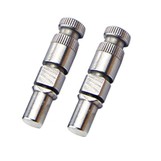
When it comes to the smooth operation of a fixed shaft, choosing the right lubricant is of paramount importance. As a trusted fixed shaft supplier, I've witnessed firsthand the impact that the appropriate lubrication can have on the performance and longevity of these crucial components. In this blog, I'll delve into the different types of lubricants suitable for fixed shafts, exploring their characteristics, benefits, and ideal applications.
Understanding the Role of Lubricants in Fixed Shafts
Before we dive into the types of lubricants, it's essential to understand why lubrication is so vital for fixed shafts. A fixed shaft is a stationary component that provides support and guidance for rotating parts such as bearings, gears, or pulleys. Over time, the constant friction between the shaft and the moving elements can lead to wear and tear, increased energy consumption, and even premature failure.
A high - quality lubricant serves several key functions. Firstly, it reduces friction by creating a thin film between the contacting surfaces. This not only minimizes wear but also helps to lower the operating temperature of the shaft, preventing overheating and potential damage. Secondly, lubricants can act as a barrier against contaminants such as dust, dirt, and moisture, which can cause corrosion and abrasion. Additionally, some lubricants offer anti - rust and anti - oxidation properties, further protecting the shaft from degradation.
Types of Lubricants for Fixed Shafts
1. Mineral Oil - Based Lubricants
Mineral oil is one of the most commonly used lubricants for fixed shafts. It is derived from crude oil through a refining process, which removes impurities and enhances its lubricating properties. Mineral oil - based lubricants are known for their excellent lubricity, which means they can effectively reduce friction between the shaft and the moving parts.
These lubricants are relatively inexpensive, making them a cost - effective choice for many applications. They also have good thermal stability, which allows them to maintain their lubricating properties over a wide range of temperatures. However, mineral oil - based lubricants may not be suitable for high - temperature or high - load applications, as they can break down under extreme conditions.
Mineral oil lubricants are often used in general industrial applications where the operating conditions are not too severe. For example, in small - scale machinery or equipment with low - speed rotating parts, mineral oil can provide adequate lubrication.
2. Synthetic Lubricants
Synthetic lubricants are engineered in a laboratory to have specific properties that make them suitable for a wide range of applications. They are typically made from chemically synthesized base oils, which offer superior performance compared to mineral oils.
One of the main advantages of synthetic lubricants is their excellent thermal stability. They can withstand higher temperatures without breaking down, making them ideal for high - speed and high - load applications. Synthetic lubricants also have better oxidation resistance, which means they can last longer and require less frequent replacement.
In addition, synthetic lubricants have a lower coefficient of friction than mineral oils, which can result in improved energy efficiency. They are also more resistant to water and contaminants, providing better protection for the fixed shaft. However, synthetic lubricants are generally more expensive than mineral oil - based lubricants, which may be a consideration for some cost - sensitive applications.
Synthetic lubricants are commonly used in demanding applications such as aerospace, automotive, and high - precision machinery. For instance, in high - speed bearings or gears in a racing car engine, synthetic lubricants can ensure smooth operation and extended component life.


3. Greases
Greases are a semi - solid lubricant that consists of a base oil and a thickening agent. The thickening agent, which can be a soap or a non - soap material, gives the grease its consistency and helps to keep the base oil in place.
Greases offer several advantages for fixed shafts. They have excellent adhesion properties, which means they can stay in place on the shaft surface and provide continuous lubrication. This is particularly useful in applications where the shaft is subject to vibration or where there is a risk of the lubricant being thrown off. Greases also have good sealing properties, which can help to prevent contaminants from entering the system.
There are different types of greases available, each with its own characteristics. For example, lithium - based greases are widely used due to their good all - around performance, including good water resistance and mechanical stability. Polyurea - based greases, on the other hand, offer excellent high - temperature performance and long - term durability.
Greases are commonly used in applications where the lubricant needs to stay in place for an extended period, such as in slow - moving or intermittent - use equipment. For example, in the bearings of a conveyor system or the hinges of a heavy - duty door, greases can provide reliable lubrication.
4. Solid Lubricants
Solid lubricants are substances that can reduce friction and wear when applied between two surfaces. They are often used in situations where traditional liquid or semi - solid lubricants are not suitable, such as in high - temperature, high - pressure, or vacuum environments.
Common types of solid lubricants include graphite, molybdenum disulfide (MoS₂), and polytetrafluoroethylene (PTFE). Graphite is a soft, black material that has excellent lubricating properties at high temperatures. It can be used as a dry lubricant or added to a liquid or grease lubricant to enhance its performance.
Molybdenum disulfide is another popular solid lubricant. It has a layered structure that allows it to easily slide between surfaces, reducing friction. MoS₂ is particularly effective in high - pressure and high - load applications.
PTFE, also known as Teflon, is a synthetic polymer with extremely low friction coefficients. It is resistant to chemicals and high temperatures, making it suitable for a wide range of applications. Solid lubricants are often used in specialized applications such as aerospace, automotive racing, and high - precision manufacturing.
Factors to Consider When Choosing a Lubricant
When selecting a lubricant for a fixed shaft, several factors need to be taken into account:
1. Operating Conditions
The operating conditions of the fixed shaft, such as temperature, load, speed, and environment, play a crucial role in determining the appropriate lubricant. For high - temperature applications, synthetic lubricants or solid lubricants may be the best choice. In wet or dirty environments, a lubricant with good water resistance and contamination protection, such as a synthetic lubricant or a grease, should be selected.
2. Compatibility
The lubricant must be compatible with the materials of the fixed shaft and the other components in the system. For example, some lubricants may react with certain metals or plastics, causing corrosion or degradation. It's important to consult the manufacturer's recommendations or conduct compatibility tests before using a new lubricant.
3. Lubrication Method
The lubrication method also affects the choice of lubricant. If the shaft is lubricated by a centralized lubrication system, a liquid lubricant may be more suitable. If the lubricant needs to stay in place on the shaft surface, a grease may be a better option.
4. Cost
Cost is always a consideration when choosing a lubricant. While synthetic lubricants and some specialty greases may offer superior performance, they can be more expensive than mineral oil - based lubricants. It's important to balance the cost with the performance requirements of the application.
Our Fixed Shaft Offerings
As a fixed shaft supplier, we offer a wide range of high - quality fixed shafts to meet the diverse needs of our customers. Our Stainless Steel Fixed Shaft is made from premium stainless steel materials, providing excellent corrosion resistance and durability. It is suitable for a variety of applications, especially in environments where moisture or chemicals are present.
Our Precision Fixed Shaft is manufactured with high precision, ensuring accurate dimensions and smooth surfaces. It is ideal for high - precision machinery and equipment, where tight tolerances are required.
Conclusion
Choosing the right lubricant for a fixed shaft is a critical decision that can significantly impact the performance and longevity of the shaft and the entire system. By understanding the different types of lubricants available and considering the operating conditions, compatibility, lubrication method, and cost, you can make an informed choice.
As a fixed shaft supplier, we are committed to providing our customers with not only high - quality fixed shafts but also the expertise and support to help them select the most suitable lubricants for their applications. If you are interested in our fixed shafts or need advice on lubrication, please feel free to contact us for procurement and further discussions.
References
- "Lubrication Fundamentals" by W. R. Jones
- "Handbook of Lubrication and Tribology" edited by B. Bhushan