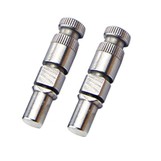
Can a DC motor shaft be used in a high - altitude environment? That's a question I've been getting a lot lately as a DC Motor Shaft supplier. And it's a good one, considering the unique challenges that high - altitude environments present. In this blog, I'll dig into the details and give you the lowdown on whether a DC motor shaft can cut it up in the thin air.
Let's first understand what a high - altitude environment means. Generally, high - altitude areas have lower air pressure, lower oxygen levels, and often extreme temperature variations. These factors can have a significant impact on the performance and longevity of mechanical components, including DC motor shafts.
Impact of Low Air Pressure
One of the primary concerns at high altitudes is the low air pressure. You see, in normal conditions, air pressure helps with heat dissipation. When a DC motor is running, it generates heat, and the air around it helps carry that heat away. But at high altitudes, the lower air density means there are fewer air molecules to transfer heat. This can cause the motor, and by extension, the shaft, to overheat.
Overheating is a big no - no for DC motor shafts. Most DC Motor Shaft materials have specific temperature limits. If the temperature exceeds these limits, the material can expand, leading to increased friction between the shaft and its bearings. This extra friction can wear down the shaft and bearings much faster, reducing the overall lifespan of the motor.
Oxygen Levels and Corrosion
Another aspect to consider is the lower oxygen levels at high altitudes. While it might seem counterintuitive, oxygen actually plays a role in the corrosion process. In some cases, lower oxygen levels can slow down the oxidation process, which is good news for the shaft. However, high - altitude environments are often also associated with other factors like high UV radiation and dust.
The dust can carry abrasive particles that can scratch the surface of the Motor Shaft SUS303 SUS304 SUS316. Once the surface is damaged, even the reduced oxygen levels might not be enough to prevent corrosion. Corrosion can weaken the shaft, making it more prone to breakage under stress.
Temperature Variations
High - altitude areas are known for their extreme temperature swings. During the day, the sun can heat up the motor and its components, while at night, the temperature can drop significantly. These rapid temperature changes can cause thermal expansion and contraction of the DC motor shaft.

If the shaft material doesn't have good thermal stability, these constant expansions and contractions can lead to internal stresses. Over time, these stresses can cause cracks in the shaft, which can ultimately result in failure. So, choosing a shaft material that can handle these temperature variations is crucial.
Suitable Materials for High - Altitude Use
When it comes to high - altitude applications, not all DC motor shaft materials are created equal. Stainless steel, like the Motor Shaft SUS303 SUS304 SUS316, is a popular choice. Stainless steel has good corrosion resistance, which helps protect the shaft from the harsh high - altitude environment. It also has relatively good thermal stability, which means it can handle the temperature variations better than some other materials.
Another option is titanium. Titanium is lightweight, strong, and has excellent corrosion resistance. It can withstand high - temperature environments without significant expansion, making it a great candidate for high - altitude DC motor shafts. However, titanium is more expensive than stainless steel, so cost might be a factor to consider.
Design Considerations
In addition to the material, the design of the DC motor shaft also plays a role in its suitability for high - altitude use. For example, a shaft with a larger diameter can handle more stress and is less likely to bend or break under the added pressure from temperature variations and friction.
Proper lubrication is also essential. At high altitudes, the low air pressure can cause lubricants to evaporate more quickly. So, using a high - quality, high - viscosity lubricant that can withstand the low - pressure environment is crucial.
Testing and Certification
Before using a DC motor shaft in a high - altitude environment, it's important to have it tested. There are specialized testing facilities that can simulate high - altitude conditions, including low air pressure, extreme temperatures, and dust exposure. These tests can help identify any potential issues with the shaft and ensure that it meets the required standards.
Some applications, especially in aerospace and military sectors, require strict certifications. Make sure the DC Motor Shaft you're using has the necessary certifications for high - altitude use.

Our Offerings as a Supplier
As a DC Motor Shaft supplier, we understand the unique requirements of high - altitude applications. We offer a wide range of DC motor shafts made from high - quality materials like stainless steel and titanium. Our shafts are designed to withstand the challenges of high - altitude environments, including heat, corrosion, and temperature variations.
We also provide custom - made shafts to meet your specific needs. Whether you need a shaft with a particular diameter, length, or surface finish, we can work with you to create the perfect solution. And we can assist you with the testing and certification process to ensure that your shaft is ready for high - altitude use.
Conclusion
So, can a DC motor shaft be used in a high - altitude environment? The answer is yes, but it depends on several factors. The material, design, lubrication, and testing all play crucial roles in determining whether a shaft can perform reliably at high altitudes.

If you're in the market for a DC motor shaft for a high - altitude application, don't hesitate to reach out. We're here to help you find the right solution for your needs. Whether you're working on a small drone project or a large - scale aerospace application, we have the expertise and products to support you. Contact us today to start the conversation about your DC motor shaft requirements.
References
- "Materials Science and Engineering: An Introduction" by William D. Callister Jr. and David G. Rethwisch
- "Motor Handbook" by Arnold Tustin
- Research papers on high - altitude mechanical component performance from various academic journals.