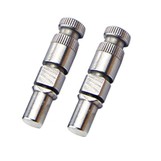
The marine environment is one of the most challenging settings for mechanical components due to its harsh conditions, including high humidity, saltwater exposure, and variable temperatures. As a pin shaft supplier, I often receive inquiries about the suitability of our pin shafts for marine applications. In this blog post, I will explore whether a pin shaft can be used in a marine environment, the factors to consider, and the types of pin shafts that are best suited for such conditions.
Understanding the Marine Environment
The marine environment presents several unique challenges that can significantly impact the performance and lifespan of mechanical components. Saltwater, in particular, is highly corrosive and can cause rapid degradation of metals. The constant exposure to saltwater spray, high humidity, and the presence of oxygen in the air create an ideal environment for corrosion to occur. Additionally, the marine environment is subject to extreme temperature variations, from freezing cold in polar regions to scorching heat in tropical areas. These temperature changes can cause materials to expand and contract, leading to mechanical stress and potential failure.
Another factor to consider is the presence of abrasive particles in the water, such as sand and sediment. These particles can cause wear and tear on the surfaces of mechanical components, reducing their efficiency and increasing the risk of failure. The constant movement of the water, including waves, tides, and currents, can also subject components to dynamic loads and vibrations, further increasing the stress on the materials.
Can a Pin Shaft Be Used in a Marine Environment?
The short answer is yes, a pin shaft can be used in a marine environment, but it must be carefully selected and designed to withstand the harsh conditions. Not all pin shafts are suitable for marine applications, and choosing the wrong type can lead to premature failure and costly repairs.
When considering a pin shaft for a marine environment, several factors need to be taken into account, including the material, coating, and design. The material of the pin shaft is crucial, as it determines its resistance to corrosion, wear, and mechanical stress. Stainless steel is a popular choice for marine applications due to its excellent corrosion resistance. Grades such as SUS304 and SUS316 are commonly used in marine environments because they contain chromium and nickel, which form a passive oxide layer on the surface of the metal, protecting it from corrosion.
For more information on stainless steel pin shafts, you can visit our Stainless Steel SUS304 SUS316 Precision Knurled Shaft product page.
In addition to stainless steel, other materials such as titanium and bronze can also be used in marine applications. Titanium is known for its high strength-to-weight ratio and excellent corrosion resistance, making it suitable for applications where weight is a concern. Bronze, on the other hand, has good wear resistance and is often used in applications where there is a need for self-lubrication.


Coating and Surface Treatment
In addition to choosing the right material, applying a protective coating or surface treatment to the pin shaft can further enhance its resistance to corrosion and wear. There are several types of coatings available, including epoxy, zinc, and ceramic coatings. Epoxy coatings are commonly used in marine applications because they provide a durable and protective barrier against saltwater and other corrosive substances. Zinc coatings, such as galvanizing, can also be effective in preventing corrosion by providing a sacrificial layer that corrodes instead of the base metal.
Ceramic coatings offer excellent wear resistance and can protect the pin shaft from abrasive particles in the water. These coatings are often used in high-stress applications where wear and tear are a significant concern. Surface treatments such as nitriding and carburizing can also improve the hardness and wear resistance of the pin shaft, making it more suitable for marine environments.
Design Considerations
The design of the pin shaft is also important when it comes to marine applications. The pin shaft should be designed to minimize stress concentrations and ensure proper alignment and fit. A well-designed pin shaft will distribute the load evenly, reducing the risk of fatigue and failure. Additionally, the pin shaft should be designed to prevent the accumulation of water and debris, which can accelerate corrosion and wear.
For precision pin shafts that are designed to meet the highest standards of quality and performance, check out our Precision Pin Shaft product page.
Applications of Pin Shafts in the Marine Industry
Pin shafts are used in a wide range of applications in the marine industry, including shipbuilding, offshore oil and gas platforms, and marine equipment manufacturing. In shipbuilding, pin shafts are used in various components such as hinges, latches, and steering systems. These components are exposed to the harsh marine environment and require pin shafts that can withstand corrosion, wear, and mechanical stress.
Offshore oil and gas platforms also rely on pin shafts in critical applications such as drilling equipment, lifting systems, and valve actuators. The pin shafts used in these applications must be able to operate reliably in extreme conditions, including high pressures, high temperatures, and corrosive environments.
Marine equipment manufacturers use pin shafts in a variety of products, including winches, cranes, and propulsion systems. These products are designed to withstand the rigors of the marine environment and require pin shafts that are durable, reliable, and corrosion-resistant.
Maintenance and Inspection
Even with the right material, coating, and design, pin shafts in a marine environment require regular maintenance and inspection to ensure their continued performance and reliability. Maintenance tasks may include cleaning, lubrication, and inspection for signs of corrosion, wear, or damage. It is important to follow the manufacturer's recommendations for maintenance and to use the appropriate cleaning and lubrication products.
Regular inspection of the pin shafts is also essential to detect any potential issues early on. Visual inspection can reveal signs of corrosion, such as rust or pitting, as well as wear or damage to the surface of the pin shaft. Non-destructive testing methods, such as ultrasonic testing or magnetic particle inspection, can be used to detect internal defects or cracks that may not be visible to the naked eye.
Conclusion
In conclusion, a pin shaft can be used in a marine environment, but it must be carefully selected, designed, and maintained to withstand the harsh conditions. Stainless steel is a popular choice for marine applications due to its excellent corrosion resistance, but other materials such as titanium and bronze can also be used depending on the specific requirements of the application. Applying a protective coating or surface treatment can further enhance the pin shaft's resistance to corrosion and wear.
The design of the pin shaft is also important, as it should be designed to minimize stress concentrations and ensure proper alignment and fit. Regular maintenance and inspection are essential to ensure the continued performance and reliability of the pin shafts in a marine environment.
If you are looking for high-quality pin shafts for your marine application, I encourage you to contact us to discuss your specific requirements. Our team of experts can help you select the right pin shaft and provide you with the technical support you need to ensure a successful project.
References
- ASM Handbook Volume 13A: Corrosion: Fundamentals, Testing, and Protection. ASM International.
- Corrosion Engineering Handbook. McGraw-Hill Professional.
- Marine Engineering: Principles and Practice. Butterworth-Heinemann.