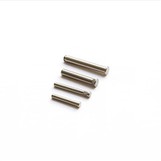
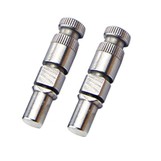
When it comes to high - torque applications, the design of a rotating shaft is a critical task that requires a comprehensive understanding of engineering principles, materials science, and manufacturing processes. As a rotating shaft supplier, I've witnessed firsthand the importance of a well - designed shaft in ensuring the efficiency, reliability, and longevity of machinery. In this blog, I'll share some key considerations and steps for designing a rotating shaft suitable for high - torque applications.
Understanding High - Torque Applications
High - torque applications typically involve machinery that needs to generate or transmit a large amount of rotational force. Examples include heavy - duty industrial equipment such as mining machinery, large - scale manufacturing presses, and high - power automotive engines. In these applications, the rotating shaft must be able to withstand significant torsional stresses without failing.
Selecting the Right Material
The choice of material is fundamental in shaft design for high - torque applications. The material should have high strength, good toughness, and excellent fatigue resistance. Common materials used for high - torque rotating shafts include alloy steels, such as 4140 or 4340. These steels can be heat - treated to achieve the desired combination of hardness and toughness.
Alloy steels offer several advantages. They have high yield and ultimate tensile strengths, which allow the shaft to withstand high torsional loads without permanent deformation. Their good fatigue resistance is crucial because rotating shafts in high - torque applications are often subjected to cyclic loading, which can lead to fatigue failure over time.
For more specialized applications, materials like stainless steel or titanium may be considered. Stainless steel offers corrosion resistance, which is beneficial in environments where the shaft may be exposed to moisture or chemicals. Titanium, on the other hand, has a high strength - to - weight ratio, making it suitable for applications where weight reduction is a priority, such as in aerospace or high - performance automotive applications.
Determining Shaft Dimensions
The dimensions of the shaft, including its diameter and length, are critical factors in its ability to handle high - torque loads. The diameter of the shaft directly affects its torsional strength. According to the torsion formula, the shear stress in a circular shaft is proportional to the applied torque and inversely proportional to the polar moment of inertia of the shaft's cross - section. A larger diameter shaft has a higher polar moment of inertia, which means it can withstand higher torques without exceeding the allowable shear stress.
The length of the shaft also needs to be carefully considered. A longer shaft may be more prone to deflection under high - torque loads, which can lead to misalignment and premature wear of bearings and other components. Therefore, the length should be minimized as much as possible while still meeting the requirements of the overall machinery design.
Designing the Shaft Geometry
In addition to the basic diameter and length, the geometry of the shaft can be optimized for high - torque applications. For example, a stepped shaft design can be used to reduce stress concentrations. Stress concentrations occur at locations where there are sudden changes in the shaft's cross - section, such as at keyways or shoulders. By using a stepped design with smooth transitions between different diameters, the stress concentrations can be minimized.
Another important aspect of shaft geometry is the design of the keyways and splines. Keyways and splines are used to transmit torque between the shaft and other components, such as gears or pulleys. The design of these features should ensure a secure and reliable connection. The dimensions and tolerances of the keyways and splines need to be carefully specified to ensure proper fit and alignment.
Considering Bearing Support
Proper bearing support is essential for the smooth operation of a rotating shaft in high - torque applications. The bearings should be selected based on the load requirements, speed, and operating conditions of the shaft. For high - torque applications, roller bearings are often preferred over ball bearings because they can handle higher radial and axial loads.
The location and arrangement of the bearings also need to be carefully considered. The bearings should be placed in a way that minimizes shaft deflection and ensures proper alignment. In some cases, multiple bearings may be used to support the shaft at different locations to distribute the load evenly.
Analyzing the Shaft's Performance
Before finalizing the design, it's important to analyze the shaft's performance under high - torque loads. This can be done using various engineering analysis techniques, such as finite element analysis (FEA). FEA allows engineers to simulate the behavior of the shaft under different loading conditions and identify potential areas of stress concentration or failure.
By using FEA, engineers can optimize the shaft design by adjusting the material, dimensions, and geometry to ensure that the shaft can withstand the expected torque loads without exceeding the allowable stress limits. This iterative design process can help to improve the reliability and performance of the shaft.
Manufacturing Considerations
Once the design is finalized, the manufacturing process also plays a crucial role in the quality of the rotating shaft. Precision machining is required to ensure that the shaft meets the specified dimensions and tolerances. The use of advanced machining techniques, such as CNC machining, can ensure high accuracy and repeatability.
Surface finishing is another important aspect of manufacturing. A smooth surface finish can reduce friction and wear, which is especially important in high - torque applications where the shaft is in contact with other components. Additionally, heat treatment processes, such as quenching and tempering, can be used to improve the mechanical properties of the shaft.
Quality Control
Quality control is essential throughout the manufacturing process to ensure that the rotating shaft meets the required standards. This includes dimensional inspection, material testing, and non - destructive testing. Dimensional inspection ensures that the shaft has the correct diameter, length, and other geometric features. Material testing verifies the chemical composition and mechanical properties of the material. Non - destructive testing, such as ultrasonic testing or magnetic particle testing, can be used to detect any internal defects in the shaft.
Conclusion
Designing a rotating shaft for high - torque applications is a complex process that requires a combination of engineering knowledge, material selection, and manufacturing expertise. By carefully considering the factors discussed in this blog, such as material selection, shaft dimensions, geometry, bearing support, and performance analysis, a high - quality rotating shaft can be designed and manufactured.


As a rotating shaft supplier, we are committed to providing our customers with the best - designed and highest - quality rotating shafts for high - torque applications. Our Precision Rotating Shaft is designed and manufactured to meet the most demanding requirements. If you are in need of a rotating shaft for your high - torque application, we invite you to contact us for procurement and further discussions. Our team of experts is ready to assist you in finding the perfect solution for your needs.
References
- Budynas, R. G., & Nisbett, J. K. (2011). Shigley's Mechanical Engineering Design. McGraw - Hill.
- Juvinall, R. C., & Marshek, K. M. (2006). Fundamentals of Machine Component Design. Wiley.
- Spotts, M. F., Shoup, T. E., & Bolin, R. E. (2004). Design of Machine Elements. Prentice Hall.