Hey there! As a supplier of fixed shafts, I've been getting a lot of questions lately about how to measure the torque of a fixed shaft. It's a crucial aspect, especially when it comes to ensuring the proper functioning and safety of machinery that uses these shafts. So, I thought I'd share some insights on this topic.
First off, let's understand what torque is. Torque is basically a measure of the force that can cause an object to rotate around an axis. In the case of a fixed shaft, it's the rotational force applied to the shaft. Measuring torque accurately is essential because it helps in determining if the shaft can handle the load it's supposed to carry. If the torque is too high, it can lead to shaft failure, which can be a real headache in industrial settings.
There are several methods to measure the torque of a fixed shaft. One of the most common ways is using a torque wrench. A torque wrench is a tool that allows you to apply a specific amount of torque to a fastener, like a nut or a bolt, that's attached to the shaft. It has a built - in mechanism that indicates when the desired torque has been reached.
To use a torque wrench for measuring the torque of a fixed shaft, you first need to identify the fasteners on the shaft. These are usually the nuts or bolts that hold the shaft in place or connect it to other components. Then, you set the torque wrench to the appropriate value. This value can be determined based on the specifications of the machinery or the shaft itself. You can find these specifications in the manufacturer's manual.
Once the torque wrench is set, you simply attach it to the fastener and start applying force. As you turn the wrench, the internal mechanism of the wrench will start to work. When the pre - set torque is reached, the wrench will usually make a clicking sound or give some other kind of indication. This tells you that the torque applied to the fastener, and by extension, the shaft, is at the desired level.
Another method is using a torque sensor. A torque sensor is a more advanced and accurate way of measuring torque. It works by converting the mechanical torque into an electrical signal. There are different types of torque sensors, such as strain - gauge torque sensors and optical torque sensors.
Strain - gauge torque sensors are quite popular. They work based on the principle of strain. When a torque is applied to the shaft, it causes the shaft to deform slightly. The strain - gauge, which is attached to the shaft, measures this deformation. The change in the resistance of the strain - gauge due to the deformation is then converted into an electrical signal. This signal can be measured and analyzed to determine the torque.
Optical torque sensors, on the other hand, use light to measure torque. They have a rotating element and a stationary element. When torque is applied to the shaft, the relative rotation between these two elements changes. This change is detected by the optical system in the sensor, and an electrical signal is generated. This signal can be used to calculate the torque.
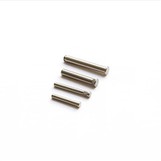
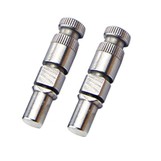
Now, if you're in the market for high - quality fixed shafts, we've got some great options. Check out our Precision Fixed Shaft and Stainless Steel Fixed Shaft. These shafts are made with top - notch materials and precision manufacturing techniques to ensure optimal performance.
When it comes to choosing the right method for measuring torque, there are a few factors to consider. Cost is one of them. Torque wrenches are generally more affordable compared to torque sensors. If you're on a tight budget and only need to measure torque occasionally, a torque wrench might be the way to go.
Accuracy is another important factor. If you need highly accurate torque measurements, especially in applications where precision is crucial, a torque sensor is a better choice. For example, in aerospace or automotive industries, where even a small error in torque measurement can have serious consequences, torque sensors are often preferred.
Ease of use is also something to think about. Torque wrenches are relatively easy to use. You don't need a lot of technical knowledge to operate them. On the other hand, torque sensors can be more complex to install and operate. They often require calibration and may need some technical expertise to interpret the data they generate.
In addition to these methods, there are also some indirect ways of estimating torque. For example, you can calculate the torque based on the power and speed of the machinery. The formula for torque (T) in terms of power (P) and angular speed (ω) is T = P/ω. However, this method is not as accurate as using a torque wrench or a torque sensor because it assumes ideal conditions and doesn't take into account factors like friction and losses in the system.
It's also important to note that regular maintenance and calibration of the measuring tools are essential. A torque wrench that is not calibrated correctly can give inaccurate readings, which can lead to problems with the shaft. Similarly, a torque sensor that is not maintained properly may not function as expected.
If you're unsure about which method to use for measuring the torque of your fixed shaft or if you have any questions about our fixed shafts, don't hesitate to reach out. We're here to help you make the right decisions and ensure that your machinery runs smoothly. Whether you're a small - scale workshop or a large industrial facility, we've got the right fixed shafts for your needs.
In conclusion, measuring the torque of a fixed shaft is an important task that requires careful consideration of the method, the tools, and the specific requirements of your machinery. By choosing the right method and using high - quality tools, you can ensure the safety and efficiency of your operations. And if you're looking for top - quality fixed shafts, we're your go - to supplier. So, get in touch with us for all your fixed - shaft needs and let's start a great business relationship!


References
- Machinery's Handbook, 31st Edition
- Torque Measurement Handbook by HBM Test and Measurement