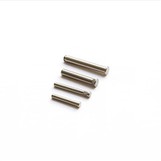
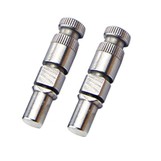
When it comes to mechanical engineering and industrial applications, shafts play a crucial role in transmitting power and torque between different components. Among the various types of shafts available, solid shafts and hollow shafts are two commonly used options, each with its own unique characteristics and advantages. As a solid shaft supplier, I have extensive experience in providing high-quality solid shafts for a wide range of industries. In this blog post, I will discuss the differences between solid shafts and hollow shafts, highlighting their respective features, benefits, and applications.
Structural Differences
The most obvious difference between a solid shaft and a hollow shaft lies in their structural design. A solid shaft is a continuous, homogeneous cylinder with a solid cross-section throughout its length. It is typically made from a single piece of material, such as steel, aluminum, or titanium, and is machined to precise dimensions to meet the specific requirements of the application. On the other hand, a hollow shaft is a tubular structure with a central cavity running along its axis. It can be manufactured by either machining a solid bar to remove the inner material or by using a seamless tube as the base material.
The solid cross-section of a solid shaft provides it with high strength and rigidity, making it suitable for applications that require the transmission of high torque and power. The absence of a central cavity also eliminates the risk of stress concentration and fatigue failure, which can occur in hollow shafts due to the presence of sharp edges or notches at the inner surface. However, the solid design also makes the shaft heavier and more expensive than a hollow shaft of the same outer diameter.
In contrast, the hollow design of a hollow shaft offers several advantages in terms of weight reduction and material efficiency. By removing the inner material, the shaft's weight can be significantly reduced without sacrificing its strength and stiffness. This makes hollow shafts ideal for applications where weight is a critical factor, such as aerospace, automotive, and robotics. Additionally, the hollow structure allows for the passage of other components, such as cables, pipes, or lubricants, through the shaft, which can simplify the design and installation of the system.
Strength and Torque Transmission
Another important difference between solid shafts and hollow shafts is their ability to transmit torque and withstand bending and torsional loads. The strength of a shaft is determined by its cross-sectional area, material properties, and the distribution of stress within the shaft. In general, a solid shaft has a higher cross-sectional area than a hollow shaft of the same outer diameter, which means it can transmit more torque and withstand higher loads.
The torque transmission capacity of a shaft is proportional to its polar moment of inertia, which is a measure of the shaft's resistance to torsional deformation. The polar moment of inertia of a solid shaft is given by the formula:
[ J = \frac{\pi}{32} d^4 ]
where ( d ) is the diameter of the shaft. For a hollow shaft with an outer diameter ( D ) and an inner diameter ( d ), the polar moment of inertia is given by:
[ J = \frac{\pi}{32} (D^4 - d^4) ]
As can be seen from these formulas, the polar moment of inertia of a solid shaft is directly proportional to the fourth power of its diameter, while the polar moment of inertia of a hollow shaft depends on the difference between the fourth powers of its outer and inner diameters. This means that for a given outer diameter, a solid shaft has a higher polar moment of inertia and can transmit more torque than a hollow shaft.
However, the actual torque transmission capacity of a shaft also depends on its material properties, such as its yield strength and modulus of elasticity. In some cases, a hollow shaft made from a high-strength material may be able to transmit more torque than a solid shaft made from a lower-strength material, even though the solid shaft has a higher polar moment of inertia.
Bending and Torsional Stiffness
In addition to torque transmission, shafts are also subjected to bending and torsional loads, which can cause them to deform and fail. The stiffness of a shaft is a measure of its resistance to deformation under these loads, and it is determined by its material properties, cross-sectional shape, and length.
The bending stiffness of a shaft is proportional to its second moment of inertia, which is a measure of the shaft's resistance to bending deformation. The second moment of inertia of a solid shaft is given by the formula:
[ I = \frac{\pi}{64} d^4 ]
where ( d ) is the diameter of the shaft. For a hollow shaft with an outer diameter ( D ) and an inner diameter ( d ), the second moment of inertia is given by:
[ I = \frac{\pi}{64} (D^4 - d^4) ]
Similar to the polar moment of inertia, the second moment of inertia of a solid shaft is directly proportional to the fourth power of its diameter, while the second moment of inertia of a hollow shaft depends on the difference between the fourth powers of its outer and inner diameters. This means that for a given outer diameter, a solid shaft has a higher second moment of inertia and is stiffer in bending than a hollow shaft.
The torsional stiffness of a shaft is proportional to its polar moment of inertia and the modulus of rigidity of the material. The modulus of rigidity is a measure of the material's resistance to shear deformation, and it is related to the material's elastic modulus and Poisson's ratio. In general, a solid shaft has a higher polar moment of inertia and is stiffer in torsion than a hollow shaft of the same outer diameter. However, the torsional stiffness of a shaft also depends on its length and the way it is supported, so the actual stiffness of a shaft in a specific application may vary.


Applications
The choice between a solid shaft and a hollow shaft depends on a variety of factors, including the specific application requirements, the available space and weight limitations, and the cost considerations. Here are some common applications where solid shafts and hollow shafts are used:
Solid Shaft Applications
- Power Transmission: Solid shafts are commonly used in power transmission applications, such as engines, motors, and gearboxes, where high torque and power transmission are required. The high strength and rigidity of solid shafts make them suitable for withstanding the heavy loads and vibrations associated with these applications.
- Machine Tools: Solid shafts are also widely used in machine tools, such as lathes, milling machines, and drills, where precise positioning and high accuracy are required. The solid design of the shaft ensures that it can maintain its shape and dimensions under the cutting forces and vibrations generated during machining operations.
- Automotive Industry: Solid shafts are used in various automotive components, such as drive shafts, axles, and crankshafts, where high strength and durability are essential. The solid design of these shafts allows them to withstand the high loads and stresses associated with vehicle operation.
Hollow Shaft Applications
- Aerospace Industry: Hollow shafts are extensively used in the aerospace industry, where weight reduction is a critical factor. The lightweight design of hollow shafts helps to reduce the overall weight of the aircraft, which in turn improves fuel efficiency and performance. Hollow shafts are also used in aerospace applications where the passage of other components, such as cables or hydraulic lines, through the shaft is required.
- Automotive Industry: Hollow shafts are also used in some automotive applications, such as steering columns and drive shafts, where weight reduction and improved fuel efficiency are desired. The hollow design of these shafts allows for the passage of other components, such as wiring or control cables, through the shaft, which can simplify the design and installation of the system.
- Robotics and Automation: Hollow shafts are commonly used in robotics and automation applications, where lightweight and high-speed operation are required. The hollow design of the shaft allows for the passage of other components, such as sensors, actuators, or cables, through the shaft, which can simplify the design and control of the robot.
Conclusion
In conclusion, solid shafts and hollow shafts have their own unique characteristics and advantages, and the choice between them depends on the specific application requirements. As a solid shaft supplier, I offer a wide range of Stainless Steel Solid Shaft and Precision Solid Shaft products that are designed to meet the diverse needs of our customers. Our solid shafts are made from high-quality materials and are machined to precise dimensions to ensure optimal performance and reliability.
If you are in need of high-quality solid shafts for your application, please do not hesitate to contact us for more information and to discuss your specific requirements. Our team of experts will be happy to assist you in selecting the right shaft for your needs and providing you with a competitive quote.
References
- Shigley, J. E., & Mischke, C. R. (2001). Mechanical Engineering Design. McGraw-Hill.
- Budynas, R. G., & Nisbett, J. K. (2011). Shigley's Mechanical Engineering Design. McGraw-Hill.
- Spotts, M. F., Shoup, T. E., & Taborek, J. (2004). Design of Machine Elements. Prentice Hall.