Hey there! As an AC motor shaft supplier, I've seen firsthand how the number of poles in an AC motor can have a huge impact on shaft design. In this blog post, I'm gonna break down the relationship between pole count and shaft design, and explain why it matters for your motor applications.
Let's start with the basics. An AC motor works by using alternating current to create a rotating magnetic field. The number of poles in the motor determines the speed at which this magnetic field rotates. In general, the more poles a motor has, the slower it will run. This is because each pole pair in the motor creates a magnetic cycle, and the frequency of the AC power supply determines how many cycles can occur per second. So, if you have a motor with more pole pairs, it will take longer to complete each cycle, resulting in a lower rotational speed.
Now, you might be wondering how this relates to shaft design. Well, the speed and torque requirements of a motor are directly related to the number of poles. A motor with fewer poles will typically run at a higher speed and produce less torque, while a motor with more poles will run at a lower speed and produce more torque. This means that the shaft design needs to be optimized for the specific speed and torque requirements of the motor.
For example, let's say you're designing a motor for a high-speed application, like a fan or a pump. In this case, you'll probably want to use a motor with fewer poles to achieve the desired speed. However, because the motor will be running at a high speed, the shaft will need to be designed to withstand the centrifugal forces and vibrations that come with high-speed operation. This might involve using a larger diameter shaft or a stronger material to prevent bending or breakage.
On the other hand, if you're designing a motor for a low-speed, high-torque application, like a conveyor belt or a hoist, you'll probably want to use a motor with more poles. In this case, the shaft will need to be designed to handle the high torque loads without twisting or deforming. This might involve using a thicker shaft or a more rigid material to ensure that the shaft can transmit the torque from the motor to the load effectively.
Another factor to consider when designing a shaft for an AC motor is the type of load that the motor will be driving. Different types of loads have different torque requirements, and the shaft design needs to be optimized accordingly. For example, a motor driving a pure inertial load, like a flywheel, will require a shaft that can handle the sudden changes in torque that occur when the load starts and stops. On the other hand, a motor driving a constant torque load, like a conveyor belt, will require a shaft that can handle a steady, continuous torque over a long period of time.
In addition to speed, torque, and load requirements, the number of poles in an AC motor can also affect the shaft design in other ways. For example, a motor with more poles will typically have a larger diameter stator, which means that the shaft will need to be longer to accommodate the larger stator. This can increase the overall length of the motor and make it more difficult to install in certain applications.
So, as you can see, the number of poles in an AC motor has a significant impact on the shaft design. By understanding the relationship between pole count, speed, torque, and load requirements, you can design a shaft that is optimized for the specific needs of your motor application.
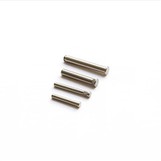
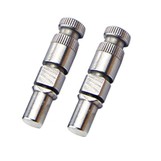
If you're in the market for high-quality AC motor shafts, we've got you covered. We offer a wide range of Motor Shaft SUS303 SUS304 SUS316, DC Motor Shaft, and Brushless Motor Shaft options to meet your specific requirements. Our shafts are made from high-quality materials and are precision-engineered to ensure optimal performance and reliability.
Whether you're designing a new motor or looking to replace an existing shaft, we can help. Our team of experts has years of experience in the industry and can provide you with the guidance and support you need to make the right choice. So, if you're interested in learning more about our products or discussing your specific needs, don't hesitate to reach out. We're here to help you find the perfect solution for your motor applications.
References


- Fitzgerald, A. E., Kingsley, C., Jr., & Umans, S. D. (2003). Electric Machinery (6th ed.). McGraw-Hill.
- Chapman, S. J. (2012). Electric Machinery Fundamentals (5th ed.). McGraw-Hill.