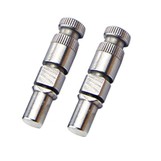
Hey there, fellow drone enthusiasts! As a supplier of Drone Roll Shafts, I've seen firsthand how these little components play a huge role in keeping drones stable and flying smoothly. Today, I'm gonna break down the nitty - gritty of what the drone roll shaft does and why it's so crucial for maintaining a drone's attitude.
First off, let's talk about what we mean by a drone's attitude. In the world of drones, attitude refers to the orientation of the drone in three - dimensional space. There are three main axes of movement: roll, pitch, and yaw. The roll axis runs from the front to the back of the drone. When a drone rolls, it tilts from side to side, kind of like a plane banking to turn. The pitch axis goes from wingtip to wingtip, and pitch movement makes the drone's nose go up or down. The yaw axis is the vertical line through the center of the drone, and yaw is the rotation of the drone around this axis.
So, where does the drone roll shaft fit into all this? Well, the drone roll shaft is an essential part of the drone's control system. It's like the backbone that helps the drone make those smooth rolling movements. When the pilot sends a command to roll the drone, the signals are transmitted to the motor connected to the roll shaft. The motor then rotates the roll shaft, which in turn causes the drone to tilt on its side.
One of the key functions of the drone roll shaft is to provide stability. Just like a tightrope walker uses a long pole to keep their balance, the roll shaft helps the drone maintain its equilibrium during flight. It does this by ensuring that the forces acting on the drone are evenly distributed. When the drone rolls, the roll shaft resists any sudden or excessive movements, preventing the drone from tipping over or losing control.
Let's say you're flying your drone in a windy environment. The wind can push the drone to one side, causing it to roll unexpectedly. This is where the roll shaft's stability function really shines. It works with the drone's other control systems, like the gyroscope and accelerometer, to detect these unwanted movements and correct them. The gyroscope senses the change in the drone's orientation, and the accelerometer measures the acceleration forces. Based on the data from these sensors, the motor connected to the roll shaft adjusts its rotation speed to counteract the wind and bring the drone back to its intended position.
Another important aspect of the drone roll shaft is its role in precision control. Drones are used for a wide range of applications, from aerial photography to package delivery. In all these scenarios, precise control is essential. The roll shaft allows the pilot to make very fine - tuned adjustments to the drone's roll angle. Whether you're trying to get the perfect shot for a movie or deliver a package to a specific location, the ability to control the roll accurately is crucial.
For example, in aerial photography, a slight tilt of the drone can make a big difference in the composition of the shot. With a high - quality roll shaft, the pilot can make small, precise movements to get that ideal angle. The roll shaft responds quickly to the pilot's commands, ensuring that the drone moves exactly as intended.
Now, I know what you're thinking. How does the drone roll shaft compare to the other shafts, like the Drone Yaw Shaft and Drone Pitch Shaft? Well, each shaft has its own unique function, but they all work together to give the drone full control in the air.


The Drone Yaw Shaft is responsible for the drone's rotation around the vertical axis. When the pilot wants to turn the drone left or right without changing its roll or pitch, the yaw shaft comes into play. It's like the steering wheel of the drone, allowing it to change its direction.
On the other hand, the Drone Pitch Shaft controls the up - and - down movement of the drone's nose. This is important for climbing, descending, and adjusting the altitude of the drone.
While these shafts have different functions, they are all interconnected. For instance, when you roll the drone, it can also affect the pitch and yaw to some extent. That's why a well - designed drone needs all three shafts to work in harmony.
As a supplier of Drone Roll Shafts, I understand the importance of quality. A high - quality roll shaft is made from durable materials that can withstand the stresses of flight. It should be lightweight to reduce the overall weight of the drone, but also strong enough to handle the forces generated during operation.
We use advanced manufacturing techniques to ensure that our roll shafts are precise and reliable. Each shaft is carefully tested to meet strict quality standards. We know that a single faulty roll shaft can cause a drone to malfunction, so we take every precaution to make sure our products are top - notch.
In addition to quality, we also offer a wide range of roll shafts to suit different types of drones. Whether you're flying a small hobby drone or a large commercial one, we have the right roll shaft for you. Our team of experts can also provide technical support and advice to help you choose the best roll shaft for your specific needs.
If you're in the market for a drone roll shaft, or if you're looking to upgrade your existing one, I encourage you to get in touch. We're here to help you take your drone flying experience to the next level. Whether you're a professional drone pilot or just starting out, having a reliable roll shaft can make all the difference in the performance of your drone.
In conclusion, the drone roll shaft is a vital component of the drone's control system. It plays a crucial role in maintaining the drone's attitude by providing stability and precision control. Without a well - functioning roll shaft, drones would be much more difficult to fly and would be at a higher risk of crashing. So, the next time you're out flying your drone, take a moment to appreciate the hard work that the roll shaft is doing to keep your drone in the air.
If you have any questions or would like to discuss your drone roll shaft requirements, feel free to reach out. We're always happy to chat and help you find the perfect solution for your drone.
References
- Drone Flight Mechanics: A Comprehensive Guide. Aviation Press, 2020.
- Principles of Drone Control Systems. Aerospace Research Institute, 2021.