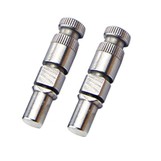
Hey there, fellow drone enthusiasts! I'm a supplier of Drone Pitch Shafts, and I'm super excited to dive into how the pitch shaft contributes to a drone's lateral movement.
First off, let's quickly understand what we're talking about when we say "drone pitch shaft." You can check out more about it right here. The pitch shaft is a crucial component in a drone's drivetrain. It's kind of like the secret behind making the drone move in certain ways that we often take for granted.
Drones, as you know, can move in several directions: forward, backward, up, down, and laterally. Lateral movement is all about moving from side to side, and that's where the pitch shaft steps in.


To grasp how the pitch shaft enables lateral movement, we need to get a bit technical about how a drone works. A drone has multiple axes of movement: pitch, roll, and yaw. The pitch is related to the front - back tilt of the drone, the roll is about the side - to - side tilt, and the yaw is the rotation around the vertical axis. You can learn more about the Drone Roll Shaft and Drone Yaw Shaft if you're interested in those aspects.
When it comes to lateral movement, the pitch shaft plays an indirect but vital role. The pitch shaft is connected to the motors and propellers of the drone. When the pitch shaft is adjusted, it changes the angle of the propellers in relation to the drone's body.
Let's say we want the drone to move to the left. The pitch shaft on the right - hand side of the drone will be adjusted. By changing the pitch of the propellers on the right side, the thrust generated by those propellers changes. If we increase the pitch of the propellers on the right, they'll generate more thrust. This creates an imbalance in the thrust distribution across the drone.
The drone, being in an environment where it's trying to maintain equilibrium based on the forces acting on it, will start to tilt to the left. As it tilts, the overall thrust vector of the drone changes. The vertical component of the thrust still keeps the drone in the air, but now there's a horizontal component of the thrust as well. This horizontal component is what causes the drone to move laterally to the left.
Conversely, if we want the drone to move to the right, we'll adjust the pitch shaft on the left - hand side of the drone. By increasing the pitch of the propellers on the left, we generate more thrust on that side. The drone then tilts to the right, and the resulting horizontal component of the thrust makes it move laterally to the right.
Now, the way the pitch shaft is adjusted is usually controlled by the drone's flight controller. The flight controller is like the brain of the drone. It receives signals from the remote control or its own sensors and then sends commands to the motors to adjust the pitch shaft accordingly.
One of the key things about the pitch shaft is its precision. When you're flying a drone, especially for tasks like aerial photography or surveying, you need very accurate lateral movement. A high - quality pitch shaft is essential for achieving that precision. At our place, we supply pitch shafts that are made with top - notch materials and are engineered to provide smooth and accurate adjustments. This ensures that your drone can make those fine - tuned lateral movements as required.
Another aspect to consider is the response time of the pitch shaft. In a dynamic flying environment, you might need the drone to quickly change its lateral direction. A good pitch shaft should be able to adjust the propeller pitch rapidly in response to the commands from the flight controller. This is where our pitch shafts shine. They're designed to have a fast response time, so your drone can react quickly to your control inputs.
The durability of the pitch shaft is also crucial. Drones can be used in all sorts of conditions, from calm indoor environments to windy outdoor areas. The pitch shaft needs to be able to withstand the stresses and vibrations that come with flight. Our pitch shafts are built to last, using materials and manufacturing processes that ensure long - term reliability.
Let's talk a bit more about the relationship between the pitch shaft and the other components of the drone. The pitch shaft works in harmony with the roll shaft and the yaw shaft. For example, when making a complex lateral movement while also changing the drone's orientation (yaw), the pitch shaft and the yaw shaft need to work together seamlessly. The flight controller coordinates these movements, but the quality of the shafts themselves determines how well these coordinated movements are executed.
In some advanced drones, the pitch shaft can also be used in combination with other flight control techniques. For instance, some drones use a combination of pitch adjustments and differential thrust from different propellers to achieve more complex lateral maneuvers. This is where a high - quality pitch shaft can really make a difference. It allows the drone to execute these advanced maneuvers with greater accuracy and stability.
Now, if you're in the market for Drone Pitch Shafts, or if you're interested in how we can help you improve your drone's lateral movement capabilities, we'd love to hear from you. Whether you're a hobbyist building your own drone or a professional in the aerial services industry, our pitch shafts can be a game - changer for your drones.
We've got a wide range of pitch shafts to suit different types of drones, from small recreational models to large industrial - grade ones. So, if you want to take your drone's performance to the next level, just hit us up. We're always happy to have a chat about your needs and how our products can meet them.
In conclusion, the pitch shaft is a critical component in a drone's ability to move laterally. Its role in adjusting the propeller pitch, and thus the thrust distribution, is what enables the drone to make those side - to - side movements. With the right pitch shaft, you can ensure that your drone has precise, fast, and reliable lateral movement capabilities. So, don't hesitate to get in touch if you think our products can benefit your drone projects.
References
- "Drone Mechanics and Aerodynamics" - A textbook on the fundamental principles of drone flight and component functions.
- Research papers on advanced flight control techniques for drones, exploring the interaction between different shafts and lateral movement.