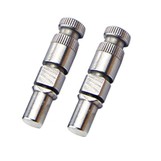
Hey there! As a fixed shaft supplier, I've been in the game for quite a while, and I often get asked, "Which manufacturing process is the best for a fixed shaft?" Well, let's dive right into it and explore the different options out there.
CNC Machining
First up, we've got CNC (Computer Numerical Control) machining. This is like the Swiss Army knife of manufacturing processes for fixed shafts. With CNC machining, you can achieve a high level of precision. The computer-controlled machines follow a set of programmed instructions to cut, shape, and finish the shaft.


One of the biggest advantages of CNC machining is its versatility. You can make fixed shafts in all sorts of materials, including stainless steel. Check out our Stainless Steel Fixed Shaft for an example of what CNC machining can produce. The process allows for tight tolerances, which means the shaft will fit perfectly into whatever machinery it's intended for.
Another great thing about CNC machining is that it's repeatable. Once you've got the program set up, you can make multiple shafts with the exact same specifications. This is super important for mass production. However, it does have its drawbacks. CNC machining can be relatively expensive, especially for small batch sizes. The setup time for the machines can also be a bit long, so if you're in a hurry to get your shafts, it might not be the quickest option.
Forging
Forging is another popular method for making fixed shafts. In forging, the metal is heated until it's malleable and then shaped using compressive forces. This process can produce very strong and durable shafts.
The main advantage of forging is the improved mechanical properties of the shaft. The grains in the metal are aligned during the forging process, which gives the shaft better strength and resistance to fatigue. This makes forging a great choice for applications where the shaft will be under heavy loads or stress.
However, forging also has its limitations. It's not as precise as CNC machining. Achieving tight tolerances can be a challenge, and there might be some additional finishing work required after forging. Also, the equipment needed for forging is quite large and expensive, so it's more suitable for large-scale production.
Turning
Turning is a machining process where the workpiece rotates while a cutting tool removes material to create the desired shape. It's a common method for making cylindrical fixed shafts.
Turning is relatively simple and cost-effective, especially for small to medium-sized batches. It can produce shafts with a good surface finish. You can also use turning to make precision shafts. Check out our Precision Fixed Shaft to see what turning can achieve.
But just like any other process, turning has its cons. It's not as versatile as CNC machining when it comes to complex shapes. If your shaft has non-cylindrical features or requires a lot of intricate details, turning might not be the best option.
Grinding
Grinding is often used as a finishing process for fixed shafts. It involves using an abrasive wheel to remove a small amount of material from the surface of the shaft to achieve a very smooth finish and precise dimensions.
The main advantage of grinding is the ability to achieve extremely tight tolerances and a high-quality surface finish. This is crucial for applications where the shaft needs to have a low friction coefficient or where it will be in contact with other precision components.
However, grinding is a slow and expensive process. It's usually only used as a secondary operation after the shaft has been rough-shaped using another method like CNC machining or turning.
Casting
Casting is a process where molten metal is poured into a mold and allowed to solidify. It's a cost-effective way to make complex-shaped fixed shafts.
One of the biggest advantages of casting is the ability to create intricate shapes that would be difficult or impossible to achieve with other methods. You can also use casting to make shafts in a variety of materials. However, casting has its downsides. The surface finish of cast shafts is usually not as good as those made by other processes, and there might be some internal defects like porosity. These defects can affect the strength and performance of the shaft.
So, Which One Is the Best?
The answer to which manufacturing process is the best for a fixed shaft really depends on your specific requirements. If you need a high-precision shaft with complex shapes and you're willing to pay a bit more, CNC machining is probably your best bet. For applications where strength and durability are the top priorities, forging might be the way to go. If you're looking for a cost-effective solution for small to medium batches of cylindrical shafts, turning could be a good choice. And if you need a smooth finish and tight tolerances, grinding can be used as a finishing step.
As a fixed shaft supplier, I've seen all these processes in action, and I can help you choose the right one for your needs. Whether you're in the automotive industry, aerospace, or any other field that requires fixed shafts, we've got the expertise to provide you with the best solution.
If you're interested in learning more about our fixed shafts or want to discuss your specific requirements, don't hesitate to reach out. We're always happy to have a chat and see how we can help you with your procurement needs. Let's work together to find the perfect manufacturing process for your fixed shafts!
References
- Kalpakjian, S., & Schmid, S. R. (2010). Manufacturing Engineering and Technology. Pearson Prentice Hall.
- Groover, M. P. (2010). Fundamentals of Modern Manufacturing: Materials, Processes, and Systems. Wiley.