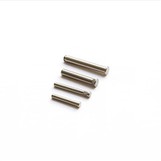
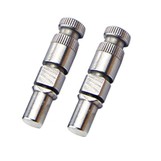
In the realm of motor engineering, the dynamic performance of a motor shaft is a critical factor that directly influences the overall efficiency, reliability, and functionality of a motor. As a seasoned motor shaft supplier, I've witnessed firsthand the impact of a well - designed and high - performing motor shaft on various applications. In this blog, I'll share some effective strategies to improve the dynamic performance of a motor shaft.
1. Material Selection
The choice of material for a motor shaft is fundamental to its dynamic performance. Different materials possess distinct mechanical properties such as strength, stiffness, and fatigue resistance, which can significantly affect how the shaft behaves under dynamic loads.


Stainless Steel Alloys
Stainless steel alloys like SUS303, SUS304, and SUS316 are popular choices for motor shafts. These materials offer excellent corrosion resistance, which is crucial in environments where the shaft may be exposed to moisture or chemicals. The high strength - to - weight ratio of stainless steel also helps in reducing the overall weight of the motor without sacrificing its structural integrity. You can find more information about Motor Shaft SUS303 SUS304 SUS316 on our website.
Alloy Steels
Alloy steels are another option known for their high strength and toughness. They can withstand high levels of stress and torque, making them suitable for heavy - duty applications. By carefully selecting the appropriate alloy steel with the right combination of elements, we can tailor the shaft's properties to meet specific performance requirements.
2. Geometric Design
The geometric design of a motor shaft plays a vital role in its dynamic performance. Key aspects of the design include diameter, length, and the presence of features such as keyways and splines.
Optimal Diameter
The diameter of the shaft affects its torsional stiffness. A larger diameter generally results in higher stiffness, which can reduce the amount of twist under torque. However, increasing the diameter also adds weight and cost. Therefore, it's essential to find the optimal diameter that balances stiffness, weight, and cost.
Length Considerations
The length of the shaft impacts its natural frequency. A longer shaft has a lower natural frequency, which can lead to resonance problems if the operating speed of the motor approaches this frequency. To avoid resonance, the shaft length should be carefully designed to ensure that the natural frequency is well outside the operating speed range of the motor.
Keyways and Splines
Keyways and splines are used to transmit torque between the shaft and other components such as gears and pulleys. However, they can also introduce stress concentrations, which may reduce the fatigue life of the shaft. Proper design and machining of these features, including rounded corners and smooth surfaces, can minimize stress concentrations and improve the shaft's dynamic performance.
3. Manufacturing Processes
The manufacturing processes used to produce the motor shaft can have a significant impact on its quality and performance.
Precision Machining
Precision machining techniques such as turning, milling, and grinding are used to achieve the required dimensional accuracy and surface finish of the shaft. A smooth surface finish reduces friction and wear, while accurate dimensions ensure proper fit and alignment with other components.
Heat Treatment
Heat treatment processes like quenching and tempering can enhance the mechanical properties of the shaft. Quenching increases the hardness of the shaft, while tempering relieves internal stresses and improves toughness. By carefully controlling the heat treatment parameters, we can optimize the shaft's strength, hardness, and fatigue resistance.
4. Balancing
Balancing is a crucial step in improving the dynamic performance of a motor shaft. An unbalanced shaft can cause vibrations, which can lead to premature wear of bearings, increased noise levels, and reduced motor efficiency.
Static and Dynamic Balancing
Static balancing ensures that the center of gravity of the shaft is on its axis of rotation. Dynamic balancing, on the other hand, takes into account the distribution of mass along the length of the shaft and corrects any imbalances in both the radial and axial directions.
Balancing Equipment
Advanced balancing equipment is used to measure and correct the imbalances in the shaft. These machines can accurately detect the location and magnitude of the imbalances and remove or add material as needed to achieve a balanced shaft.
5. Lubrication and Bearing Selection
Proper lubrication and bearing selection are essential for reducing friction and wear in the motor shaft system.
Lubrication
Lubricants such as oils and greases are used to reduce friction between the shaft and the bearings. They also help to dissipate heat and prevent corrosion. The choice of lubricant depends on factors such as operating temperature, speed, and load.
Bearing Selection
The type and size of bearings used in the motor shaft system should be carefully selected to match the operating conditions. High - quality bearings with low friction and high load - carrying capacity can improve the shaft's dynamic performance and extend its service life.
6. Vibration Monitoring and Analysis
Continuous vibration monitoring and analysis can help detect potential problems with the motor shaft early on. By installing vibration sensors on the motor, we can collect data on the vibration levels and frequencies.
Fault Diagnosis
Analysis of the vibration data can be used to diagnose faults such as unbalance, misalignment, and bearing wear. Early detection of these faults allows for timely maintenance and repair, preventing more serious problems and reducing downtime.
Performance Optimization
Vibration monitoring can also be used to optimize the performance of the motor shaft. By adjusting the operating parameters or making minor modifications to the shaft or its components, we can reduce vibration levels and improve the overall efficiency of the motor.
Conclusion
Improving the dynamic performance of a motor shaft requires a comprehensive approach that encompasses material selection, geometric design, manufacturing processes, balancing, lubrication, and vibration monitoring. As a motor shaft supplier, we are committed to providing high - quality shafts that meet the most demanding performance requirements. Whether you need a DC Motor Shaft or an AC Motor Shaft, we have the expertise and resources to deliver the right solution for your application.
If you're interested in learning more about our motor shafts or would like to discuss your specific requirements, please don't hesitate to contact us for a procurement discussion. We look forward to working with you to improve the performance of your motors.
References
- Budynas, R. G., & Nisbett, J. K. (2011). Shigley's Mechanical Engineering Design. McGraw - Hill.
- Harris, T. A., & Kotzalas, M. N. (2007). Rolling Bearing Analysis. Wiley.
- Spotts, M. F., Shoup, T. E., & Bonis, R. A. (2004). Design of Machine Elements. Prentice Hall.