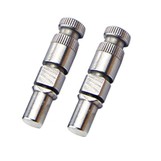
As a long shaft supplier, I understand the critical role that efficient heat dissipation plays in the performance and longevity of long shafts. In industrial applications, long shafts often operate under high - speed rotation and heavy loads, which generate a significant amount of heat. If this heat is not properly dissipated, it can lead to a series of problems, such as thermal expansion, reduced material strength, and accelerated wear of components. In this blog, I will share some effective ways to improve the heat dissipation of long shafts.
Understanding the Heat Generation Mechanism in Long Shafts
Before discussing heat dissipation methods, it is essential to understand how heat is generated in long shafts. The main sources of heat include friction and internal losses.
Friction occurs at the contact points between the shaft and its bearings, seals, and other mating components. When the shaft rotates, the relative motion between these surfaces causes frictional forces, which convert mechanical energy into heat. The magnitude of frictional heat depends on factors such as the surface roughness, the load applied, and the rotational speed.
Internal losses are another source of heat. These losses are mainly due to the internal resistance of the shaft material when it is subjected to mechanical stress during rotation. For example, in a long shaft made of metal, the molecular structure of the material experiences deformation and relaxation processes, which dissipate energy in the form of heat.
Material Selection
One of the fundamental ways to improve heat dissipation is through proper material selection. Different materials have different thermal conductivity properties. Materials with high thermal conductivity can transfer heat more efficiently from the heat - generating areas to the surrounding environment.
For long shafts, metals are commonly used due to their good mechanical properties. Among metals, copper and aluminum have relatively high thermal conductivity compared to steel. However, copper is relatively soft and may not be suitable for applications where high strength is required. Aluminum is lightweight and has a decent thermal conductivity, but its strength may also be a limiting factor in some heavy - load applications.
Stainless steel is a popular choice for long shafts in many industrial applications. Although its thermal conductivity is lower than that of copper and aluminum, it offers excellent corrosion resistance and mechanical strength. If you are interested in a [Stainless Steel Long Shaft](/cnc - machining - shaft - parts/long - shaft/stainless - steel - long - shaft.html), our company provides high - quality options that can be customized according to your specific requirements.
Surface Treatment
Surface treatment can significantly enhance the heat dissipation performance of long shafts. One common surface treatment method is anodizing, which is often used for aluminum shafts. Anodizing creates a porous oxide layer on the surface of the shaft, which increases the surface area available for heat transfer. A larger surface area allows for more efficient heat exchange with the surrounding air or coolant.
Another surface treatment option is coating the shaft with a high - thermal - conductivity material. For example, a thin layer of copper or silver can be deposited on the shaft surface using techniques such as electroplating or physical vapor deposition. These coatings can improve the heat transfer rate from the shaft to the environment.
Cooling Systems
Implementing an effective cooling system is crucial for long shafts operating under high - heat conditions. There are several types of cooling systems that can be used:
Air Cooling
Air cooling is a simple and cost - effective method. It involves using fans or blowers to direct a stream of air over the surface of the shaft. The moving air carries away the heat from the shaft by convection. To enhance the effectiveness of air cooling, fins can be added to the shaft surface. Fins increase the surface area of the shaft, allowing for more efficient heat transfer to the air.
Liquid Cooling
Liquid cooling is more efficient than air cooling, especially for applications where a large amount of heat needs to be dissipated. In a liquid - cooling system, a coolant, such as water or a special coolant fluid, is circulated around the shaft. The coolant absorbs the heat from the shaft and then transfers it to a heat exchanger, where the heat is dissipated to the environment.
For long shafts, a jacketed design can be used for liquid cooling. A jacket is a hollow structure that surrounds the shaft, and the coolant flows through the space between the jacket and the shaft. This design ensures that the coolant is in close contact with the shaft surface, maximizing the heat transfer efficiency.
Bearing Design and Lubrication
The bearings play a crucial role in the heat dissipation of long shafts. Proper bearing design and lubrication can reduce frictional heat generation.
When selecting bearings, it is important to choose bearings with low friction coefficients. High - precision bearings, such as [Precision Long Shaft](/cnc - machining - shaft - parts/long - shaft/precision - long - shaft.html) bearings, are designed to minimize friction and wear. These bearings often have better internal geometries and surface finishes, which result in lower frictional forces during shaft rotation.
Lubrication is also essential for reducing friction and heat. The right lubricant can form a thin film between the bearing surfaces, separating them and reducing direct contact. There are different types of lubricants available, including oils and greases. The choice of lubricant depends on factors such as the operating temperature, load, and rotational speed of the shaft. Regular lubricant replacement is necessary to maintain its effectiveness.


Structural Design Optimization
The structural design of the long shaft can also affect its heat dissipation performance. One important aspect is the shaft's diameter and length ratio. A shaft with a relatively large diameter and shorter length generally has better heat dissipation characteristics compared to a long and thin shaft. This is because a larger - diameter shaft has a larger cross - sectional area, which allows for more efficient heat conduction within the shaft.
In addition, the internal structure of the shaft can be optimized. For example, a hollow shaft design can be used. A hollow shaft not only reduces the weight of the shaft but also provides a space for coolant circulation if a liquid - cooling system is implemented. The coolant flowing through the hollow interior can directly absorb the heat from the inner surface of the shaft, improving the overall heat dissipation efficiency.
Monitoring and Maintenance
To ensure the long - term effectiveness of the heat dissipation measures, regular monitoring and maintenance are necessary. Temperature sensors can be installed on the shaft or its surrounding components to monitor the operating temperature. If the temperature exceeds a certain threshold, it may indicate a problem with the heat dissipation system, such as a clogged coolant passage or insufficient lubrication.
Regular inspection of the shaft and its associated components is also important. Check for signs of wear, damage, or corrosion, which can affect the heat dissipation performance. Replace worn - out bearings, seals, and lubricants in a timely manner to maintain the optimal operating conditions of the shaft.
Conclusion
Improving the heat dissipation of long shafts is a multi - faceted task that involves material selection, surface treatment, cooling systems, bearing design, structural optimization, and proper monitoring and maintenance. By implementing these strategies, we can effectively reduce the operating temperature of long shafts, improve their performance, and extend their service life.
If you are in the market for high - quality long shafts or need more information on how to optimize the heat dissipation of your long - shaft applications, we are here to help. Contact us for procurement discussions, and our team of experts will work with you to find the best solutions for your specific needs.
References
- Incropera, F. P., & DeWitt, D. P. (2002). Fundamentals of Heat and Mass Transfer. Wiley.
- Shigley, J. E., & Mischke, C. R. (2001). Mechanical Engineering Design. McGraw - Hill.