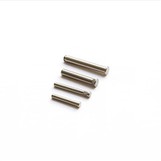
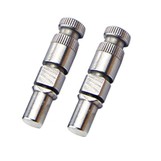
Precision machining of small shafts is a critical process in various industries, including automotive, aerospace, electronics, and robotics. As a small shaft supplier, I understand the importance of delivering high - precision small shafts to meet the demanding requirements of our customers. In this blog, I will share some key steps and techniques on how to machine a small shaft with high precision.
Understanding the Requirements
Before starting the machining process, it is essential to have a clear understanding of the requirements of the small shaft. This includes the dimensions, tolerances, surface finish, and material properties. For example, in electronics, Stainless Steel Micro Shafts for Motors, Electronics need to have extremely tight tolerances and a smooth surface finish to ensure proper functioning of the motors. In robotics, Stainless Steel Small Shaft for Robotics, Sensors may require high strength and corrosion resistance.
The design specifications will determine the machining methods, tools, and equipment to be used. It is also important to communicate with the customer to clarify any ambiguous requirements and ensure that the final product meets their expectations.
Material Selection
The choice of material for the small shaft is crucial as it affects the mechanical properties, machinability, and cost of the final product. Common materials for small shafts include stainless steel, carbon steel, aluminum, and titanium.
Stainless steel is a popular choice due to its excellent corrosion resistance and strength. It is suitable for applications where the shaft will be exposed to harsh environments or corrosive substances. Carbon steel, on the other hand, is known for its high strength and relatively low cost. It is widely used in general - purpose applications.
Aluminum is lightweight and has good thermal conductivity, making it ideal for applications where weight reduction is important, such as in aerospace and electronics. Titanium is known for its high strength - to - weight ratio and excellent corrosion resistance, but it is more expensive and difficult to machine compared to other materials.
Machining Equipment and Tools
To achieve high - precision machining of small shafts, the right equipment and tools are essential. CNC (Computer Numerical Control) machines are commonly used for their accuracy and repeatability. CNC lathes can perform operations such as turning, facing, threading, and grooving with high precision.
The choice of cutting tools also plays a significant role in the machining process. High - speed steel (HSS) and carbide tools are commonly used for machining small shafts. Carbide tools are more wear - resistant and can maintain their cutting edge for a longer time, making them suitable for high - volume production.
Proper tool selection depends on the material being machined, the cutting parameters, and the desired surface finish. For example, when machining stainless steel, carbide tools with a specific coating can improve the cutting performance and reduce tool wear.
Machining Process
Turning
Turning is the most common operation for machining small shafts. It involves rotating the workpiece on a lathe while a cutting tool removes material from the outer diameter. To achieve high precision, it is important to control the cutting speed, feed rate, and depth of cut.
The cutting speed is determined by the material being machined and the type of cutting tool. A higher cutting speed can increase the material removal rate, but it may also lead to increased tool wear. The feed rate refers to the distance the cutting tool travels along the workpiece per revolution. A proper feed rate ensures a smooth surface finish and accurate dimensions.
The depth of cut is the amount of material removed in each pass. It should be carefully controlled to avoid excessive cutting forces and tool breakage. Multiple roughing and finishing passes may be required to achieve the desired dimensions and surface finish.
Grinding
Grinding is a finishing operation that can be used to achieve extremely high precision and a smooth surface finish. It involves using an abrasive wheel to remove a small amount of material from the surface of the shaft.
There are different types of grinding processes, including cylindrical grinding, centerless grinding, and surface grinding. Cylindrical grinding is commonly used for small shafts to improve the roundness, straightness, and surface finish. Centerless grinding is suitable for high - volume production as it can achieve high precision without the need for center holes.
During the grinding process, it is important to control the grinding parameters, such as the wheel speed, feed rate, and depth of cut. The choice of abrasive wheel also depends on the material being ground and the desired surface finish.
Heat Treatment
Heat treatment can be used to improve the mechanical properties of the small shaft, such as hardness, strength, and toughness. Common heat treatment processes include annealing, quenching, and tempering.
Annealing is a process of heating the shaft to a specific temperature and then cooling it slowly to relieve internal stresses and improve machinability. Quenching involves heating the shaft to a high temperature and then rapidly cooling it in a quenching medium, such as oil or water, to increase its hardness. Tempering is a subsequent process that is used to reduce the brittleness caused by quenching and improve the toughness of the shaft.
The heat treatment process should be carefully controlled to ensure that the desired mechanical properties are achieved without affecting the dimensional accuracy of the shaft.
Quality Control
Quality control is an integral part of the machining process to ensure that the small shafts meet the specified requirements. This includes dimensional inspection, surface finish measurement, and material testing.
Dimensional inspection can be performed using precision measuring instruments, such as micrometers, calipers, and coordinate measuring machines (CMMs). These instruments can accurately measure the diameter, length, and other dimensions of the shaft to ensure that they are within the specified tolerances.


Surface finish measurement can be done using profilometers, which can measure the roughness and waviness of the shaft surface. A smooth surface finish is important for reducing friction and wear in applications.
Material testing, such as hardness testing and chemical analysis, can be used to verify the material properties of the shaft. This ensures that the shaft has the required strength, hardness, and corrosion resistance.
Assembly and Packaging
After the machining and quality control processes are completed, the small shafts need to be properly assembled and packaged. Assembly may involve fitting the shaft with other components, such as bearings, gears, or couplings.
Proper packaging is important to protect the small shafts during transportation and storage. The shafts should be wrapped in protective materials, such as plastic or paper, to prevent scratches and damage. They can be placed in boxes or containers with appropriate cushioning to absorb shocks and vibrations.
Conclusion
Machining a small shaft with high precision requires a combination of proper planning, the right equipment and tools, and strict quality control. As a small shaft supplier, we are committed to providing our customers with high - precision small shafts that meet their specific requirements.
If you are in need of high - precision small shafts for your application, we invite you to contact us for procurement and further discussions. We have the expertise and experience to deliver the best solutions for your needs.
References
- "Manufacturing Engineering and Technology" by Serope Kalpakjian and Steven Schmid
- "CNC Machining Handbook" by Mark Albert
- Industry standards and guidelines related to precision machining of small shafts