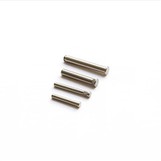
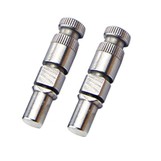
Hey there! I'm a supplier of long shafts, and I know that one of the biggest challenges our customers face is reducing the weight of these long shafts without sacrificing their strength. It's a tricky balance, but it's definitely achievable. In this blog post, I'm going to share some tips and techniques that can help you do just that.
1. Material Selection
The first step in reducing the weight of a long shaft is choosing the right material. Different materials have different densities and strength - to - weight ratios.
For instance, aluminum is a great option. It's much lighter than steel. Aluminum has a density of around 2.7 g/cm³, while steel can have a density ranging from 7.75 to 8.05 g/cm³. That's a huge difference! At the same time, modern aluminum alloys can offer impressive strength. They've been engineered to have high tensile and yield strengths, which means they can withstand a good amount of stress without deforming.
Another option is titanium. Titanium has an excellent strength - to - weight ratio. It's stronger than many steels while being significantly lighter. However, titanium is more expensive than aluminum and steel, so it might not be the best choice for every application.
If you're interested in high - quality long shafts made from different materials, you can check out our Precision Long Shaft and Stainless Steel Long Shaft options.
2. Hollow Design
One of the most effective ways to reduce the weight of a long shaft is by making it hollow. A hollow shaft can have almost the same strength as a solid shaft of the same outer diameter, but it weighs much less.
When a shaft is loaded, the stress is distributed non - uniformly across its cross - section. The outer part of the shaft bears most of the stress, while the inner part bears relatively less. By removing the material from the center of the shaft, we can significantly reduce the weight without a substantial loss of strength.
However, designing a hollow shaft requires careful consideration. The wall thickness of the hollow shaft needs to be optimized. If it's too thin, the shaft might buckle or deform under load. Engineers use advanced software and mathematical models to calculate the ideal wall thickness based on the expected load, length of the shaft, and material properties.
3. Advanced Manufacturing Techniques
Using advanced manufacturing techniques can also help in reducing the weight of long shafts without sacrificing strength.
CNC machining is a great option. It allows for precise control over the shape and dimensions of the shaft. With CNC machining, we can create complex geometries that are optimized for strength and weight. For example, we can machine grooves or ribs on the shaft to increase its stiffness without adding much weight.
Additive manufacturing, also known as 3D printing, is another emerging technique. It enables us to build shafts layer by layer, which gives us the freedom to design internal structures that are tailored to the specific load requirements. We can create lattice structures inside the shaft, which provide support where needed while minimizing the amount of material used.
4. Surface Treatments
Surface treatments not only enhance the durability of the shaft but can also play a role in weight reduction.
For example, shot peening is a surface treatment that involves bombarding the surface of the shaft with small spherical particles. This creates compressive stresses on the surface, which can improve the fatigue strength of the shaft. As a result, we can use a thinner - walled shaft (if it's a hollow shaft) or a shaft made of a lighter material, because the surface treatment compensates for the potential loss of strength.


Another surface treatment is nitriding. Nitriding adds a hard, wear - resistant layer to the surface of the shaft. This can protect the shaft from damage, allowing us to use a shaft with a lower cross - sectional area without sacrificing its overall performance.
5. Design Optimization
Proper design optimization is crucial for reducing the weight of long shafts.
First, we need to analyze the actual loads that the shaft will experience in its intended application. By understanding the load distribution, we can remove material from areas that are not under high stress. For example, if a shaft is mainly subjected to bending loads, we can reduce the material in the regions near the neutral axis, where the stress is relatively low.
Secondly, we can use computer - aided design (CAD) and finite element analysis (FEA) tools. CAD allows us to create detailed 3D models of the shaft, and FEA helps us simulate how the shaft will behave under different loads. By running multiple simulations and making iterative design changes, we can arrive at a design that has the optimal balance between weight and strength.
Why It Matters
Reducing the weight of long shafts has several benefits. In industries like aerospace and automotive, every gram counts. A lighter shaft means less fuel consumption, which leads to cost savings and a reduced environmental impact. In manufacturing, lighter shafts are easier to handle and install, which can improve productivity.
Moreover, in applications where the shaft is part of a moving system, a lighter shaft reduces the inertia, allowing for faster acceleration and deceleration. This can enhance the overall performance of the system.
Let's Connect
If you're looking for long shafts that are lightweight yet strong, I'd love to hear from you. Whether you have a specific design in mind or need help in optimizing your shaft for weight and strength, we're here to assist. Contact us to start a discussion about your requirements, and let's work together to find the best solution for your project.
References
- Ashby, M. F. (2011). Materials Selection in Mechanical Design. Butterworth - Heinemann.
- Callister, W. D., & Rethwisch, D. G. (2015). Materials Science and Engineering: An Introduction. Wiley.
- Dieter, G. E. (1988). Mechanical Metallurgy. McGraw - Hill.