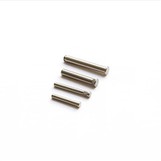
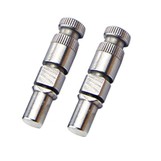
Hey there! As a knurled shaft supplier, I've seen firsthand how crucial it is to select the right knurling for a shaft. In this blog, I'll share some tips on how to make that choice, based on my years of experience in the industry.
First off, let's talk about what knurling is. Knurling is a manufacturing process that creates a pattern of small ridges or teeth on the surface of a shaft. This pattern serves a few important purposes. It can improve grip, making it easier to hold and turn the shaft. It can also prevent slippage when the shaft is being used in a mechanical assembly. And in some cases, it can enhance the aesthetic appeal of the shaft.
Now, when it comes to selecting the appropriate knurling for a shaft, there are several factors to consider.
1. Application Requirements
The first thing you need to think about is how the shaft will be used. Different applications call for different types of knurling. For example, if the shaft is going to be used in a hand - held tool, you'll want a knurling that provides a good grip. A coarse diamond or straight knurling might be a great choice here. The ridges are more prominent, so it's easier for your hand to hold onto the shaft without slipping.
On the other hand, if the shaft is part of a precision machinery, like a high - end watch or a medical device, you'll need a more delicate knurling. A fine straight or spiral knurling can be used in these cases. These types of knurling won't interfere with the precision operations of the machinery, while still providing some grip if needed.
2. Material of the Shaft
The material of the shaft also plays a big role in knurling selection. Different materials have different properties, and some are more suitable for certain types of knurling than others.
For instance, if you're working with a soft material like aluminum, you can usually get away with a more aggressive knurling. The material is malleable, so it can easily form the ridges without cracking or breaking. However, if you're dealing with a hard material like stainless steel, you'll need to be more careful. A too - aggressive knurling might cause the material to crack or deform. In such cases, a finer knurling pattern is often a better option. You can check out our Stainless Steel Knurled Shaft for more details on how we handle knurling on stainless steel.


3. Size and Dimensions of the Shaft
The size and dimensions of the shaft are important factors as well. A small - diameter shaft might not be able to handle a very coarse knurling. The ridges could be too large in proportion to the shaft, which could weaken the shaft or make it difficult to machine. For small shafts, a fine knurling is typically a better choice.
Conversely, a large - diameter shaft can usually accommodate a coarser knurling. The extra material provides more strength and stability, allowing for larger ridges. But you still need to make sure that the knurling doesn't cause any balance issues if the shaft is going to be rotating at high speeds.
4. Aesthetic Considerations
Sometimes, the look of the knurling is just as important as its functionality. If the shaft is going to be visible in the final product, you might want to choose a knurling pattern that looks good. For example, a diamond knurling has a very symmetrical and attractive appearance. It can add a touch of elegance to the shaft, making it look more professional and high - end.
On the other hand, if you're going for a more industrial or utilitarian look, a straight knurling might be more appropriate. It gives a simple, no - nonsense appearance that is often associated with machinery and tools.
Types of Knurling
Let's take a closer look at some of the common types of knurling and when to use them.
Straight Knurling
Straight knurling is one of the simplest and most common types of knurling. It consists of parallel ridges running along the length of the shaft. This type of knurling is great for providing a basic grip. It's easy to machine and can be used in a wide range of applications, from hand tools to mechanical assemblies.
Diamond Knurling
Diamond knurling creates a pattern of diamonds on the surface of the shaft. It provides a very good grip in all directions, making it ideal for applications where the shaft needs to be held firmly from different angles. It's also very aesthetically pleasing, so it's often used in products where appearance matters.
Spiral Knurling
Spiral knurling has ridges that run in a spiral pattern around the shaft. This type of knurling can be useful in applications where the shaft needs to be turned in a specific direction. The spiral pattern can help guide the rotation and provide a smooth turning motion.
Precision and Tolerance
When selecting knurling, precision and tolerance are also key considerations. In some applications, like aerospace or automotive, the knurling needs to be very precise. The ridges need to be of a consistent size and shape, and the spacing between them needs to be accurate.
We offer Precision Knurled Shaft that are manufactured to high - precision standards. Our advanced machining techniques ensure that the knurling meets the strictest tolerance requirements.
Cost
Last but not least, cost is always a factor. Some types of knurling are more expensive to produce than others. For example, a complex diamond knurling with a high level of precision will generally cost more than a simple straight knurling. You need to balance your requirements with your budget. Sometimes, a slightly less precise or less elaborate knurling can still meet your needs at a lower cost.
In conclusion, selecting the appropriate knurling for a shaft is a multi - faceted decision. You need to consider the application requirements, the material of the shaft, its size and dimensions, aesthetic considerations, precision, and cost. As a knurled shaft supplier, we have the expertise and experience to help you make the right choice. Whether you need a simple straight knurling for a hand tool or a precision diamond knurling for a high - end device, we've got you covered.
If you're interested in purchasing knurled shafts or have any questions about knurling selection, feel free to reach out. We'd be more than happy to discuss your needs and provide you with the best solutions.
References
- Machinery's Handbook, 31st Edition
- Manufacturing Engineering and Technology, 7th Edition